
I believe I've mentioned that my music listening history started with my father's classic rock collection. While the big three have remained pretty constant in my life, if there was a fourth, it would be Styx. I remember getting into them in the mid-90s, enjoying the purple A&M compilation album my dad had. They really were the first "hard rock" band I got into, and they've stayed with me over the years, as I've never grown tired of their unique blend of distorted guitars and theatrical ballads. Perhaps not unique for the 70s, but still iconic in all the right ways. This time, I decided to focus just on their studio albums, largely because I had been working on this for a few years, and I was hoping to get it out before the end of the year with their latest album. I didn't quite succeed, as you can tell, but it's been a fun ride regardless.

Starting off doing weddings and parties under a couple of different names, including The Tradewinds and TW4, this band from Chicago would finally settle on Styx when they got picked up by Wooden Nickel Records. Similarly, their first album is an ecclectic mix of ideas, including prog rock and Vanilla Fudge-esque soul rock. It's actually not a bad listen, and even has songs I often come back to.
First off is the epic, though. Featuring four movements (including a cover of "Fanfare of the Common Man" by Aaron Copeland 5 years before ELP would do theirs!), it's a curious piece that shifts between hard rock, jazz fusion elements, and an iconic section where the band collected clips from opinionated people they interviewed. It's certainly strange, but would foreshadow much of their better known work which weaves prog rock pomp with social commentary.
As for the rest, it's pretty solid. DeYoung doesn't add much of his well-known theatricality (though he does get in some snappy keyboard work), so it sounds like most hard rock from the same time-period. As I was looking into the details of this album for this retrospective I was surprised to learn that everything but "Movement" and "Best Thing" were covers of songs the band had never heard of (and to be honest, I don't know the original songwriters either). However, "Best Thing" is a rocker that has a lot James Young's charm, and I've always liked "Quick Is the Beat of My Heart" with its chunky scrape-riff-thing and mysterious ending with Gregorian chanting. The rest doesn't stand as out as much, but is still enjoyable.
Overall, it's definitely different compared to their better known work, but the elements are here: hard rocking riffs and solid vocal harmonies, backed by keyboards and a solid rhythm section. A decent first effort from a band that clearly has talent and experience, but don't quite have the sound that would make them national superstars.

Unfortunately, Styx I did not take off. Eager to focus on more original material, the band start establishing their iconic sound, featuring their first big hit, but the rest of the album is pretty solid as well.
It starts with a great rocker from DeYoung called "You Need Love," featuring James Young on vocals, followed by the now-classic ballad "Lady," which would be a template for all future ballads by the band, really. Starting off with a soft, piano opening before eventually exploding in arena rock epicness. Next are the two songs written by the guitarist John Curulewski. He provides the vocals for them, and he's not bad! First is "A Day," which is certainly the jazzy prog epic of the album at 8 minutes. However, the second of his, "You Better Ask," has more of a bluesy groove, and some quirky lyrics. They're decent songs, but don't really stand out compared to what else is on the album.
The second side starts with DeYoung playing some Bach, which is nice, short instrumental, but definitely feels like filler. However, it does lead into "Father OSA," which is the other longer track at 7 minutes. It has some epic organ work, but it kinda meanders for most of its runtime, ending with a very long fadeout. However, "Earl of Roseland" is a standout track for me, as I feel this one shows them getting closer to their iconic sound, with the hard rock riffs and tight vocal harmonies. As much as I love "Lady," I think this might be my favorite track on the album. The final track, "I'm Gonna Make You Feel It," has James Young returning to the vocals, and it's another uptempo rocker, though more in the vein of their first album, with the hammonds.
Overall, I think this is a stronger album than the first one, not only because it has more of DeYoung's writings, but also because it has a stronger sense of energy as well as more unity in the band's sound. "Lady" is an obvious winner, but I do think "Earl of Roseland" is quite the underrated gem. While they might not have all the pieces together, this is definitely a big step forward with some solid songs.

Released only a mere three months after Styx II, the band was certainly prolific at the time, but that wasn't unusual for bands in the early 70s, really. While there are still several proggy touches here and there, the band is starting to streamline their sound compared to what came before.
The album is definitely more bouncy and energized than their first two, like the band was having a bit more fun in making this one, at least at the time. The lyrics do get a little juvenile (such as the surprise track "Plexiglas Toilet"), and the song-writing does wander into some weird territory, but otherwise, there's some decent rock 'n' roll. Looking back, the band considered this album an embarrassment, with DeYoung saying it was the worst ever recorded in the history of music.
However, I think there are some gems, mainly "Witch Wolf" and "Jonas Psalter." The former is a classic James Young tune, gritty and driven, while the latter has a more adventurous energy, which matches its pirate-y theme. I will admit, though, that it's not a great album. It has some decent ideas, but the band would do them so much better on later albums, so beyond a few tracks, there really isn't much to recommend here.

Taking a bit more time with this one, Man of Miracles is the last album they put out with Wooden Nickel Records. By this point, the prog is nearly gone, and the band continues to grow into their well-known sound.
The album goes back and forth between Young's energy and DeYoung's more dramatic pieces. Things start off with two James Young rockers, which are decent, with two more later on called "A Man Like Me" and "Southern Woman," both of which are full his gritty charm. DeYoung's pieces go for a more somber, melodramic vibe, with "Golden Lark" being more of a spacy piano number, and "Evil Eyes" having more of a spooky tone. "A Song for Suzanne" and "Christopher Mr. Christopher" are interesting blends of both the harder and softer styles, something the band would master later in the decade, but these are solid early efforts. The album is capped by the over-the-top title track, featuring a rather symphonic sound before crashing in with a harsh-sounding organ into rock music.
To be honest, most of this album just kinda cruises along, with only "Christopher Mr. Christopher" being the real stand out for me, as I like its somber epicness and catchy chorus. At the same time, though, it's much more consistent in quality across its runtime, making it a much better album than The Serpent Is Rising. Overall, their first four albums are an interesting set. While much of the material wouldn't be as enduring and iconic as what they would do later, it's easy to hear how much of their sound was established on these, growing and maturing as songwriters. While Styx II is probably the best one, they all have some hidden gems and are worth listening to, in my opinion.

Thanks to the delayed success of "Lady," the band were finally able to get a major record deal with A&M, and the boost in production is tangible. While the Wooden Nickel recordings were fine for their time, the rock music industry was in the midst of a sea change, shifting over to anthemic, melodic songs for FM radio stations, and with this album, the band was starting to ride that wave.
At this point, DeYoung really starts to take over as the main songwriter for the band, but we end up with a solid set of rockers, regardless. While "Lorelei" was the single, and it did fairly well, the album has some good deep cuts, like "Light Up," and "Lonely Child." James Young gets his rocking in with "Midnight Ride," and while they're not as strong as the other songs, "Mother Dear" and "Born for Adventure" still show the band is doing a good job of blending their styles together.
However, for me, the big song is the closer "Suite Madame Blue." I have always loved this song, starting with this somber, introspective tone before breaking out one of their best riffs ever and heading straight into Queen-style prog rock epicness with the layered vocal harmonies. Then it ends with a big build up and payoff, making it probably their best song to this point in their career (at least in my opinion). Overall, this album is a stark improvement over the Wooden Nickel albums as the band's sound is really coalescing into what we know and love.

While the band's lineup had been stable to this point, John Curulewski was starting to struggle with his place in the group. A few different stories are around, with some saying that John wasn't contributing as much, or just being overly negative, but I guess after one show, DeYoung chewed him out, and Curulewski said "I quit" in response, eager to spend more time with his family. (He would go on to be a successful guitar teacher in Chicago for many years before dying of an aneurism in 1988.) However, this left the band in a bit of a scramble to find a replacement, picking up Tommy Shaw for the tour they had planned. It may have been a last-minute thing at the time, but Shaw would end up being a vital part of the band's success going forward.
History aside, we finally have the first material with Shaw on board, and he brings his songwriting right away. He wrote on the album's first single "Mademoiselle," which ends up being very Queen-like, with the harmonies on both guitars and vocals. He also contributes to the self-aware opener "Put Me On" (a fun rock song with some amusing shifts) and "Shooz," a cool, blues rock song. However, I think he does his best work as the sole writer of the title track, which is one of my favorites. I love how it builds from a somber acoustic guitar to classic Styx epicness, with a chorus I can't help but sing along to. Of course, the other members were writing a well, with DeYoung continuing to explore his dramatic style with "This Old Man," the closer "Ballerina," and the back-and-forth rocker "Jennifer," which ends with some peculiar space-rock elements.
Overall, I don't know if this album is quite as strong as Equinox. As much as I love the title track, the rest of the album is a little clunky, with "Shooz" feeling like filler and some of DeYoung's proggy ideas don't have as much punch as they should. Perhaps with a new songwriter in the crew, the band still had a few kinks to iron out. It also has the problem of coming before one of their best albums ever, so it makes for an awkward entry in their discography. Still, this isn't a bad follow-up, with plenty of their iconic sound to enjoy.

This album was the first one I reviewed for this blog, and frankly, I feel pretty much the same as I did when I wrote that seven years ago. This one blew the band up to superstars (appropriately enough), with massive hits like the title track, "Fooling Yourself," "Miss America," and the ever enduring "Come Sail Away," which still evokes incredible emotions in me, no matter how many times I've heard it. Backed by the proggy deeper cuts of "Man in the Wilderness" and "Castle Walls," there is very little filler on this album, if any! Dennis DeYoung really comes into his own, writing and singing on at least half of this album.
I'm not going to lie: this is my favorite Styx album, as it just seems to have everything that makes the band who they are. Between the excellent rocking, clever lyrics, smooth transitions to other sections, and a sound bigger than anyone else at the time, I'd be hard pressed to think of another arena rock album from this time period better than this. (Point of Know Return by Kansas does get close, but not quite.) Anyways, if you want more of my endless praise for this album, you can click on the link above to that review. However, I know I'm not alone in loving this chunk of excellent songs.
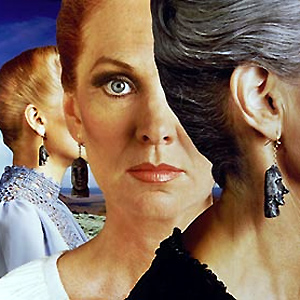
As disconcerting as that Hipgnosis album cover might be, Styx carry on from their success with a very solid follow up. While DeYoung kinda dominated the last one, here we have Tommy Shaw getting his dues, providing two of the band's biggest hits, which, considering how many they have, is saying something! While I don't think this album is as complete as The Grand Illusion, it's still a great set of songs most Styx fans probably know by heart.
Starting off with "Great White Hope," likely inspired by the film that came out a few years prior, James Young gets things rocking, and those harmonies on the chorus are wonderful. Meanwhile DeYoung provides plenty of songs, but they're an odd blend. "I'm O.K." is a pretty cheesy self-discovery anthem, "Lords of the Ring" (which sadly has nothing to do with Tolkien's world) is mostly mysterious, using fantasy as a way to talk about the rock music industry, and the title track is a curious bit of dramatic prog that starts as a ballad but shifts in different ways. However, my favorite of his is "Queen of Spades." It might be trying to catch the "Come Sail Away" lighting-in-the-bottle again, with its softer opening before hitting hard with the rock, but I love the drama of it, and it's very singable (though I suppose that's typical for this band, overall).
However, it's the Shaw songs that end up getting all the attention. "Sing for a Day" is very Yes-like, making me think of a more rock-oriented version of "Wondrous Stories," with the folky vibe and whimsical keyboard solos. The closer "Aku Aku" is a chill, somber piece, making me think of Alan Parson's ballads. But the two big hits really are the highlights. "Blue Collar Man" has that iconic motor engine riff and emotional frustration of unemployment, while "Renegade" has one of the most iconic acapella openings ever that goes right into one of the best classic rock songs of the 70s.
In retrospect, it's perhaps a little uneven, but there's still plenty of great music here, with the singles by Shaw standing out the most. However, this is also when the band really dials back the prog elements, as from here, they dive further into AOR territory. While it's not a bad thing, it does show how they were subject to trends as much as they were making them.

At this point, Styx had proven themselves to be hit makers. Perhaps because of that, their next album leaned in a more pop direction, full of songs with typical structures and shining production, and even some authentic strings to raise the emotions higher. This is by no means a bad thing, in general, but it does give this album less of an identity than the previous two, as there is not as much creativity or hard rock energy this time around.
With the last few albums, it was pretty easy to see the two major sides of their songwriting, but here, the emphasis on smoother songs makes the differences between DeYoung's and Shaw's seem less distinct. Ballads and soft rock styles are more prevalent, with "Babe" becoming the band's first (and only) #1 hit in the US. It's a great ballad, though, and better than the others. "First Time" isn't a particularly strong effort from DeYoung, while Shaw's "Love in the Midnight" has a more proggy approach, but otherwise kinda plods along. There's also more orchestral elements this time around, giving the band a big sound, but with songs as straight-forward as these, they only make them more melodramatic. Shaw also provides "Boat on the River," a very folky, somber ballad that's quite the shift for the band. It's not bad, and apparently was a big hit in Europe, but it's hard to see it as anything more than a novelty.
As for more rocking songs, "Lights" and "Why Me" are solid as the album's first tracks, and have a bit of a funky feel. "Borrowed Time" and "Never Say Never" bring more energy to the album, and James Young's only contribution "Eddie" has his typical gritty rock 'n' roll charm (despite the political content of the song dating it pretty badly). However, they're just not as exciting or driven as stuff they've written before.
Of course, it's not a bad album, by any means. There's still plenty of great vocal harmonies, melodic hooks, and neat (if occasionally strange) solos. However, "Babe" really is the standout song, as it has all the right pieces for a great, late 70s pop ballad. Perhaps they got a little carried away with their success or were just burned out from writing an album every year since 1972, but this album doesn't have quite the same punch as their earlier hits.

While the band was moving in a more AOR direction, it didn't mean they were abandoning big ideas. Styx started the 80s with a bit of a curious concept album, using the history of a famous movie theater in Chicago as a metaphor for how the United States was changing in the late 70s and early 80s. This album certainly has plenty of good hard rock, but there are themes of struggling to understand yourself or make progress toward your goals.
Dennis DeYoung really takes over on this album. While the other two songwriters certain contribute, DeYoung clearly has the lion's share of the credits, and I guess his theatrical style works for a concept album about a theater. While he provides the little pieces that build toward the concept, his big song is "The Best of Times," which is one of the band's best ballads. Shaw puts in the catchy "Too Much Time on My Hands" and the AOR-friendly "She Cares." James Young has his one song, this time being the gritty "Half-penny, Two-penny," when the theater finally gets taken down. Of course, there are a few were the guys work together, such as the explosive "Rockin' the Paradise," and the cocaine-inspired "Snowblind," discussing the destructive nature of the drug.
It's a peculiar album, with the first side having the better songs. "Nothing Ever Goes As Planned" is a little weird, as it meshes a lot of genres together, but still is a fun number, despite its pessimistic tone. However, the second half gets bogged down with DeYoung's "Lonely People" with its weird solos and Shaw's "She Cares," which comes across as a bit toothless, compared to the rest. As far as the album's themes go, it provides some interesting vignettes of failure and hope, trying to find the good in a world of bad, even if they're just memories. It's not perfect, but it remains a good album, and the last of their multi-platinum-selling four. While the band carried on well enough, this really is the beginning of the end of their most successful and celebrated part of their history.

When their song "Snowblind" got targeted by certain Christian groups for having a backmasked Satanic message (a completely ridiculous notion, as far as the band was concerned), they followed up with another concept album, focusing on a dystopian future where censorship has gone so far as to ban rock 'n' roll altogether! The story focused on a former rock star named Kilroy who had been imprisoned. However, when a new young rocker named Jonathan tries to bring back rock music, Kilroy breaks out and tries to meet up with him so that they can work together against the censorship of the establishment.
Certainly not a bad idea for a rock opera, but the execution is a bit mixed. They even made a short film to play at the beginning of their concerts, but audiences were unimpressed with the idea. Fortunately, the music is still mostly solid. Starting with the big hit, "Mr. Roboto," it's bouncy, synth-driven style has remained a classic rock radio staple for as long as I've been aware. "Don't Let It End" is the album's big, dramatic ballad, and it's as good as their others, though this time more of a "break up" song about wanting someone back. "Heavy Metal Poisoning" is an interesting piece of satire, with James Young playing the villain of the story, trying to insist that rock music is evil and to stay under his control. However, some of the other songs don't seem to fit the theme, like Shaw's "Cold War" and Young's "Double Life" (though that one could fit in a few different ways).
While I don't think the songs are as strong as their earlier efforts, there is some campy fun to be had with some of their ideas. The band sounds as tight as ever, selling this concept as best they can. "Mr. Roboto" and "Don't Let It End" are the only ones that got much attention, but I'm sure most Styx fans, when they gave this a chance, found a fun album that may not have all the pieces, but remains entertaining enough. However, as the tour for this album really suffered, Tommy Shaw left the band, and the rest took a break from each other for the rest of the 80s, recording some solo albums and working on other projects.

At the end of the 80s, the members starting talking about getting back together. However, when Tommy Shaw had other commitments, they picked up Glen Burtnik to replace him. A successful songwriter in his own right, Burtnik ended up being a major contributor to the album, working with DeYoung and Young on a new batch of songs. The result is something pretty different
I admit I don't know Burtnik's work other than this, but he clearly brought in a heavy dose of late 80s glam metal, as his songs definitely have those elements. It's weird to listen to songs like "Love Is the Ritual" and "World Tonite" and think of bands like Poison or Warrant. They're not bad, but they're definitely not typical Styx. As for DeYoung's songs, he has drifted even further into pop with his ballads. It's like he's written them for the credits of some 90s Disney animated film. They're not necessarily bad, but fall on the wrong side of cheesy, with "Show Me the Way" being the best of them. He does get in some old-school 50s rock 'n' roll with "Not Dead Yet," which was amusing, but not much more. However, I do like a couple of tracks. "Love Is the Ritual" isn't bad, and the title track has a lot of great energy. James Young also comes through with his one track "Homewrecker," which is probably the most Styx-like song on the album.
I can see Styx fans throwing this album right out the window when they got it, as it really doesn't have much of their classic sound, even the early 80s shift into more pop territory. However, if you can set this aside, there is some decent, well-produced hard rock here, and Dennis DeYoung is certainly giving his all on these ballads. At the very least, it's quite the unique black sheep of the discography!

Between the last album and this one, quite a lot happened. Styx suddenly was having a kind of odd comeback in pop culture, being referenced in movies and television shows. This led to a big reunion tour with Tommy Shaw coming back, which did very well. Unfortunately, their drummer John Panozzo had passed away, so they picked up Todd Sucherman to play the drums, sticking around even to today. Eventually, they started working on their next album. Perhaps it was originally meant to be a concept album based on the novel of the same title, but in the end, they ended up with a curious collection of songs.
Shaw and Young end up writing most of the material, often working together (or featuring a credit from Jack Blades of Night Ranger, who had been working with Shaw quite a bit before this). Most of them end up being the heavy rockers of the album, naturally, but they do have a decent amount of variety, from the straight-ahead songs like "I Will Be Your Witness" and "Best New Face," to more thematic songs like the title track and "Everything Is Cool." DeYoung still has his handful of songs, and naturally they're piano-heavy and theatrical. Weirdly, though, his songs are probably the most Styx-like on the album as well. Not that the others don't have some of the staples, but it's clear that Shaw has taken to a more 80s style of hard rock rather than the classic 70s ideas from their heyday.
I remember getting this album for my birthday shortly after it came out, and as I was a massive Styx fan at the time, I listened to it quite a bit, so I have a lot of nostalgia for these songs. Listening to it again, after so long, I find myself singing along with all of them, even the sappy ballads and cheesy rockers. Listening objectively, I can see why this didn't really take off, as it's a curious attempt at trying to update the AOR formula at a time when Creed and Nickelback were setting the standard for hard rock. It also doesn't help that some of the songs here are gimmicky at times, such as the curious attempt at bringing in a different feel with gospel, reggae, or hip-hop elements, with mixed results.
The nostalgia in me prevents me from saying that this is a bad album, as I still like a lot of this, but I can understand if this falls flat for longtime Styx fans. I think the songs connected to the main theme have aged the best, like the title track, "Everything Is Cool," and the Young-led "Heavy Water," but overall, it's still a fun album for me. However, it also represents the end of an era, as Dennis DeYoung would have some health problems preventing him from touring after this, so the band replaced him with Lawrence Gowan, who is still with the band today. While there are the usual talks about reunions, it's pretty clear they're not on the same page anymore.

With Gowan on board, the band came together on their next album, with the songs being more of a collaborative effort this time. This is also the last one with Glen Burtnik, making his contributions similar to what he brought with Edge of the Century. However, this one feels more jarring and mixed up, with some pretty odd results.
It's pretty clear at this point that the classic Styx sound is nearly gone, now. Sure, it's still rock 'n' roll, with some pianos, organs, and synths, and the tight vocal harmonies, but the spirit of the band has changed. And I don't want to argue that it's all because DeYoung left. Shaw doesn't even quite sound like his classic self anymore, Burtnik brings his more 80s rock vibes, and Gowan is trying to channel DeYoung's theatrical style, making for something of a hodgepodge. Of course, having guests like Billy Bob Thornton, Brian Wilson, and Tenacious D (among others) certainly shakes things up. At least James Young seems consistent with some of his older style, as his songs "These Are the Times" and "Captain America" are highlights for me. Perhaps it's just transition pains as the band explores what their current identity is. Fortunately, there is one sign of future possibilities, and that's in the song "One with Everything." While it's not perfect, it does feature some rather classic progressive rock elements that I rather quite liked.
Unfortunately, the rest really did feature some pretty bog-standard AOR (when they aren't doing something weird). While they had a good thing going, playing their classic hits live, much of this album's material leaves me pretty lukewarm. They aren't bad, but definitely lack something, and for whatever reason, the band isn't filling in the void very well. Overall, it's a pretty underwhelming album that has only has a few sparks of good ideas here and there.

When in 2004 they played at a festival, they pulled out a cover of The Beatles "I Am the Walrus," which went over really well. This would eventually inspire them to record an entire album of cover songs, mostly from the 60s and 70s. While I didn't necessarily see any details on this, but I get the impression this is the band showing respect for their inspirations, which range from the likes of The Who and Jimi Hendrix, to Procol Harum and Willie Dixon, as well as some Crosby, Stills, Nash, and Young, for good measure.
The band spread their singers out pretty well. Lawrence Gowan is responsible for "I Am the Walrus," but also has "Talkin' About the Good Times," Tommy Shaw gets to rock out with "I Can See For Miles" and "Wishing Well," while James Young brings some interesting energy to the songs "It Don't Make Sense (You Can't Make Peace)" and "Locomotive Breath." The acoustic version of "Blue Collar Man" is interesting, adding some vocal counter-point elements the song didn't have before. In the end, it's a decent album that lets the band just kinda hang loose and play some fun songs.
.jpg)
While the gap between albums is pretty big, the band was busy with plenty of tours, often playing with other classic rock bands like Kansas, Foreigner, and REO Speedwagon. However, while Tommy Shaw was working on some new music, he had an idea about a manned mission to Mars, and worked with Will Evankovich (who worked with Shaw as a producer and engineer) to put it together as a concept album. While certainly not a new thing for the band, it had been a while since they exercised their progressive rock muscles. Still, they were able to put together a pretty fascinating album, nonetheless.
Right off, with "Overture," the classic 70s rock sounds are back. Noodly organs, rockin' energy, some distorted vocals, all setting the stage for the story they want to tell. From there, the album goes through quite the journey, starting with some more conventional rock songs before really diving into the weirdness. Things get meditative with "Locomotive" and "Radio Silence," and then the daring trip through "The Red Storm," with some mixed meter shenanigans, before resolving with the triumphant guitars in "The Outpost" and the quirky "Mission to Mars." It's certainly a much more diverse album than the band has tried since Brave New World, and most if it certainly works. Tommy Shaw mentioned that he wanted to make albums that were experiences, instead of just a bundle of singles, like Pink Floyd's better known works, and I think he succeeded.
For whatever reason, I didn't listen to this when it came out, and I probably should have. This is the closest that the band has been to their classic sound! However, I also think they've included some extra elements (mainly cinematic ambiance) that helps this one stand on it's own. As for the songs, I liked the single "Gone Gone Gone," though I wish it was longer, "Radio Silence" was a nice breather with a solid chorus, "The Red Storm" is probably the most complex song with some good dramatic flourishes, and the chorus on "The Outpost" is excellent classic rock! I won't say it's a perfect album, as some songs do feel like filler, but overall, it's a great sign that the band was pushing themselves again, with some pretty decent results.

After some time, they decided to release a quick EP in 2021, partially for the Record Store Day of that year. It featured two new songs, and then a handful of live tracks. The first of the new song is the title song, and it has a bit of a Beatles-y vibe, but has a decent chorus and some rockin' energy. The second track, "Age Of Entropia," is much more folky, featuring some solid harmonies and lilting sense of mystery. However, both are quite short, being under 3 minutes, and it makes me wonder if they were built out of some left over ideas. They're no bad, but not great either. The live songs are a fun listen, if nothing else. Their voices have aged a little, but they remain tight in their performances, and are certainly having a good time, which is engaging enough. Perhaps it was just a intermediate slice of music in anticipation of their next album, but it's worth a listen.
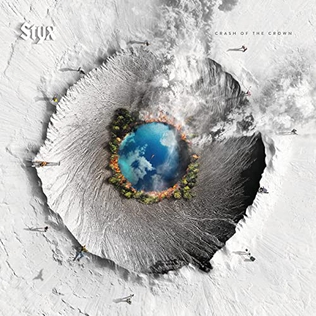
Four years after their last big effort, Shaw, Gowan, and Evankovich came together on another concept album, though with a much less concrete idea. Coming out after the Covid-19 lockdown, the album seems to focus on the idea of enduring hard times and finding hope and healing in the aftermath. However, much of the album was written before the lockdown, and doesn't reference any specific events, allowing the album to have enough of a timeless quality with its themes. Overall, it's an appeal to optimism more than anything else.
Musically, this is a bit of a weird one. While they definitely are trying some new ideas and blending it with their classic rock sensibilities, what comes out really doesn't sound like Styx, but more like a blend of Queen and The Flower Kings, with just a dash of Pink Floyd. The third-wave prog sound is definitely here, eager to call back to the 70s, but at the same time still try to sound modern and relevant, and it's an odd fit for Styx. Give them credit for trying, though, as this album is certainly not much like any of the others, except for maybe The Mission, but perhaps less atmospheric and ambitious. Probably the most alarming thing is how short all the songs are. They have good ideas, but they don't seem interested in embellishing them or giving them room to breathe, making for a lot of mini-prog epics, as oxymoronical is that sounds. Another thing I noticed was a greater emphasis on acoustic guitars, as they are on most of the tracks, even the rock ones.
Still, it wasn't a terrible listen, as they were clearly aiming for a rather pleasant listen. This is most obvious on tracks like "Reveries," "Our Wonderful Lives," "Sound the Alarm," and "Coming Out the Other Side." Still, there are some solid rock moments, like the opener "The Fight of Our Lives," "Save Us From Ourselves," and my favorite track "To Those." That last one is definitely the most Styx-like on the whole album. While I think there isn't much above "decent," I can't deny that they're trying, instead of just resting on their laurels by making boring albums. Between the last one, this one, and the next one, Styx has forged a curious new chapter in their history.

Now with Evankovich an official member of the band, even playing with them live, the band has clearly entered a new stage in their history. Between him, Shaw, and Gowan, we have another concept album, somewhat on a handful of themes. I admit it's a little hard to pin down, as the cover art seems to focus on the the dangers of relying too much on technology, but there are also songs about human hubris and plain optimism.
Sonically, it feels like the band is truly embracing their modern soft prog era, channeling everything from Pink Floyd and Queen to the Beatles and maybe some Crosby, Stills, and Nash. Lawrence Gowan gets quite a bit to do on his synths, getting in plenty of solos, and the rest of the band are content to just flow along with the songs. However, the songwriting has more standard verse-chorus structures. Whatever compelled them to be so creative on The Mission has clearly been put back on the shelf, as they have clearly settled into a slightly proggy soft rock. While I do think there are some interesting ideas here, it's hard not to feel like the band is just content to cruise along, avoiding any real risks or bumps.
It's certainly not a bad album; in fact I found most of it rather pleasant, if a bit hard to understand what they were singing about. I struggled to decide if some songs were being satirical, or just plain shallow. Still, I enjoyed "Build and Destroy" for having a decent 6/8 groove, as well as "The Things That You Said" for having a good build up towards the end. However, the stand out is a very folky, acoustic jazz piece about falling in love with a gypsy called "Blue Eyed Raven." However, I don't think this album is going to get many replays as it just doesn't seem to have the bite or energy of their better material. While I appreciate the band's willingness to push into a completely new style full of ideas, I don't know if this one really sees the band at their best.
So that was a bit of a bummer album to end on. Modern Styx has clearly pushed themselves into some interesting territory, but it remains to be seen if they will make anything that really stands out. Still, I will always love their classic material, as I'm sure many of their fans do, as it has established a rock legacy that is truly unique and inspiring.
While it took a very long time to get here, this has been a fun journey to not only go over the early stuff, but also to catch up with what the band has been doing lately. I wish they would bring back the classic hard rock elements, they remain a band eager to carry on in their own way, and if they should put out any more in the future, you know I'll be giving them a shot. In the meantime, I've got some more 2025 albums to review before the end of the month, so until then, rock on! \m/

No comments:
Post a Comment