Wednesday, May 6, 2026

Retro Reviews - May 2026 Part One!!

Here is the first of a very long stretch of retro reviews for 1986.  Turns out, there's a lot I want to review!  This article will be all about German metal, as I guess the metal scene there really picked up through the middle of the decade.  I will also be following up on albums that I checked out last year, so expect a few links to previous articles.  At the very least, it makes for a solid slab of thick, crunchy metal!

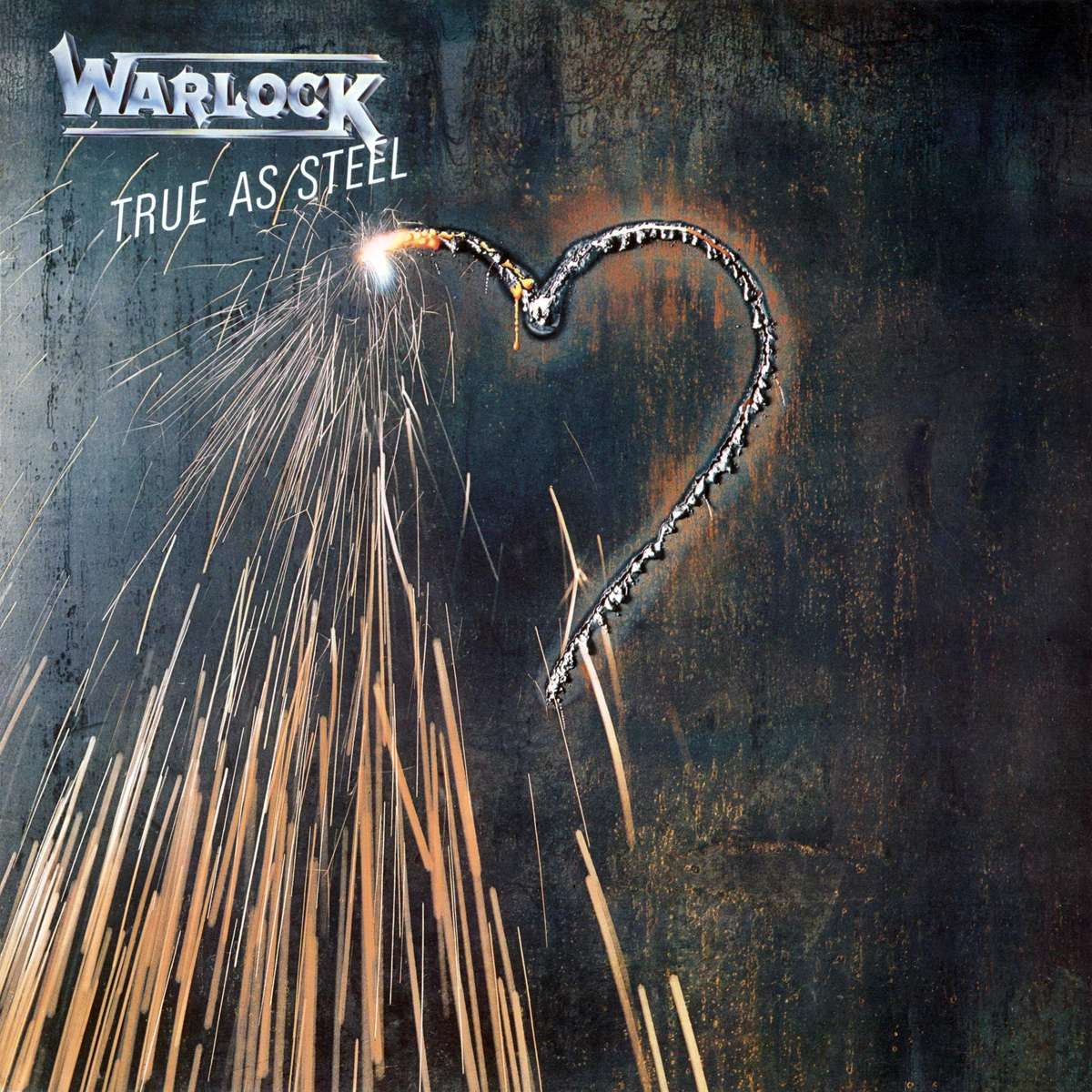
Warlock - True As Steel

Let's kick things off with the Queen of Metal herself!  While their first album got them some fans and their second pushed into some heavier territory, True As Steel definitely leans more toward a bigger, more commercial sound.  With new guitarist Niko Arvanitis, they forge another slab of metal that tries to go big, and sort of succeeds.

Right off, the production is thicker, going for this massive wall of sound meant to fill arenas.  Unfortunately, it kind of buries Doro's voice.  There are times where there is so much reverb on it, it sounds like she's singing in a cave.  However, this bigger production makes their songs feel more cinematic in style, as they are often telling stories with the lyrics.  The performances are certainly tight, especially when they play the faster songs, and there are some neat ideas, but I think the production gets in the way more than it should, making it hard to really enjoy the songs on their own.

That being said, once you get used to it, there really is a lot to enjoy.  "Fight for Rock" and the title track are solid anthems, "Love in the Danger Zone" and "Love Song" are decent ballads, and I rather liked "Vorwärts, All Right!" for having good energy.  Having the closer "T.O.L." be instrumental is a curious choice, but over all the album is not bad.  

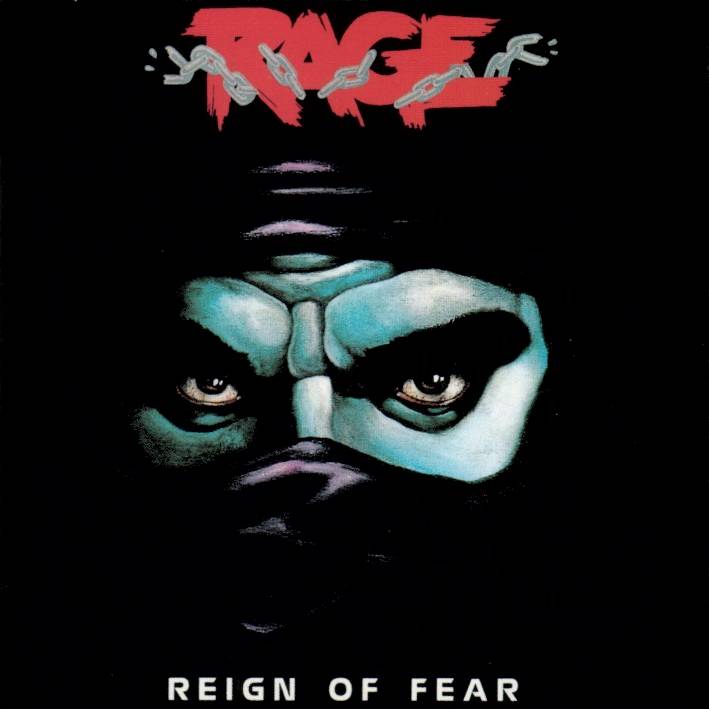
Rage - Reign of Fear

This is another band I've often seen get grouped with Grave Digger and Running Wild over the years.  They started off as Avenger, releasing an album and an EP.  I listened to them last year, but ended up not reviewing them as I felt I didn't have much to say about them.  They're not bad, just some pretty average German heavy metal.  After a name change, they decided to pick up quite a bit of thrash metal energy.

It really is quite the shift, right from the get go.  The first handful of tracks definitely sound like very early Slayer and Megadeth, eager to go fast and play some very aggressive riffs!  The opener "Scared to Death" starts off with this ominous, symphonic swell, but then blasts right into high speed fury.  "Deceiver" gets even thrashier, while the title track and "Hand of Glory" ease up things a little, but retain a very thrashy attitude.  It's not until "Raw Energy" that the band slows down to something more typical of Judas Priest, but it's right back to speed metal for "Echoes of Evil."  Overall, the album remains pretty fast and aggressive, with few exceptions.  The biggest deviation was the CD-only bonus track "The Scaffold," which starts with some nice acoustic guitar playing before getting into a more doom metal sound as it plods along pretty well.

It's hard to know how much I like this album.  I'm not a big Slayer or Megadeth fan, but there is more melody here than on Hell Awaits or Killing Is My Business.  "Scared to Death" and "Hand of Glory" in particular lean a little into Metal Church territory, so I liked those the most.  At the very least, it's not a boring album as they play with incredible energy and precision.  While the Avenger material wasn't bad, those songs definitely feel like a different band compared to what they've done here, so perhaps the name change was justified.

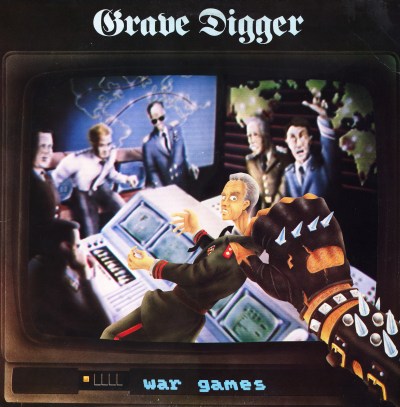
Grave Digger - War Games

Speaking of Grave Digger, I enjoyed their sophomore effort, though it was pretty rough stuff, overall.  Bassist C.F. Brank joins the band, but it's the same recipe as before as they blast through another chunk of 80s heavy metal.

While much of what worked on Witch Hunter sticks around, with plenty of chunky riffs and shreddy solos, I feel like this album is less experimental and more interested in settling into a conventional metal style.  However, I think they're comfortable with what they've created, making for a more consistent album overall.  Once again, they channel Judas Priest and Accept, and I found I liked the ones that leaned more Accept, like "Heaven Can Wait" and "Paradise."  "Fallout" even has a dark atmosphere as they discuss the destruction of nuclear bombs.  The strange instrumental "The End" that closes the album is really the only piece that seems different, going for a more cinematic little song than anything resembling rock or metal.

However, some tracks do feel kinda paint-by-numbers.  "Let Your Heads Roll" is a pretty standard song about rock 'n' roll, and "Love Is Breaking My Heart" is a very typical power ballad that any other band could have written.  While I don't know whether or not it's better than Witch Hunter, I would say that this one is more accessible.  Whether or not that's intentional, I don't know, but I do know that they would push for more accessibility with their next album.

Digger - Stronger Than Ever

Simplifying their name to just Digger, and replacing Peter Masson with Uwe Luwis on guitars, Grave Digger were certainly courting a more mainstream audience (if the robot duck flexing his arm on the cover art wasn't a clue itself).  I wasn't able to find out if this was something the band wanted to, or if they were pressured by their label/manager/etc.  In any case, the result is a very curious mixed bag of songs.

It's a weird album where their efforts for a more poppy sound are only on a few tracks, while others retain their furious speed-metal sound, making for a very clunky listen.  Things start with "Wanna Get Close," which sounds like a very typical 80s glam metal rocker for MTV, as does "Stay Till the Morning," and the title track wanders into AOR territory.  But then you have songs like "Lay It Own" and "Shadows of the Past" that are full of high-tempo energy, making me think of their messy first album.  Even the mid-tempo songs like "Moonriders" and "Stand Up and Rock" feel more like typical Grave Digger than anything radio friendly.  Chris Boltendahl switches his singing style based on the song, trying to be clean for the more accessible ones, but roaring as usual for the others.  While there have been a few keyboards in the past, the synths are quite prominent here.  They're cheesy, but not out of place.  I did like "Don't Leave Me Lonely," as the uptempo parts made me think of Walls of Jericho-era Helloween, but overall, this album is an awkward listen.  Part of the problem is that the band doesn't seem to be as into things unless they're doing the fast songs, leaving some rather uneven performances (though the production is quite nice).

I can see why fans would be frustrated with this album.  While it does have some of the Grave Digger they know and love, it feels compromised in its efforts to find a bigger audience, which it never did.  After this album, the band broke up, and Chris and Luwis focused on a new project called Hawaii.  That group only ever recorded a demo, but as they carried on, they decided to pick the Grave Digger name again and reboot themselves in the 90s.  I'll probably get to those at some point, as I am curious, but it may take some time before I get back around to this band.

Accept - Russian Roulette

Let's finish this article off with these German legends.  While Metal Heart was successful, it certainly leaned towards a more commercial sound, which ended up being a mixed bag in terms of quality.  Accept decided they weren't completely satisfied with that and decided to go back to their gritty roots with their next one.  They also decided to focus on a strong, anti-war theme, considering it a stupid game, like Russian Roulette.

Not that all the songs talk about war, as they cover other topics typical for them: monsters, empowerment, and masculinity.  They definitely get right to it with the opening track "T.V. War," a solid speed metal track to get things going.  However, songs like "Monsterman," "It's Hard to Find a Way," "Walking in the Shadow," and "Man Enough to Cry" lean into some very typical 80s metal.  They're not MTV fodder, but there certainly is a strong AC/DC vibe on these songs.  The title track gets rather somber, as does the 7 minute "Heaven Is Hell," showing the band's range.  One thing they did keep around was the emphasis on gang vocals, appearing on most of these songs, giving them a more anthemic touch.

While I do think this is an improvement over most of what was on their last album, I also find there is isn't a whole lot that stands out.  It's a good pick-and-mix of their various staples, and it's all played well enough, but it's hard not to feel like I've heard them do each of these better on previous (or later) albums.  It's not a bad album, and perhaps something of a refocus for the band, but not much more.

Thursday, April 30, 2026

Top 5 of 1981!

Like I mentioned in the Anniversary Article for this year, there was a lot of stellar music in 1981, so putting together a Top 5 was difficult.  There were no obvious winners, but more than a handful solid albums, and it took quite a bit of nit-picking to get the list down to five.  Naturally, there are a lot of honorable mentions, including Mötley Crüe's debut Too Fast for Love, Rush's Moving Pictures, and Foreigner's 4.  Even Saxon and Survivor had a chance to get in, but they couldn't quite make it.  As always, this is just my opinion, and I can't listen to everything, but this my Top 5 for one of the best years for melodic rock and metal.


5. AC/DC - For Those About to Rock (We Salute You)

While following up the iconic Back in Black would have been a challenge no matter what, but they certainly gave it a shot anyway.  It's not a perfect album, but it has a lot of energy, and the title track is purely anthemic.  A solid sophomore effort from Brian Johnson as the band keeps doing what they do best.


4. Journey - Escape

I mentioned that this was a shoe-in for the Top 5 in the review, but it was a matter of where.  After reviewing all these albums, this isn't as complete as the ones above it, though the hits are iconic and classic.  Despite all the praise I gave it, #4 is the highest I can put it against such tough competition.


3. Black Sabbath - Mob Rules

The second of the Dio Sabbath albums, when I reviewed this, I mentioned it wasn't as good as Heaven and Hell.  While I do still feel that way, it doesn't change the fact that it's still a very solid album.  The title track and "Sign of the Southern Cross" let Dio soar majestically, and I'm thinking I'm liking his Sabbath albums more than Ozzy's (sacrilege, I know), but this is a great album to represent how metal was evolving at the time.


2. Styx - Paradise Theater

When I posted my retrospective of this band earlier in the year, I stated that this album kinda falls off in the second half.  However, when you listen to it as an album, the ending does work as a good match to the start, and solid book ends do help an album seem strong.  There's also a lot of nostalgia for this band, so they were gonna end up pretty high, no matter what!


1. Def Leppard - High 'n' Dry

I internally debated hard about what to put at #1 for this year.  Styx seemed like the obvious winner, but as I continued to listen to Def Leppard's second album, I found it to be very consistent and enjoyable.  Just a lot of solid hard rock.  While it does lean into some AC/DC territory (largely because Mutt Lange was producing), with so many catchy hooks and choruses, I finally decided to put them at the top of what is a very excellent list.  They would go on to bigger things from here, but let it be said with this and their debut, they started from a great foundation.

Monday, April 27, 2026

Retro Reviews - April 2026 Part Two!

After enjoy the more melodic side of 1981, it's now time to get into the heavier stuff.  I've got a pair of pairs in here this time, as I'm still catching up with some of these bands.  Still, there is some solid stuff here, even it isn't the greatest overall.  However, let's get started with an NWOBHM highlight!

Saxon - Denim and Leather

After enjoying their pair from the previous year, it's time to take on this classic.  Retaining their lineup for one more album, they end up blending their hard rock and heavy metal ideas better on this one, making for a staple of the NWOBHM scene.

Honestly, this is just more of the high energy metal that they had established, now being refined with more experience.  Once again, elements of Motorhead and AC/DC can be heard, but the band has really identified their sound now, one they would carry into the future.  Things kick off well with "Princess of the Night" and "Never Surrender," as they have a lot of uptempo energy, which comes back with "Fire in the Sky."  Otherwise, they stay in a solid mid-tempo groove for most of these songs.  "Rough and Ready" pushes some tough guy attitude while "And the Bands Played On" reminisces about the Monsters of Rock Festival from 1980.  The title track closes the album, celebrating the scene that turned up around the band.  Naturally, it's become NWOBHM's anthem.

While it maybe easy to say that it's more of the same, I do think this is their best album of the first four, just slightly.  The playing and songwriting feel tighter, and things sound just a touch bigger.  The inclusion of more vocal harmonies certain helps, but honestly, I think the band just finally worked out what they wanted, and brought it to the people.  While I don't know if it will make it into my Top 5, it certainly has a fighting chance.

Y&T - Struck Down

While their first album was a decent chunk of hard rock, it didn't get much traction for them right away, so they dug in their heels and cracked out another two years later.  While this one wasn't a big winner either (largely because their label dropped them), they do show some maturity in their songwriting and musicality.

The album is also quite short, clocking under 30 minutes with only 8 songs, so there really is no filler here.  They also mix things up decently as well, with the opening title track going for this slow, sludgy track that's rather heavy, while "Pleasure in My Heart" has more of a funky groove, and "Road" is more uptempo with some metal chugging.  "Dreams of Egypt" in particular sounds like their attempt at a Rush-style track, with all the noodly riffs and atmosphere.  "I'm Lost" is faster rocker, feeling like Dio-era Rainbow ("Kill the King", for example.)  The closing track "Stargazer (Round and Round)" is also peculiar, switching between a reflective ballad before switching to some very active hard rock.

However, there are a few problems.  The production, while going for a big arena sound, does get a little muddy, especially with the drummer's bass drum.  The lyrics continue to be simplistic, but Dave Meniketti sings them well.  This album is an improvement over their self-titled debut, played with plenty of energy and featuring some good guitar work, but I don't think they've quite nailed their sound yet. Fortunately, I'm going to dive right into their transition into the 80s next!

Y&T - Earthshaker

With a new record label and a shortened name, the band entered a new decade ready to party!  Sonically, they've streamlined their sound and really honed in on being a hard rocking band with no frills.  Unfortunately, this made them feel like many other bands of the time.

While it may not seem like there's much of a change at first, as this is some well-played hard rock, but the harmonies are gone in favor of more driven, chugging energy.  However, I wonder if they didn't take more than few cues from their contemporaries like Motley Crue, Van Halen, and AC/DC, even featuring a seven minute power ballad to close the album.  I know 1981 was still pretty early for the glam metal scene, but it would be hard to see this one stand out from other bands at the time.  It's not that these are bad songs necessarily, but they do feel kind of "by the numbers" for an 80s hard rock album.  I can at least give them credit for anticipating what would work in the near future.

As for what I did like, "Rescue Me" had some good dynamics, blending in that acoustic guitar along with the electrics that made me think of Styx, actually.  "Hurricane" has some good guitar work along with its metal chugging, and "Knock You Out" has some good swagger.  The rest isn't bad, just kind of basic, and fun, forgettable way.  I know they get more successful as the decade goes on, so I'll have to carry on through their discography to find out how that goes.

The Rods - Rock Hard/The Rods

After enjoying their more recent releases, I figured I'd dig into the history of this classic band, going back to their debut album.  Well, sorta.  They recorded Rock Hard in 1980 with a small label named Primal before they got picked up by Arista.  However, instead of recording a new album or just re-releasing Rock Hard, they took a bunch of tracks from the first album, added two new ones, and released it as a self-titled album.  It's a bit confusing, but I figured it made sense to review them together, due to their small differences.

While I had to get used to their style of cruise control metal on their new albums, it seems they liked to stick to mid-tempo grooves right from the beginning, feeling like a fusion of ZZ Top and Judas Priest, with just a dash of Deep Purple.  David "Rock" Feinstein's vocals has a nice, gritty charm, thanks to his younger voice, and there is a decent amount of energy in the playing, even if they don't really go for speed.  I liked "Power Love" and "Crank It Up," but most of this is pretty straight-ahead chugging rock 'n' roll, featuring David's solid guitar work and some nice, if infrequent, vocal harmonies.

It turns out the self-titled album largely replaced the two covers with two different cover songs, but "Nothing Going On in the City" is the only one worth listening to of the four.  In the end, the album doesn't blow my mind, but it does set the tone that (I imagine) The Rods intended to have going forward, so it succeeds in its goals, I think.  They may not have been stars, but for those who like some old school rock fused with the coming 80s metal, this debut is not bad.

Thursday, April 16, 2026

Retro Reviews - April 2026 Part One!!

After 1976 comes 1981!  At this point, melodic rock was really refining into the arena-filling sentimental sound that we now know as AOR.  So for my reviews, I've focused on a few bands that have some pretty solid songs, while setting the tone for the rest of the decade.  Here's what I've been checking out lately!

Survivor - Survivor

While I know I've referenced this band here and there when reviewing various modern AOR albums, I admit I don't know much from Survivor other than "Eye of the Tiger."  So let's fix that!  Largely built around singer Dave Bickler, and guitarists Jim Peterik and Frankie Sullivan, this band formed in the late 70s, rockin' the Chicago area with some very radio ready songs.

Maybe it's because I've been listening to older stuff lately, but the production here is very clean and polished.  Sonically, they fit right in with the hard rock of the time; Styx, Toto, Foreigner, Journey, even a bit of Queen here and there.  Bickler even plays some keyboards, and his synth choice makes me think of the Cars at times, especially on "Can't Getcha Offa My Mind."  Basically, if 1979 had a sound, it was on this album.  Fortunately, these are some pretty catchy songs.  There's nothing fancy, but the melodic hooks are effective, and most of the choruses work well.  I don't know if I've heard a band that was more ready for the 80s than this one!

This is one solid album.  I don't know why this didn't blow up more when it came out because this doesn't really have any filler.  Maybe it seemed too derivative, but they play with plenty of energy, making these songs their own.  I don't know there are any real standout songs, as they all generally sound pretty good, but it's certainly an impressive debut.  However, I will admit, I listened to this just to prepare myself for their follow-up.

Survivor - Premonition

And here it is!  While they have a new rhythm section, Bickler, Peterik, and Sullivan are back for another set of radio-friendly rock, albeit much shorter this time.  This album is barely over 30 minutes long!

Naturally, not much has changed, as they're still aiming for that melodic rock demographic, along side Styx and Toto.  The main difference is more a matter of tone, as these songs have a more cinematic quality, as if anticipating their future film song opportunities.  This is most noticeable on "Runway Lights," "Light of a Thousand Smiles," and especially "Poor Man's Son" (no wonder Stallone was impressed).  As for the other songs, "Chevy Nights" is a decent opener, and "Take You on a Saturday" had some strong Bad Company vibes that I liked.

As much as I liked the first album, I do think this one is just slightly better.  While I didn't really notice much of a difference with the new drummer and bass player, I do think their songwriting has taken a step toward arena rock in a good way.  Again, I'm surprised they weren't a bigger deal right from the start.  While this album did get a few singles on the charts, I'm still wondering why they aren't higher.  This is solid melodic rock from a band who helped mold the AOR model going forward.

Praying Mantis - Time Tells No Lies

Started by the Troy brothers in the 70s, Praying Mantis was a hard rock band that got attention by being a part of the New Wave of British Heavy Metal, despite not really being a metal band.  Nevertheless, it got them a record deal with a label, and their debut album is considered quite the hidden gem.

Musically, they are a blend of 70s rock (like Blue Öyster Cult and Queen) with 80s ideas, such as some very Iron Maiden like guitar harmonies and noodly solos.  Steve Carroll and Tino Troy make for quite a talented duet with their fretwork!  Overall, it's some pretty decent melodic rock with a few shake ups here and there.  "Beads of Ebony" has a peculiar shift towards the end, and "Lovers of the Grave" goes from a dark ballad to a rather uptempo ending with some more great guitar work!  Another thing they share with the Cult is shifting vocalists between songs, but they all sound similar enough, it's hard to notice.  However, they all harmonize very well.

I liked the opener "Cheated," and while their Kinks cover was a little lackluster, things picked up with "Rich City Kids" and "Flirting with Suicide."  "Children of the Earth" is a solid closer with a lot of energy.  However, I think it's that aforementioned excellent guitar work that really stood out the most to me.  It's a shame that circumstances prevent the band from building off of this record right away.  However, they were able to reunite later on, and I'll get to that album later this year!

Rainbow - Difficult to Cure

Has it really been six years since I reviewed Down to Earth?  Kinda wild how time flies.  In any case, it was quite the turning point for the band as guitarist Ritchie Blackmore sought to shift to a more commercial, streamlined sound.  Ronnie James Dio wasn't interested, so he left and the vocalist role was filled by Graham Bonnet, and they made a pretty solid collection of melodic rock.  Blackmore wanted to carry on, but Bonnet decided to leave, so the band brought in Joe Lynn Turner to sing on the album, who would stick around for the next two albums.

Right off, these songs are absolutely aiming for radio play, with very few shake-ups.  Turner ends up being more of a crooner compared to Bonnet's more aggressive style, and he fits these songs well, getting plenty of time to show his range.  Blackmore mentioned being influenced by Foreigner at the time, and do I hear that, but I also think he brought back some pretty classic Deep Purple vibes, especially on "Spotlight Kid" and "Can't Happen Here."  Other notable tracks include "No Release," which features an unusual gospel-style breakdown before really turning up the rock towards the end, and the closing title track, which is a curious rock interpretation of the fourth movement of Beethoven's Ninth Symphony.

However, I can't shake the feeling that something is lost here.  Despite their commercial success, it's hard to feel like these songs are as substantial as even the last album's.  They have decent energy, and they aren't really trying to be like they were in the 70s, but most of these go in one ear and out the ear.  "I Surrender" is a decent single, and I did like the two aforementioned Purple-style songs, but everything else just doesn't stick very well.  

Journey - Escape

Let's wrap things up with a classic.  Despite being titans of the classic rock scene, I've only reviewed two of their albums, but I have the intention of getting to the rest of their 80s material this year, thanks to the Top 5 articles I'm making.  While they had some decent success up to 1981, their keyboardist Gregg Rolie would end up leaving, recommending Jonathan Cain as his replacement.  With him on board, his songwriting skills contributed quite a bit, making this album the one that would really break them out into superstardom.  With massive hits like "Don't Stop Believing," "Who's Crying Now," and "Open Arms," Journey set the standard for melodic rock that is still being felt to this day.

So the hits are pretty well known, but how is the rest of the album?  Pretty good, as it turns out.  There are a few weaker tracks, but they don't hold the album down much at all.  "Keep On Runnin'" has some awkward mixed meter riffing, and "Still They Ride" is not a bad ballad, but compared to "Open Arms," it doesn't stand out well.  I also think "Lay It Down" and "Dead or Alive" are a little generic, largely held up by Neal Schon's excellent guitar work.  He really shows a lot of range, going from shred on one song to something more melodic and iconic on others.

Still there are some good tracks.  "Stone In Love" is a solid track that kicks off with an interesting stop-and-start riff, then halfway through, the song shifts into a more dramatic piece with Schon doing some great work over the top.  The title track is also quite dramatic, making me think of Styx's theatrical style, with a bass noodle that could have been on a Rush album.  "Mother, Father" is probably the most dramatic track, telling a somber but hopeful story, and Perry's voice carries the song's drama well.  And I don't need to say much about the iconic ballad "Open Arms," and the power of the anthemic "Don't Stop Believing."  I don't know if I could identify an album that could have better predicted with the rest of the 80s would be like.  Even as glam metal would take over the decade, it still feels like they were borrowing from the playbook Journey built with this album.  While it does have a few rough spots, this will easily make it into Top 5.  The problem will be deciding where it goes!

Monday, April 6, 2026

Top 5 of 1976!!

Well, after quite a bit of listening, I've finally pulled together my Top 5 for 1976.  As always, I can't listen to everything and this is just my personal preferences, but this really interesting list to put together.  When I did my Anniversary Article, I noted how good this year was, as bands were making the transition into more melodic rock styles for the sake of FM Radio.

I do have a few honorable mentions to bring up.  While "Carry On Wayward Son" is an excellent song, the rest of Kansas's Leftoverture it just okay, and I feel the same about Rush's 2112.  Starcastle's self-titled debut is a decent bit of Yes-styled prog, and even Triumph had an outside shot.  However, I really do think these five albums are the best the year has to offer.


5. Styx - Crystal Ball

While the album can be a bit of a mixed bag, the title track is one of their classic hits, and "Put Me On" is a clever bit of meta-humor.  As a massive Styx fan, it's hard to keep this band down, so even one of their weaker album still squeaks into this Top 5!


4. AC/DC - Dirty Deeds Done Dirt Cheap

While they did have one album before this, I was a little unsure as to whether to include High Voltage for 1975 (Australian release) or 1976 (International release).  Fortunately, their follow up simplifies things for me by being a much better album.  Not only do the title track and "Problem Child" continue to get play on classic rock radio, but deeper cuts like "Rocker" and the slow burning "Ride On" easily put this at number 4.


3. Rainbow - Rising

While Ritchie Blackmore's Rainbow started off well last year, he and Dio really knocked it out of the park with Rising.  Kicking off with "Tarot Woman" and "Run with the Wolf," both strong songs, the album's real highlight is the eight minute epic "Stargazer," where the band's triumphant scope really shines.


2. Alan Parsons Project - Tales of Mystery and Imagination

I've always been a fan of this band, and while I admit this one is a little shaky compared to the rest of their discography, its theatrical tone helps set it apart from anything else in the year.  From "Crazy" Arthur Brown's manic performance on "Tell Tale Heart" to the orchestral brooding in the suite "Fall of the House of Usher," this project really captures the spirit of Edgar Allan Poe into some high quality symphonic rock.


1. Boston - Boston

I am hard pressed to think of a debut album that soared higher than Boston's self-titled album.  Half the songs on this album are still being played on classic rock radio and for good reason.  Between the proggy pomp and hard rocking riffs, with extremely tight vocal harmonies, this is arena rock at its finest.  It's such a shame that the band couldn't quite live up to this debut with their subsequent albums.  Still, I doubt this is a controversial choice at number one, as I know it's been praised by nearly everyone who has taken the time to listen to it, and I know I have many times over.

Wednesday, April 1, 2026

April Fools! Weird Al Rocks the 2000s!

After doing the first two articles, I said I would wrap things up with a third one.  At this point, Weird Al's production slowed down, only doing five(-ish) albums in the next 25 years.  However, his live show is bigger than ever, even touring with an orchestra for a few of them!  As for the music, there is naturally less rock-oriented material here, but I'm going gonna review it anyway!  Here we go!

Poodle Hat is actually my favorite album by Weird Al and his band, as this was when I was really becoming aware of what music was doing at that time.  Unfortunately, it didn't do very well, as the music video for the Eminem parody got shut down, so he wasn't able to promote it as he would have liked.  As for rock music, it has a few fun pieces.  "Hardware Store" isn't spoofing anyone but is a great song about being excited for power tools and building materials.  "Angry White Boy Polka" is an excellent medley that captures the zeitgeist of the alt rock and nu metal that was exploding at the time.  "Why Does This Always Happen to Me?" is an interesting take on Ben Folds' style of piano rock (featuring the man himself!), and "Ode to a Superhero" takes Billy Joel's classic "Piano Man" and makes it about the first Spider-man move that had just come out.

However, like with Running with Scissors, the highlight is an epic track at the end, going nearly nine minutes, that really leans into the diverse and strange styles of Frank Zappa.  The song goes through so many different genres, from rock to jazz to doowop to bluegrass, and yet remains fun all the way through!  I don't think it's quite as good as "Albequerque," but I like that he was willing to pull another one of these together!

At this point, though, the rock music nearly disappears from his albums.  Straight Outta Lynwood features the nerd-rap anthem "White and Nerdy," but otherwise sticks to alternative rock genres.  There are parodies for Green Day, Rage Against the Machine, Sparks, and Cake.  The polka medley "Polkarama" adds more alt rock, with pieces from Franz Ferdinand, Weezer, Coldplay, Modest Mouse, The Killers, and Velvet Revolver.  All entertaining stuff (including a bit of Led Zeppelin's "Black Dog" played by Weird Al's band for a few seconds of the ten-minute "Trapped in the Drive-Thru"), but not really the kind of rock music that my blog covers.

Rock music continues to be sparse with Alpocalypse.  You would think with an album cover like that, there would be some epic metal or something!  Once again, we get a Weezer-inspired song along with a style parody of The White Stripes.  However, he does pull out a few classic rock references.  "Craigslist" is a curious song in the style of The Doors, "Ringtone" has some Queen-like qualities, and "Stop Forward That Crap to Me" draws upon the work of Jim Steinman, like Meatloaf's Bat Out of Hell.  Not bad pieces, but the main parodies focused on Lady Gaga, Taylor Swift, and Miley Cyrus.  Again, the album is plenty of fun, but I was kinda hoping a DragonForce parody about World of Warcraft.  Oh well.

As Al carried on, he struggled to continue to feel relevant in an internet age where parodies come out in weeks and don't have to wait for a full album.  Mandatory Fun would end up being his last one that has all-new material, saying that he was setting aside the album format from here on.  Fortunately, it's not a bad album to end on, taking on the likes of Pharrell Williams and Daft Punk (and I do like the transition from "Best Song Ever" to "Gangnam Style" in the polka medley!).  As for rock music, there are style parodies for The Foo Fighters, Crosby Stills & Nash, and The Pixies, as well as giving Imagine Dragons the full treatment by turning "Radioactive" into "Inactive."  However, the most rock song that's on here is "Lame Claim to Fame," a style parody of Southern Culture on the Skids, making the most of their quirky, southern-fried, roots rock sensibilities.  The album ends with another big epic, this time using "Cat Stevens" as an inspiration, but I find "Jackson Park Express" doesn't click with me, and even feels a little creepy.  Kind of a rough track to end on.

From here, Weird Al would focus on touring and other creative ventures.  The last album to bear anything original from him was the soundtrack to the parody biography film Weird: The Al Yankovic Story.  It's not a bad movie, but I don't deal with "awkward humor" well, so I didn't enjoy all of it.  I think it's just what comedy was at the time.  However, seeing Daniel Radcliffe's version of Al turn into an action here to go rescue his girlfriend Madonna in the South American jungles from the notorious drug lord Pablo Escobar was certainly a highlight.

Naturally, there would be music, but for some reason, instead of letting the actor sings the songs, he's overdubbed by Al himself.  They are peculiar versions of his classics, and it shows how much his voice has aged, as he's not being as nasal as he was on the originals.  They're not bad but do feel a little surreal to hear with modern production.  And I do kind of wish Daniel's versions were available, as I would have liked to hear how he sounded.  The one original track "Now You Know" is pretty solid, though, being a catchy rock song, much like what they did for UHF's theme song.  The rest of the soundtrack features other tracks from the film, including some other polka artists, a fictional attempt at being a punk band called Skunk Barf, another Doors reference, and Dr. Demento's theme song.  The rest are more typical movie music, and while Leo Birenberg and Zach Robinson are no Hans Zimmer, they're scoring a comedy, so the music has to match the beats of the story's humor, so it works.

Since then, Weird Al has only put out a few polka medleys and that's it!  While I do respect abandoning the album format if he doesn't feel comfortable with it, but I was kind of expecting him to do more singles in order to be more timely.  Perhaps that was the plan (just me speculating), but he clearly got busy doing other things (including being a father!).  It's definitely been fun going over these again, but it makes sense that he wouldn't have as much melodic rock and metal, as they weren't as relevant after the 80s.

So I guess this is it!  I knew I wouldn't be able to squeeze too many articles out for this, but now I have to think about what I want to do for next April Fools.  Fortunately, I will have plenty of time to think of something.  Until then, rock on!  \m/

Monday, March 30, 2026

Retro Reviews - March 2026 Part Two!!

As I'm working through 1976 and checking albums out, I decided to split my reviews into two articles.  Last time, I focused on more hard rock bands, while this one has more proggy or weird rock bands.  Of course, prog was pretty much phasing out at this point, with many bands streamlining their sound to be more like the melodic rock of the times, so maybe these differences are just my own hair splitting.  In any case, here's what I've been listening to lately!

Druid - Fluid Druid

After checking out their debut album last year, and finding it to be rather pleasant, it's time to check out their second and final album.  Of course, being a prog rock band in 1976 was not easy, and so they mixed in a variety of ideas to spice things up while retaining many of their Yes-like qualities that they had before.

I think the best way to describe this album is that they're trying to be too quirky.  There are times where the proggy sections feel jarring and forced, like they were put in out of obligation.  While the first album focused on a united sound and atmosphere, here the songs are much more singular, like the instrumental "FM 145" being very bouncy, "Nothing But Morning" going for this dramatic Queen-like song, and "Barnaby" getting into a reggae groove.  "Crusade" certainly has some curious transitions, but it's so disjointed to really follow.  "Kestrel" is also a mess, despite being much shorter, and the closer "The Fisherman's Friend" feels like a joke song that doesn't really land.

Despite my criticisms, there are some decent pieces here.  The album starts off well enough with "Razor Truth" and "Painters Clouds."  They both have the more Yes-like style, like the material from Toward the Sun, and "Left to Find" starts off with a mysterious low synth before building up the instruments in a pretty satisfying way.  Dane in particular feels more confident, as he's not straining his voice quite so much, and his guitar work is pretty decent.  Neil Brewer retains his Squire-like basslines, and the rest of them play well, despite the awkward songwriting.

However, these good bits are just part of the junk drawer that this album assembled itself from, making this the weaker of their two albums.  From here, the band would break up, and its members would work on various other projects and groups over the years.  It's a bit of a shame as I do think they had some good ideas.  If they could have taken a break to refresh their minds and worked on another album, I think it could have been solid.  However, like I said, prog was in a weird place, and if you already didn't have a decent sized fanbase by this point, it would have been a struggle to continue.

Genesis - Wind and Wuthering

It's been quite some time since I last reviewed a Genesis album!  As I mentioned on those articles, I struggle with the Gabriel-era material, but now that I'm into the beginning of the Collins-era, I'm hoping I might find more to like (other than the usual handful I hear on classic rock radio).  While it does have some decent ideas, this is one mellow album!

Much of what they started on Trick of the Tail is here, as there is only one song over 10 minutes, and many shorter ones.  However, there certainly is an increase in synths, as Tony Banks gets rather orchestral in arranging all the different tones and pads he uses, along with the organs and pianos.  This gives the album a very cinematic feel, and the lyrics often carry that tone.  The album starts with the energetic "Eleventh Earl of Mar," based on a book about the Jacobite Rebellion in Scotland, "One for the Vine" is about someone ending up as a chosen one without wanting to be, and the pair of instrumentals that make up "Unquiet Slumbers for the Sleepers...In that Quiet Earth" are based on a line from Wuthering Heights.  They even tell a unique story with "All in a Mouse's Night," with the rodent waking up the humans and running into a dangerous cat!

Unfortunately, much of this album sticks to a slower, more somber vibe, and I found myself struggling to stay interested.  Banks keys do kinda overwhelm the album at times as well.  I liked "Eleventh Earl of Mar" and "...In That Quiet Earth" for being more upbeat, but otherwise, this is soft rock as much as prog, and while that's not necessarily a bad thing, I found it hard to really connect to sometimes.  As it would turn out, this album is the last they did with guitarist Steve Hackett, as he felt his contributions were being set aside in favor of Tony Banks' pieces, eventually compelling him to leave.  After hearing the album, it sounds like it was a pretty valid criticism.  I didn't hate the album, but it was on the wrong side of lackluster.  Maybe it will improve with more listening, but for now, this hasn't turned me into a Genesis fan.

Blue Öyster Cult - Agents of Fortune

To be honest, I've listened to this album before, but since I have been going through their discography lately, I figured I should squeeze this one in before I moved on to the rest of their albums.  I'm a big fan of "(Don't Fear) The Reaper," and I was kinda hoping the rest of the album would be just as dramatic and mysterious, so I was a little bummed to discover that it was mostly some pretty straight-ahead rock 'n' roll.  However, now that I'm giving it a second chance (and with the wider context of their previous albums), I can see this is very much a transition album for them, streamlining their songwriting to something much more punchy and conventional.

As usual, they do like to shift their style around from song to song.  Things start off with a pretty standard rock 'n' roll pair of songs, but they have some grooves later on, and even get sentimental at times.  Otherwise, "Buck" Dharma is still noodling along, his guitar solos really being solid across the tracks, and the song writing definitely settles into some familiar forms, letting the lyrics do most of the weirdness.  (I had totally forgotten that Patti Smith was on "The Revenge of Vera Gemini"!)  As for stand outs, "This Ain't the Summer of Love" has some decent chugging energy, and while "E.T.I. (Extra Terrestrial Intelligence)" starts with a weird riff, it quickly settles into a neat song that feels like it came out of a tabloid.  The spooky vibes continue with "Sinful Love" and "Tattoo Vampire," but then it gets rather serious for the end of the album.  "Morning Final" is about a random murder in the streets, and "Debbie Denise" is about a struggling, one-sided relationship.  This album is certainly all over the map.

And then there's "(Don't Fear) The Reaper."  This is pretty much the song that made me want to listen to more of the band.  Starting off with that iconic riff before settling into a thoughtful, dark tone, contemplating death and coming to terms with it.  Then the bridge outright explodes into a great guitar solo by "Buck," letting the feedback linger into the next verse.  An absolutely brilliant song.  Sadly, the rest of the album doesn't hold up to that level of quality, but I can see that it is a decent rock album that sees the band changing without losing their identity.

Triumph - In the Beginning

When we think of 70s hard rock trios from Canada, we generally think of Rush, but Triumph soon followed after and had quite a respectable career north of the US border.  I was only ever loosely aware of them, so I'm taking my next Top 5 article as an opportunity to check out their debut.  (It was originally just self-titled and had a different cover, but I like this re-release version better.)

The comparison to Rush is a little unfair, as this album has much more in common with fellow country-men Bachman-Turner Overdrive with some Led Zeppelin for good measure.  The result is some hard rockin' music with decent variety, with Rik Emmett's excellent shredding all over the place.  They mess around with a talk box on "Be My Lover," "Don't Take My Life" has some neat dynamics, switching between electric and acoustic guitars, "Easy Life" has a bluesy groove, and the "Street Fighter" pair a songs going from heavy metal in the first part to a somber, cinematic vibe in the "Reprise."  Even the opener "24 Hours a Day" starts off with this ballad-like style before going into some straight party rock.  The other songs are a little more generic, but are played with good energy, and the closer is where they tap into some prog, as "Blinding Light Show" goes from an aggressive noodly riff to a somber anthem before dropping to the classical guitar of "Moonchild."

I feel like the Y&T album I reviewed last time feels similar to this, but Triumph definitely has better songwriting.  I know I often say that debut albums show promise, but this is some very good rock music right from the start!  I liked the more dynamic songs like "Don't Take My Life" and "Street Fighter," and "What's Another Day of Rock 'n' Roll" made me think of "Black Betty" by Ram Jam with that scratchy riff.  The epic closer is solid as well, probably the most Rush-like song on the album, and I was overall satisfied with what I heard!  I'm definitely looking forward to their next one, whenever I get around to it!

Thursday, March 19, 2026

Retro Reviews - March 2026 Part One!!

I know I haven't been as consistent with my posts lately, but I've been dealing with a lot of stuff, including making some very long articles.  There was just a lot to cover, including some debut albums, and I had a lot to say about the others as well.  We're focusing on more straight-ahead rock with this one, while the next one will be more proggy.  For now, here's what I've been checking out lately!

Uriah Heep - High and Mighty

Last time I checked out this band, they had picked up John Wetton and carried on their way with more hard rock full of organs and tight vocal harmonies.  With this album, nearly all of the progressive rock and fantastical lyrics have been streamlined out.  However, this makes them rather in line with many of their contemporaries.

All the comparisons I've been making to Deep Purple and Vanilla Fudge hardly apply anymore, as they've shifted into something like a blend of Styx, Foreigner, Boston, and Queen (though not as theatrical).  Of course, there are a few twists here and there, like with the shifting dynamics of "Misty Eyes", the genre-switching in "Woman of the World," and "Can't Stop Singing," which sounds like it came from a funky musical.  Ken Hensley's organs and synths don't seem as prominent on this album, either, despite being the main songwriter.  John Wetton actually contributes to the songs as well, but it's hard to know what exactly he's responsible for.

Still, there were a few tracks I liked.  "Weep In Silence" is actually a decent ballad, with some solid solos from Mick Box, "Misty Eyes" had some great energy making me think of Styx in particular, and "Can't Keep a Good Band Down" was pretty fun.  Unfortunately, this would also be their last album with their iconic singer David Byron.  It turns out he was drinking a lot and it affected his performance, so the band had him sacked.  John Wetton left as well, never really feeling like he fit in with the band, and the band understood.  After listening to all these Uriah Heep albums over the last few years, it really is an end of an era.  As I carry on through their discography, it will be interesting to see how they transition from here. 

Queen - Day at the Races

Speaking of Queen, after the breakout success that was A Night at the Opera, and the following four-month tour, the band pretty much went right back into the studio the next year and hammered out this one.  Meant to be something of a companion to the previous album, the band really explores the dynamics of their sound, perhaps even pushing a little too far, sometimes, with not enough to show for it.

Ranging from hard rock to gospel and from piano waltzes to folk pop, it's definitely a demanding listen.  Queen have never been shy about pushing a song in a weird direction, so this is largely nothing new.  However, I wonder if they weren't a little rushed in the studio, as some of these songs don't feel quite as developed as the ones on their previous album.  The opener "Tie Your Mother Down" is a pretty bog-standard blues rock song, like if AC/DC was being lazy.  "Long Away" takes a few cues from the folky parts of the Beatles and the Byrds but hardly feels like Queen.  "Good Old-Fashioned Lover Boy" is pretty campy with it's bouncy, music hall style, leaning into their iconic theatrics, but not really working as a song.  "Drowse" goes for this trance-y vibe on a slide-guitar riff, but it never clicked with me, as it felt weirdly anxious the while time.  Overall, these tracks feel a little odd, and unfortunately, not very memorable, at least compared to the hits I know so well.

Speaking of hits, though, "Somebody to Love" really stands out with its epic gospel choir (even though it's just the band redubbing themselves several times over).  "The Millionare Waltz" at least has some curious dynamics, "White Man" has this heavy, twangy riff that matches the angsty, brooding song quite well, and "Teo Torriatte (Let Us Cling Together)" is a decent enough power ballad to end the album on.  Naturally, all of this is performed very tightly, as they comfortably reuse a lot of their iconic beats, like tight vocal harmonies and Brian May's melodic guitar work.  It's not a bad album, but it does feel like a bit of a let down after A Night at the Opera, and I can't help but wonder if maybe it just needed a bit more time in the studio to help bring it together as more of a whole.

Y&T - Yesterday & Today

Here's another one of those bands where I've heard of them, but never really listened to them (though I imagine I've heard "Mean Streak" on classic rock radio at some point).  Touring with the likes of Journey and Queen under the name Yesterday and Today (after an American Beatles release), they got picked up by a British Label and released their debut album.  While they may have had some metallic styles later, they start with a pretty decent set of blue-collar blues rock.

The main takeaway I had when listening to this is that they seem to have the straight-ahead simplicity of Bad Company, but with heavier riffs from Sabbath or Zeppelin.  While some of it can get a little bland, even the weaker tracks are elevated by Dave Meniketti's shredding solos!  He has an American 70s style, dedicated to playing a lot of notes quickly, often sounding random, but it really works for the sound they have.  "Come On Over" is a perfect example of this blend they have.  However, I think the main stand outs are "Earthshaker" and "Fast Ladies (Very Slow Gin)" for have a lot more energy than the rest of the album (though "Fast Ladies" does have some strange mixed meter playfulness).  "Game Playing Woman" is their most proggy, starting with a funky riff, but in the middle they drop it down to some very moody jazz.  From there, they build back up to the funky riff, and the transition is really quite smooth.

The only real problem I had was that the production was a little muddy.  Phil Kennemore's bass was big in the mix, but some of his notes don't land well, and Leonard Haze's drums feel more like thuds and impactful whacks.  It's a shame because they're playing good stuff.  While I know I've said this before on other debuts, but I can see a lot of promise with this one.  If they can gets some decent production and maybe give their songwriting a boost, I'd find a lot to like!  I plan on jump into their next album pretty quickly, so I'll find out soon!

We're just gonna ignore the original cover art.
Scorpions - Virgin Killer

With the band slowly embracing their hard rock destiny with the last album, they maintained their lineup for the follow up the next year.  While there was some proggy noodling before, here the songs are aggressively streamlined, with most of them being under four minutes!  

At this point, their sound is very much in line with what rock music was doing, with plenty of energy and dual guitar harmonies.  "Pictured Life" and "Catch Your Train" start the album well with some good energy.  The title track is also decent, with Klaus Meine providing some pretty aggressive vocals.  Of course Uli Jon Roth gets plenty of opportunities to shred, and he brings his vocals to "Hell Cat" and "Polar Night," which are some pretty weird songs.  I wasn't sure if they really fit well with the others.  "In Your Park" is a pretty average ballad, and the closer "Yellow Raven" is a slightly better one, especially with that big riff at the end.

Overall, I think this is an improvement, but I do wonder if perhaps this isn't an over-correction.  Most of these songs are so short and clean, it's hard to really appreciate them.  They do expand out a little towards the end, but otherwise, this album shows a clear shift to focusing more on no-filler hard rock.  At just under 35 minutes, it's a burst of good energy with some catchy tracks, but not much more.

Wednesday, March 11, 2026

David Gilmour, The Ferrymen, and Styx Retrospectives!

Just wanted to post a quick article for the new David Gilmour Retrospective Article I put over in my Article Retrospectives section.  Again, I've just pulled the reviews I've written over the years together into a single article, with a few tweaks.  (I have also since included my Catching Up with The Ferrymen and Styx Retrospective articles in there as well.)  That's all for now, but I'm sure to put together more of these sooner rather than later.  Until then, rock on! \m/

Saturday, February 28, 2026

Top 5 of 1971!!

Yup, we're starting this over again!  Back when I did my Anniversary Article, I focused on who both prog rock and hard rock were evolving, and this Top 5 reflects that!  While Black Sabbath, with their detuned guitars, and Deep Purple, who cemented their Mark II sound, were considered, they couldn't quite make it in as those albums also have some lackluster tracks.  Remember: a few great songs do not a great album make.  As always, I couldn't listen to everything, and this is super subjective, but these are my Top 5 albums of 1971!


5. Jethro Tull - Aqualung

This band has always been on the weird side, even among their prog rock contemporaries.  Featuring curious folk melodies and quirky lyrics, this album squeezes into the Top 5 primarily because the songs feel very well thought out.  For all their fanciful strangeness, these songs are exactly what they need to be, and the title track is a classic for these same reasons.


4. Uriah Heep - Look At Yourself

When I first listened to this, I thought it was alright, but upon revisiting both of their 1971 albums, this one stood out as the stronger of the two, mainly because it had a more focused rock approach.  The title track is a great start and "July Morning" really builds well, and the rest of the album just has the right touches to help put this one in the Top 5.


3. Led Zeppelin - IV

I've been relistening to a lot of Zeppelin lately, and as cliche as it may be, I do think this is their best album.  Not only featuring some of their most iconic tracks like "Black Dog" and "Stairway to Heaven," I was more recently blown away with the droning blues song "When the Levee Breaks."  I know I had heard it before, but this last time, it stayed in my mind much longer than I expected!


2. Pink Floyd - Meddle

It took them more than a few albums, but Pink Floyd finally pull themselves together and make some great music. While there are a few goofy tracks here and there, they arrive at excellence with the dark and brooding "One of These Days" and the epic underwater journey "Echoes."  Absolutely beautiful stuff.


1. Yes - The Yes Album & Fragile

I know this is cheating again, like I did with my Top 5 of 1985, but when my favorite band brings out two incredible albums in a year, this is just gonna happen!  Seriously, though, this is some of their best material.  Getting Steve Howe and Rick Wakeman on board expanded their sound considerably.  While I do think The Yes Album is probably better as a whole, Fragile does have my favorite Yes song "Heart of the Sunrise," so it's a close match.  In any case, Yes is certainly the best of the year, and I'm not ashamed to say it!

Wednesday, February 25, 2026

Retro Reviews - February 2026 Part Two!!

So here's the follow up from the last article, featuring three returning bands, and this time, all four are from 1971 to help me work out my Top 5.  Unfortunately, I don't think any of these will be making it as they are a clunky group of albums.  I know I may be tipping my hand early here, but nothing here was particularly mind-blowing, despite their various efforts.  Still, they're interesting albums and worth giving a listen, if only to show how each band has changed and will change.

Caravan - In The Land Of Grey And Pink

After checking out their debut and enjoying the follow up, it's finally time to check out their critically acclaimed third album.  At this point, the band was eager to get some attention outside their fanbase, and keyboardist Richard Sinclair brought some stronger pop music vibes to the songwriting.  While it's a decent collection of songs, I feel like something got lost in the shuffle as a consequence.

First off, the production is a major step up, sounding rather quite clean compared to their muddier previous albums.  However, the songs themselves are much more straight forward.  The album opens with "Golf Girl," which is about how the bassist met his girlfriend and honestly sounds bland, even with a trombone playing the lead melody.  "Winter Wine" is an improvement, letting the band jam around quite a bit, but then they get strange with the 7/8 "Love to Love You (and Tonight Pigs Will Fly)."  It's like they tried to blend prog with pop, and I don't know if it really works.  The title trick is alright, full of folky nostalgia for the band's hometown.  The album then closes with a 22 minute epic titled "Nine Feet Underground."  While it certainly has some interesting sections, I don't know if the flow is quite perfect as they journey through them.  It makes me think of Procol Harum's "In Held Twas In I" at times, but much more instrumental.  It's not bad, and probably the closest the band gets to the weirdness of If I Could Do It Again... that I liked.

While it's not a bad collection of songs, the spontaneity of the previous album is missing.  Perhaps the band wasn't as interested in psychedelic spaces this time around, shifting into their idea of a pop rock sound with some very safe song structures.  I liked "Winter Wine" and "Nine Feet Underground" the most, as they took me on more of a sonic journey than the others.  Maybe I need to listen to it more, but this is a let down compared to what I heard.

Wishbone Ash - Pilgrimage

While the band did well with their first album, they were pretty rushed to put out a second and relied on some older material they had written before but couldn't fit into the first.  I enjoyed their debut as a decent set of jammy blues rock, the band takes a much bigger dive into jazz-fusion.

Jazz was certainly a part of their sound before this, but this is stepping away from the likes of Cream in favor of something like King Crimson or Colosseum.  This is made very clear with the first two tracks "Vas Dis" and "The Pilgrim" being some very interesting journeys, and featuring some very technical playing.  Steve Upton in particular gives his drum kit quite the pounding.  It is also worth noting that these two songs don't have any lyrics, but instead feature some interesting vocals anyway.  "Vas Dis" goes for this rambling scat melodies, while "The Pilgrim" has some Yes-like ahs that fit the moodier tone.  There are two other instrumentals, but they're short and don't add much.  "Alone" was part of a longer song, but they decided to just include a section of it that's a meditative jam, and "Lullaby" has some appropriate sentimentality with the guitar harmonies.  "Valediction" is also in the soft rock style, though the lyrics are on the forlorn side.  Of course, the blues rock hasn't been completely abandoned, as "Jail Bait" is very straight-ahead with its structure (until the sudden reggae section at the end), and the album ends with "Where Were You Tomorrow," a live blues jam that goes over ten minutes.

I don't know if this is better or worse than their first, as it is kind of a different animal.  The one before was more of a blues-rock album and had some pretty good stuff, but here, I think the jazzy songs are the better ones, as the blues rock feels a little bland in comparison.  In any case, the band remains solid, featuring their slick guitar licks and harmonies and backed by a very driven rhythm section.  I understand their next album Argus is the one everyone praises, but I'll have to wait until next year to get to that!

Hawkwind - X In Search of Space

After getting through their first album, which was quite the unusual trip, I was feeling a bit hesitant about their follow up.  Fortunately, this one ended up being much more music focused, letting their synthy noise-makers be the spice to their spacey jams.

Things kick off with the 15-minute uptempo epic "You Shouldn't Do That."  It takes a minute to get into the music, but once it does, the chugging rhythms do a solid job of setting the tone and letting the band just mess around creatively for most of the runtime.  While the lyrics are more angst driven, they have this overlapping style that flows well with the song.  However, the album kind of descends from there.  While there are more decent space rock jams, they don't feel quite as ambitious, though. "Masters of the Universe" feels the most organized of the songs.  "We Took the Wrong Step Years Ago" shakes things up by being more of a folky jam on acoustic guitars, but the rest pretty much stick to more mid-tempo songs that roll along.

This is a definite improvement, as the band is clearly focusing on creating a musical space rather than a noisy, ambient one.  I admit it's hard to know how much of this is intentional and how much is just improvised playing that's loosely organized, but I suppose that's space rock for you.  At the very least, this is much closer to what I was expecting with the band.  I don't know if I've heard anything great yet, but I can see this band growing on me the more I listen to them.

Electric Light Orchestra - The Electric Light Orchestra

Before becoming pop rock legends, the Electric Light Orchestra started as more of a chamber pop group, inspired by some of the symphonic songs of the Beatles.  Largely focused around Jeff Lynne, Roy Wood, and Bev Bevan, their debut is a very confusing album, as they haven't quite worked out how to make their blend of ideas work smoothly yet.

The opening track "10538 Overture" is a decent start, featuring a solid riff and backed by the orchestrations well.  You can definitely hear their later sound in this one, as well as on "Nillie Takes Her Bow" and "Mr. Radio."  However, the album is uneven with its shifting styles.  The Beatles' influence is strongly felt on "Look At Me Now" and "Queen of the Hours," and they have some instrumentals that feel like movie soundtrack pieces, full of drama and noise, but they don't hold my interest very well.  The production isn't really helping them.  Maybe having different instruments panned far left and right might have sounded impressive at the time, but it just feels jarring now, and there are spots where things get muddy.

The one thing that holds the album together is this strong sense of melodrama.  You can tell the artists were dedicated to an idea, but hadn't quite figured out how to make it work.  Blending orchestral arrangements with typical pop and rock structures weren't necessarily new, but I don't think anyone quite embraced them as much as ELO was trying to here.  I did like "10538 Overture" and "1st Movement (Jumping Biz)," even if that second track was derivative of "Classical Gas" by Mason Williams.  Overall, this album is a mixed bag, but I'm determined to dig through their discography as I'm confident there will be some great tracks soon enough.

Friday, February 13, 2026

Retro Reviews - February 2026 Part One!

Now that 2025 is finally out of the way, I can focus on a new set of Top 5 lists for this year.  However, in order to check out some stuff for my 1971 list, I figured I should squeeze in a handful of debut albums in advance.  The first three bands all have albums in 1971, but I'll get to those next time.  Here's what I've been checking out for the start of the new year!

Caravan - Caravan

Formed by remaining members of The Wilde Flowers, and borrowing equipment from their country mates Soft Machine, Caravan had their humble start with this debut album in 1969.  While I definitely enjoyed their follow up from 1970, going back to this one shows them still forming their sound and clearly hoping for some pop success.

The songs are much more conventional here, with many of them featuring standard verse and chorus structures.  While they aren't bad songs, they do just kinda carry on in a bit of a lazy, laid back.  The opener "Place of My Own," "Love Song with Flute," and the nine-minute closer "Where But For Caravan Would I" all sound the most like their jazz fusion-y second album, so they stand out the most to me, but there were a few other good moments.  "Ride" gets some decent, meditative sections and "Magic Man" is a good little ballad.  However, other tracks like get a little too weird.  "Policeman" feels like their attempt at a quirky Beetles-like song, and "Cecil Rons" has some jarring repetitive chords and aggressive growling vocals, of all things!

So over all, it's a decent set of songs with more than a few clunky moments, though this is expected of a band who is on the cusp of something greater.  Sometimes it just takes some experience before a band really coalesces into themselves.  I don't know what I was expecting necessarily when I started listening to this, but it served as a decent foundation for them to build on for future releases.

Wishbone Ash - Wishbone Ash

This is a band I've heard about, but had never really gotten around to until now.  They are best known for having two guitarists, a style that would be very influential on later metal bands like Judas Priest and Iron Maiden.  Opening for Deep Purple helped them get attention from MCA Records, and by the end of 1970, they released this debut album.  Clearly built on the British blues rock scene, this some decent rock with a very jam-friendly vibe.

While bands like Cream, The Yardbirds, and perhaps even Black Sabbath's first album come to mind, but the double-guitar work really sets them apart from those bands.  Another stand-out element is the very clean production, allowing you to hear those crisp guitar harmonies that really are the highlight of the album.  Even bassist Martin Turner joins Andy Powell and Ted Turner on some of the melodies, creating a powerful sense of unity.  Meanwhile Steve Upton gets plenty of work out of his drums, find all kinds of gaps to get in a fill.  Overall, there's a solid, upbeat vibe to their songs, at least for the first half, with "Blind Eye" and "Lady Whiskey" bringing a lot of boogie.

The second half has the band really pushing into psychedelic rock, featuring only two tracks that are both over ten minutes long.  "Handy" starts with an extended bass solo before settling into a blues rock groove that felt like a genuine ancestor to Seven Planets before reaching a rather jazzy ending.  "Phoenix" was much the same, starting with some laid back jamming before turning up the energy with a swing step.  I definitely like the second half more, as I think it had more identity and featured the players at their best as they jammed away.  Overall, it was a pretty fun album, banging my head through it all.  For a debut album, there's quite a bit going on, and I look forward to where the band goes from here.

Hawkwind - Hawkwind

Another debut album!  Hawkwind is another band I had heard about, but never listened to until now.  I mostly knew them as a band that leaned in "space rock" long after the 60s (and had Lemmy on bass for a bit before they kicked him out, which caused him to start Motorhead).  But I'm getting ahead of myself here.  Their first album is considered an early space rock landmark, but honestly, I don't think it's aged that well.

I get that the point of psychedelic rock is the vibes and atmosphere instead of having thought-out orchestrations, but there are times where this album seems to revel in musical noise that occasionally has some rock jams in between.  A great example is "Seeing It as You Really Are," where there are so many sound effects and strange noises going on that it overwhelms what might have been a decent track.  Another example is "The Reason Is," which turns out to be just a few minutes of jarring ambiance.  Fortunately, there are a few songs to enjoy here.  The opener "Hurry on Sundown" has a folky twang coming from a 12-string guitar, making for a very acoustic-heavy rock jam.  "Be Yourself" has some rather King Crimson rhythms at the start before settling into a decent groove.  The closer "Mirror of Illusion" is probably the best track, as Dave Brock's voice really carries the song through a pretty solid jam, featuring plenty of solos.  I guess this song is what I was expecting the whole album to be like.

After listening to the whole thing, I get the feeling that the band were more interested in freaking out the listener than focusing on the music.  The descending warp in "Paranoia Part 1" in particular seems designed to make the listener to panic, thinking there is something wrong with their player.  Perhaps innovative and bizarre for its time, but listening to this retroactively on a computer, it feels just tacky.  Even though there are a few decent sections, this feels like one of those "you had to be there" kind of albums.

Deep Purple - Fireball

Finally, something that isn't a debut album!  I've been slowly working my way through Deep Purple's catalog, and I can see why Mark II is so important to the band's history, as I'm finding quite a bit to like.  This one has another decent bunch of songs, but listening to this retroactively, it's hard not to feel like this is just preparation for something greater.

I think a good way to describe this album is to say that the band is coming to terms with their new sound.  While In Rock was a massive burst of power, here they are grappling and controlling that power into something more organized.  They also wander into elements of space rock here and there, exploring the dynamics of their sound.  "No No No" and "Fools" have some stark transitions between hard riffs and mellower sections, but none of it feels jarring as they make these switches with a confident ease.  "The Mule" also has this droning quality that pushes the listener into a very strange space (though I do think the version on Made In Japan is better, naturally).  Still, there's plenty of rockin', with the opening title track not wasting anyone's time with its double-kicking bass drum energy, and "No One Came" has this pulsing drive from Roger Glover that keeps things moving.  "Anyone's Daughter" is a curious attempt at a joke song, but it's hard to know how much of the band was into the idea.

This is an improvement over In Rock, as the band is a little more confident in what they're doing, not really having to prove themselves as much.  However, like I said, with Machine Head coming after this one, it's hard not to feel like this one falls short of that excellent album.  Perhaps it's unfair to do that.  In any case, they are really becoming a strong unit with some solid (if quickly written) songs, proving that the switch to Mark II was worth it for both the band and the listener.