Showing posts with label Rainbow. Show all posts

Thursday, April 16, 2026

Retro Reviews - April 2026 Part One!!

After 1976 comes 1981!  At this point, melodic rock was really refining into the arena-filling sentimental sound that we now know as AOR.  So for my reviews, I've focused on a few bands that have some pretty solid songs, while setting the tone for the rest of the decade.  Here's what I've been checking out lately!

Survivor - Survivor

While I know I've referenced this band here and there when reviewing various modern AOR albums, I admit I don't know much from Survivor other than "Eye of the Tiger."  So let's fix that!  Largely built around singer Dave Bickler, and guitarists Jim Peterik and Frankie Sullivan, this band formed in the late 70s, rockin' the Chicago area with some very radio ready songs.

Maybe it's because I've been listening to older stuff lately, but the production here is very clean and polished.  Sonically, they fit right in with the hard rock of the time; Styx, Toto, Foreigner, Journey, even a bit of Queen here and there.  Bickler even plays some keyboards, and his synth choice makes me think of the Cars at times, especially on "Can't Getcha Offa My Mind."  Basically, if 1979 had a sound, it was on this album.  Fortunately, these are some pretty catchy songs.  There's nothing fancy, but the melodic hooks are effective, and most of the choruses work well.  I don't know if I've heard a band that was more ready for the 80s than this one!

This is one solid album.  I don't know why this didn't blow up more when it came out because this doesn't really have any filler.  Maybe it seemed too derivative, but they play with plenty of energy, making these songs their own.  I don't know there are any real standout songs, as they all generally sound pretty good, but it's certainly an impressive debut.  However, I will admit, I listened to this just to prepare myself for their follow-up.

Survivor - Premonition

And here it is!  While they have a new rhythm section, Bickler, Peterik, and Sullivan are back for another set of radio-friendly rock, albeit much shorter this time.  This album is barely over 30 minutes long!

Naturally, not much has changed, as they're still aiming for that melodic rock demographic, along side Styx and Toto.  The main difference is more a matter of tone, as these songs have a more cinematic quality, as if anticipating their future film song opportunities.  This is most noticeable on "Runway Lights," "Light of a Thousand Smiles," and especially "Poor Man's Son" (no wonder Stallone was impressed).  As for the other songs, "Chevy Nights" is a decent opener, and "Take You on a Saturday" had some strong Bad Company vibes that I liked.

As much as I liked the first album, I do think this one is just slightly better.  While I didn't really notice much of a difference with the new drummer and bass player, I do think their songwriting has taken a step toward arena rock in a good way.  Again, I'm surprised they weren't a bigger deal right from the start.  While this album did get a few singles on the charts, I'm still wondering why they aren't higher.  This is solid melodic rock from a band who helped mold the AOR model going forward.

Praying Mantis - Time Tells No Lies

Started by the Troy brothers in the 70s, Praying Mantis was a hard rock band that got attention by being a part of the New Wave of British Heavy Metal, despite not really being a metal band.  Nevertheless, it got them a record deal with a label, and their debut album is considered quite the hidden gem.

Musically, they are a blend of 70s rock (like Blue Öyster Cult and Queen) with 80s ideas, such as some very Iron Maiden like guitar harmonies and noodly solos.  Steve Carroll and Tino Troy make for quite a talented duet with their fretwork!  Overall, it's some pretty decent melodic rock with a few shake ups here and there.  "Beads of Ebony" has a peculiar shift towards the end, and "Lovers of the Grave" goes from a dark ballad to a rather uptempo ending with some more great guitar work!  Another thing they share with the Cult is shifting vocalists between songs, but they all sound similar enough, it's hard to notice.  However, they all harmonize very well.

I liked the opener "Cheated," and while their Kinks cover was a little lackluster, things picked up with "Rich City Kids" and "Flirting with Suicide."  "Children of the Earth" is a solid closer with a lot of energy.  However, I think it's that aforementioned excellent guitar work that really stood out the most to me.  It's a shame that circumstances prevent the band from building off of this record right away.  However, they were able to reunite later on, and I'll get to that album later this year!

Rainbow - Difficult to Cure

Has it really been six years since I reviewed Down to Earth?  Kinda wild how time flies.  In any case, it was quite the turning point for the band as guitarist Ritchie Blackmore sought to shift to a more commercial, streamlined sound.  Ronnie James Dio wasn't interested, so he left and the vocalist role was filled by Graham Bonnet, and they made a pretty solid collection of melodic rock.  Blackmore wanted to carry on, but Bonnet decided to leave, so the band brought in Joe Lynn Turner to sing on the album, who would stick around for the next two albums.

Right off, these songs are absolutely aiming for radio play, with very few shake-ups.  Turner ends up being more of a crooner compared to Bonnet's more aggressive style, and he fits these songs well, getting plenty of time to show his range.  Blackmore mentioned being influenced by Foreigner at the time, and do I hear that, but I also think he brought back some pretty classic Deep Purple vibes, especially on "Spotlight Kid" and "Can't Happen Here."  Other notable tracks include "No Release," which features an unusual gospel-style breakdown before really turning up the rock towards the end, and the closing title track, which is a curious rock interpretation of the fourth movement of Beethoven's Ninth Symphony.

However, I can't shake the feeling that something is lost here.  Despite their commercial success, it's hard to feel like these songs are as substantial as even the last album's.  They have decent energy, and they aren't really trying to be like they were in the 70s, but most of these go in one ear and out the ear.  "I Surrender" is a decent single, and I did like the two aforementioned Purple-style songs, but everything else just doesn't stick very well.  

Journey - Escape

Let's wrap things up with a classic.  Despite being titans of the classic rock scene, I've only reviewed two of their albums, but I have the intention of getting to the rest of their 80s material this year, thanks to the Top 5 articles I'm making.  While they had some decent success up to 1981, their keyboardist Gregg Rolie would end up leaving, recommending Jonathan Cain as his replacement.  With him on board, his songwriting skills contributed quite a bit, making this album the one that would really break them out into superstardom.  With massive hits like "Don't Stop Believing," "Who's Crying Now," and "Open Arms," Journey set the standard for melodic rock that is still being felt to this day.

So the hits are pretty well known, but how is the rest of the album?  Pretty good, as it turns out.  There are a few weaker tracks, but they don't hold the album down much at all.  "Keep On Runnin'" has some awkward mixed meter riffing, and "Still They Ride" is not a bad ballad, but compared to "Open Arms," it doesn't stand out well.  I also think "Lay It Down" and "Dead or Alive" are a little generic, largely held up by Neal Schon's excellent guitar work.  He really shows a lot of range, going from shred on one song to something more melodic and iconic on others.

Still there are some good tracks.  "Stone In Love" is a solid track that kicks off with an interesting stop-and-start riff, then halfway through, the song shifts into a more dramatic piece with Schon doing some great work over the top.  The title track is also quite dramatic, making me think of Styx's theatrical style, with a bass noodle that could have been on a Rush album.  "Mother, Father" is probably the most dramatic track, telling a somber but hopeful story, and Perry's voice carries the song's drama well.  And I don't need to say much about the iconic ballad "Open Arms," and the power of the anthemic "Don't Stop Believing."  I don't know if I could identify an album that could have better predicted with the rest of the 80s would be like.  Even as glam metal would take over the decade, it still feels like they were borrowing from the playbook Journey built with this album.  While it does have a few rough spots, this will easily make it into Top 5.  The problem will be deciding where it goes!

Monday, April 6, 2026

Top 5 of 1976!!

Well, after quite a bit of listening, I've finally pulled together my Top 5 for 1976.  As always, I can't listen to everything and this is just my personal preferences, but this really interesting list to put together.  When I did my Anniversary Article, I noted how good this year was, as bands were making the transition into more melodic rock styles for the sake of FM Radio.

I do have a few honorable mentions to bring up.  While "Carry On Wayward Son" is an excellent song, the rest of Kansas's Leftoverture it just okay, and I feel the same about Rush's 2112.  Starcastle's self-titled debut is a decent bit of Yes-styled prog, and even Triumph had an outside shot.  However, I really do think these five albums are the best the year has to offer.


5. Styx - Crystal Ball

While the album can be a bit of a mixed bag, the title track is one of their classic hits, and "Put Me On" is a clever bit of meta-humor.  As a massive Styx fan, it's hard to keep this band down, so even one of their weaker album still squeaks into this Top 5!


4. AC/DC - Dirty Deeds Done Dirt Cheap

While they did have one album before this, I was a little unsure as to whether to include High Voltage for 1975 (Australian release) or 1976 (International release).  Fortunately, their follow up simplifies things for me by being a much better album.  Not only do the title track and "Problem Child" continue to get play on classic rock radio, but deeper cuts like "Rocker" and the slow burning "Ride On" easily put this at number 4.


3. Rainbow - Rising

While Ritchie Blackmore's Rainbow started off well last year, he and Dio really knocked it out of the park with Rising.  Kicking off with "Tarot Woman" and "Run with the Wolf," both strong songs, the album's real highlight is the eight minute epic "Stargazer," where the band's triumphant scope really shines.


2. Alan Parsons Project - Tales of Mystery and Imagination

I've always been a fan of this band, and while I admit this one is a little shaky compared to the rest of their discography, its theatrical tone helps set it apart from anything else in the year.  From "Crazy" Arthur Brown's manic performance on "Tell Tale Heart" to the orchestral brooding in the suite "Fall of the House of Usher," this project really captures the spirit of Edgar Allan Poe into some high quality symphonic rock.


1. Boston - Boston

I am hard pressed to think of a debut album that soared higher than Boston's self-titled album.  Half the songs on this album are still being played on classic rock radio and for good reason.  Between the proggy pomp and hard rocking riffs, with extremely tight vocal harmonies, this is arena rock at its finest.  It's such a shame that the band couldn't quite live up to this debut with their subsequent albums.  Still, I doubt this is a controversial choice at number one, as I know it's been praised by nearly everyone who has taken the time to listen to it, and I know I have many times over.

Wednesday, March 26, 2025

Top 5 of 1975!!

Like I mentioned in the Anniversary Article for this year, this was a year of transition, with prog rock phasing out and arena rock taking over.  Still, this meant a lot of good albums, and putting together this Top 5 was harder than it seemed.  As usual, I want to note that I'm just one guy with limited time, listening to what I can, and I'm keeping things within the scope of the blog, so this isn't going to be the most comprehensive list ever.

I did want to talk about a few honorable mentions, though.  While Black Sabbath and Scorpions had some decent stuff, those albums are a little clunky, and even though Rush had two albums this year, neither of them made it (even though Caress of Steel nearly made it in!).  With that out of the way, here's my Top 5 for 1975!


5. Rainbow - Ritchie Blackmore's Rainbow

Sure, it might not be their best album, but this was the world's introduction to the titanic singer Ronnie James Dio, and his presence is immediately felt with "Man on the Silver Mountain."  While the album does get a bit goofy here and there, I find it to be pretty consistent in quality, and so it squeezes in here at number 5.


4. Queen - Night at the Opera

Like I mentioned when I reviewed this, it would be impossible to talk about this decade without Queen, and this album is a major reason why.  I have to admit it was tough to decide whether or not I liked this more than Zeppelin's work, but in the end, fourth is not a bad place to be.


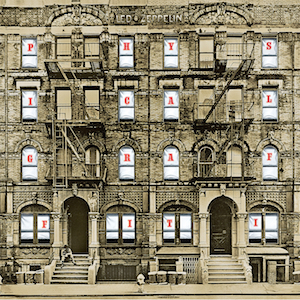
3. Led Zeppelin - Physical Graffiti

Again, this an obvious choice.  While their definitely experimenting with their sound, they still dominate the hard rock scene with titanic songs like "Kashmir" and "Ten Years Gone."  Being a double album, I will say that it's probably a bit too long, but that doesn't make the album any less amazing.


2. Styx - Equinox

I won't deny that Styx is one of my favorite bands, and even a clunky album of theirs will still rate highly for me.  It's a bit of a janky listen, but with catchy rockers like "Lorelei," "Lonely Child," and "Midnight Ride," the album gets plenty of play.  That awesome riff in the middle of "Suite Madame Blue" seals the deal.


1. Pink Floyd - Wish You Were Here

However, this year is dominated by Pink Floyd's follow up to The Dark Side of the Moon.  While it doesn't get the same level of acclaim as their iconic album, I still think there's a lot going on with this one as well as they perfect their iconic sound.  If you really want to see me gush about this album, go check out the band retrospective I did four years ago, but suffice it to say, this is one of my favorite albums, so it's no surprise to me that it takes the crown for 1975.

Saturday, March 30, 2024

Anniversary Series - 1979!

Wow, this has been a rough month!  I wanted to get some articles out before now, but I guess life had other plans.  Still, I am determined to do these Anniversary Articles, as they provide a fun summary to write up.  As it turns out, 1979 is a pretty solid year.  Melodic rock was really starting to take off, and we have the early signs of NWOBHM movement.  Let's get into it!

The year starts off strong with a lot of big names.  Scorpions was "Loving You Sunday Morning," Journey gave us some "Lovin', Touchin', Squeezin'," Van Halen wanted to "Dance the Night Away," and Supertramp was having Breakfast in America.  That album was a big one for them, as the title track, "The Logical Song," "Goodbye Stranger," and "Take the Long Way Home" would be big hits for them.

Heavy metal gets some interesting releases this year, featuring the debut albums of both Accept and Saxon, as well as Motorhead's iconic double-bass kicking on Overkill.  Judas Priest released a classic live album with Unleashed in the East, Iron Maiden was working on their Soundhouse Tapes, and Motorhead would return later in the year with Bomber.  While I do think the next year would be where metal really takes off, this year was certainly a sign of things to come.

Meanwhile, the summer really heated up with a lot of massive hits.  The Electric Light Orchestra released "Don't Bring Me Down," Foreigner sang about "Head Games," Rainbow switched out Dio for Graham Bonnet to get Down to Earth, the Eagles went for The Long Run, and AC/DC drove down the Highway to Hell, which is easily the best album they did with Bon Scott.

As the year winded down, some of the high points included Styx's ballad "Babe," Molly Hatchet's "Flirtin' with Disaster," ZZ Top's "Cheap Sunglasses," and .38 Special's "Rockin' Into the Night."  However, the big album that would cap the year off is Pink Floyd's The Wall.  Powered by iconic hits like "Another Brick in the Wall Part Two," "Run Like Hell," and "Comfortably Numb," this psychological rock opera would put Pink Floyd back on top of the world, despite the band falling apart inside.  

That wraps up another year.  Check out the playlist below for more tracks, and let me know in the comments below if you think I've missed something.  I'll certainly do better next month for articles, as I've slowly been pulling some things together.  Until then, rock on!  \m/

Monday, March 20, 2023

Anniversary Series - 1978!

It's time for another article to celebrate an iconic year in rock history.  1978 is definitely a dynamic year.  While competing with the explosion of disco (which I actually don't mind, honestly), bands found all kinds of new ways to rock.  Between the growing arena rock scene, the fading prog rock scene, and metal at a pivotal turning point, the year provides all kinds of exciting music!

The year started off with Journey introducing the world to the voice of Steve Perry with Infinity.  Bolstered by the big hits "Lights" and "Wheel in the Sky," the band evolved from their jazz-fusion roots into the rock radio scene with confidence.  Hard rock would continue to dominate the first part of the year, with AC/DC putting out Powerage, Joe Walsh's eclectic "Life's Been Good," and Van Halen's debut "erupting" on the scene, providing the hits "Ain't Talking  'Bout Love" and their cover of "You Really Got Me," and essentially rewriting the electric guitar playbook for at least 10 years.

Moving into the spring, the rock parade continues with The Cars iconic debut album, Dire Straits releasing "Sultans of Swing," and Rainbow proclaiming Long Live Rock 'n' Roll, with "Kill the King" and "Gates of Babylon" continuing to show the strengths of the Dio and Blackmore combination.  However, the biggest album was Foreigner's Double Vision, which had three massive hits in "Hot Blooded," "Blue Morning, Blue Day," and "Double Vision," all of which are classic rock station staples to this day.

Progressive rock would go through quite the transition this year.  Genesis would morph their streamlined sound into something more poppy and accessible, finding success with "Follow You Follow Me."  Yes would also release a stripped down effort with Tormato, strange album art and all.  However, concept albums were not lacking.  The Alan Parsons Project would look to Egypt for ideas with their concept album Pyramid, and Jeff Wayne would unleash his version of The War of the Worlds.  In the midst of all this, Rush put out Hemispheres, being one of the few bands at the time willing to push deeper into their sound.

Heavy metal was also going through changes.  Despite the confident title, Black Sabbath's Never Say Die! sounded like a last, desperate gasp for the genre.  However, Judas Priest carried on unperturbed, as they released two albums within the calendar year.  Stained Glass provided the "Exciter," while Killing Machine inspired metalheads the world over to be "Hell Bent for Leather."  The power of these releases would help to inspire the rebirth that is the New Wave of British Heavy Metal to suddenly pick up in the subsequent years.

Wrapping things up, the rest of the year featured some great, anthemic rockers.  The Who showed their veteran strength by demanding "Who Are You," Toto debuted their self-titled album and asked us to "Hold the Line," Boston followed up their incredible first album with Don't Look Back, and Styx released Pieces of Eight, a solid follow-up to The Grand Illusion.  Featuring big hits like "Blue Collar Man," "Queen of Spades," and the iconic "Renegade," they rocked stadiums and jukeboxes across the country, and continue to do so on classic rock stations around the world along with Foreigner.

With a year of plenty great rock and metal to listen to, this ends up being one of the strongest years I've had to write about.  As always, check out the playlist below for more, and let me know if I've missed anything you think should be mentioned!  Until then, rock on! \m/

Monday, March 15, 2021

Anniversary Series - 1976!

You'd think it would be hard to top 1971, but honestly 1976 is almost just as good.  Lots of great albums came out this year, even if not all of them were massive radio hits.  There's a lot to cover for this one, so I'd better get started!

The year starts with the massive Frampton Comes Alive!, featuring extensive use of the talkbox.  Live versions of "Show Me the Way," "Babe, I Love Your Way," and "Do You Feel the Way We Do" would find their way to rock stations around the world.  Kiss, who also found success with a massive live album last year, would release two albums this year: Destroyer and Rock and Roll Over, the former of which had big hits with "Detroit Rock City" and the ballad "Beth."  Led Zeppelin, while perhaps struggling with drugs and personal tragedies, still proved they still had it with Presence, featuring the epic "Achilles Last Stand."

Progressive rock was on its way out of public favor at this time, but there were still some solid albums this year.  Genesis released Trick of the Tail, which I reviewed late last year.  Rush also came to fruition with 2112, featuring the epic side-long title track that would propel them to the forefront of prog rock and hard rock fans across the world.  The Alan Parsons Project would begin this year as year, with Tales of Mystery and Imagination providing musical adaptations of the works of Edgar Allan Poe.  I also want to mention Starcastle's debut album.  Perhaps a little derivative of Yes, but I think it's a solid album, especially the opening track "Lady of the Lake."

Meanwhile, metal was starting to move toward its iconic sound, with help from Judas Priest's Sad Wings of Destiny, featuring classic tracks like "Victim of Changes" and "The Ripper," and Rainbow's Rising, which saw Ronnie James Dio really go all out on "Stargazer."  Black Sabbath would also release an album this year, but frankly Technical Ecstasy is not the band at their best, as they tried for a more commercial sound as the members were falling apart.

As the year went on, Blue Öyster Cult would tell us to "Don't Fear the Reaper," Steve Miller Band would help us "Fly Like an Eagle," and the Electric Light Orchestra would ask "Do Ya."  AC/DC would continue to perfect their sound with Dirty Deeds Done Dirt Cheap, which I reviewed two years ago.  Boston released their incredible debut album, probably one of the best ever!  With songs like "More Than a Feeling," "Peace of Mind," and "Long Time," Boston would be a staple for classic rock stations in the decades to follow.

At the end of the year, we have two more great albums.  Styx released Crystal Ball, which not only has a great title track, but also "Put Me On," a fun song about listening to rock records that balance the band's classic styles together.  And finally, The Eagles put out Hotel California, which features another great title track, as well as the massive hit "Life in the Fast Lane."

I told you this was a great year!  Honestly, there were others that I left off this article, but I made sure to throw them into the playlist below.  As always, if I've missed some, just let me know!  Until then, rock on!  \m/


Sunday, March 15, 2020

Anniversary Series - 1975!

Hey, it's time for another one of these!  My goal is to do an anniversary article once a month for the rest of the year. That should provide some decent variety, especially as I get closer to the present!  This month, 1975!  To be honest, this year is very much a time of transition.  Prog was wearing out its welcome, arena rock was really picking up, and punk was still a few years off.  Still, a lot of great stuff came out this year, so let's get into it!

Early in the year, Rush introduces the world to Neil Peart with Fly by Night.  While they still retain much of their Zeppelin-like debut, the song-writing definitely went up a notch or two when they got their new drummer.  Of course, Zeppelin themselves would show their chops that same month with Physical Graffiti, a titanic double-album with epics like "Kashmir" and "Ten Years Gone."  

Also expanding the arena rock style is Alice Cooper and Kiss, with their style and flashy flair.  Alice introduced us all to his nightmares, while Kiss were Dressed to Kill, though their success wouldn't come around until they release Alive! later on this year.  Inspired by UK's glam rockers, these bands gave shows few attendees would forget, letting us rock 'n' roll all night!

As winter turns to spring, we get Aerosmith's Toys in the Attic.  With massive tracks like "Walk This Way" and "Sweet Emotion," its no wonder they still get airplay on classic rock radio.  At the same time, fellow blues-rockers Bad Company released Straight Shooter, giving us "Feel Like Makin' Love" and "Shooting Star."  The Eagles followed with One of These Nights, a massive album featuring not only the title track, but "Lyin' Eyes" and "Take It To The Limit" as well!

Despite this trend of more streamlined rock, the prog-masters were still putting out material.  Rick Wakeman would continue his solo career by dabbling with King Arthur and his Knights, Camel released The Snow Goose, Hawkwind had Warrior on the Edge of Time, and Uriah Heep was making a Return to Fantasy.  Rush would be highly productive and release Caress of Steel, expanding their prog rock style with "Bastille Day" and the side-long epic "The Fountain of Lamneth."

Of course, the big prog rock record would be Pink Floyd's Wish You Were Here.  Featuring incredible and innovate moods and melodies, the band really came together and made a masterpiece (in my opinion, anyway).  Unfortunately, it would also be the last time they would be so well-balanced and in-sync with each other.

Heavy metal also saw a few excellent releases, with Black Sabbath releasing Sabotage, a rather underrated album with classics like "Hole in the Sky" and "Symptom of the Universe."  Meanwhile, Rickie Blackmore would finally break from Deep Purple and introduce the world to Ronnie James Dio with his Rainbow Debut.  "Man on the Silver Mountain" remains one of the most epic tracks ever recorded!

Wrapping things up, Fleetwood Mac would introduce the world to Stevie Nicks on their second self-titled album, providing singles in the second-half of '75 and deep into '76.  Styx finally gets their major record label debut with Equinox, full of great songs like "Lorelei," "Lonely Child," and "Suite Madame Blue."

And finally, a discussion of rock from 1975 would not be complete without Queen's A Night At The Opera, released at the end of November.  Between the poppy "You're My Best Friend," the epic "The Prophet's Song," and of course the headbang-worthy "Bohemian Rhapsody," it was a release few rockers could afford to miss.

Hard to beat a conclusion like that!  Hopefully, you're all enjoying this style of article.  I know I'm having fun digging through all this stuff, and I know I've missed some great tracks, so I've got another playlist below.  If I'm missing anything, let me know.  Until then, rock on! \m/


Saturday, July 20, 2019

Last Played - July 2019!

Rock and roll never sleeps, but I've been feeling more exhausted than ever lately (maybe it's the heat).  Because of that, I've decided to dig deep into the history of rock to try and relax and cool off.  Let's see what I've been listening to this month!

Pink Floyd - Obscured by Clouds

When I’m feeling exhausted, Pink Floyd can be the best band to listen to in the world.  Their mix of blues, ambiance, and rock just seems to provide a lot of relief from the weariness of the day.  While some albums are better about it than others, I decided to listen to the often overlooked Obscured by Clouds, and it was the right album to listen to that day.


Being a hodgepodge of songs made for a movie soundtrack, it doesn’t have the thematic vibe of their better known albums, but it shows how, even when they’re just throwing stuff together, they still know how to set an iconic tone.  Set between the bluesy Meddle and the dramatic Dark Side of the Moon, there are some very nice pieces on here that wouldn’t be out of place on either, honestly.  


Of course, there are some stand out tracks.  “The Gold It’s In The…” is very different, almost coming across as a CCR or Guess Who style blues rocker (and not a bad one, in my opinion).  And there’s “What’s … Uh The Deal?”, a great acoustic ballad later made famous by its inclusion on David Gilmour’s later solo tours.  In fact, Gilmour has a lot of good (if short) solos on this album.  However, it’s the instrumental sections that really stood out to me this time around, notably the opening title track and “Mudmen.”


To be sure, this isn’t Pink Floyd at their best, but to dismiss this album as mere filler would be a mistake, in my opinion.  If you’re in the mood to just throw on a solid, ambient rock album and not worry about following a thread from track to track, Obscured by Clouds fills that need quite well.

Rainbow - Down to Earth

I’m pretty familiar with Rainbow’s classic three albums with Ronnie James Dio, but I hadn’t really bothered with their later stuff, that is until I decided to tune in to Dee Snider’s House of Hair show.  After he played a few tracks from this album, I decided I should give it a shot.  Right off, it’s definitely a change of pace from Dio’s sword-and-sorcery and mysticism.  Gone are the long, proggy epics, and instead we get a handful radio-friendly rockers with a much more straight-forward approach.  

That doesn’t necessarily mean it’s bad, but it does make comparisons to the earlier stuff somewhat useless.  Comparing it to the likes of Styx’s Grand Illusion or Kansas’s Point of Know Return would probably serve it better.  However, even in the company of those albums, a lot of this stuff sounds very bog-standard late-70s arena rock. The production also seems a bit muddy, like they were trying for a “wall of sound” effect, but the results sound like everything is just smushed together. 

Still, there are some songs worth listening to.  Blackmore brings his bouncy riffs and solid solos, while new singer Graham Bonnet has his moments.  Singles “All Night Long” and “Since You Been Gone” do have their charm, and “Eyes of the World” still has shades of the Dio-era bigness.  Songs like “Makin’ Love” and “Love’s No Friend” have more of an old-school Deep Purple vibe, which let Blackmore’s bluesy-ness really hang out.  “Lost in Hollywood” makes for a pretty solid closer, as well.

So, overall, not a bad album.  Perhaps not the chart-breaking success they were going for with the transition from 70s metal to 80s AOR, but a decent attempt at the sound while still retaining a few of the elements that has made Blackmore one of the most celebrated guitarists in the world.

Black Sabbath - Heaven and Hell

Speaking of Dio, can you believe that I hadn’t listened to his iconic first Black Sabbath album until this month?  While I was somewhat familiar with Sabbath’s Ozzy period, as well as early Rainbow and Dio’s later solo career, I had overlooked this nexus of two great names for far too long, so I decided to fix that, and throw it on. 

Up front, this definitely has Dio’s stamp all over it.  The epic melodic lines, the mythological references, the soaring vocals over crunchy powerful riffs; it really does feel like a prototype of Dio’s Holy Diver, and it sounds amazing.  Dio may have been many things, but he certainly knew how to pen a rock song and give it life like few others can.

That’s not to say he overwhelms the album.  Tony Iommi is definitely here, bringing his solid, thick chords and riffs.  In fact, compared to the likes of Technical Ecstasy and Never Say Die, both of which sounded pretty thin, the production on Heaven and Hell is very full and powerful, so I can see how many would see this as a major step up for the band.

I do think the first side (with “Neon Knights,” “Children of the Sea,” and the title track) is definitely stronger than the second, though “Die Young” has a lot of dynamic range.  It also seems to have a bit of a glossy sound, not unlike Judas Priest’s British Steel, as Sabbath rides the NWOBHM wave of tighter, faster, slicker metal.  Overall, very solid, and I feel bad for having missed it this whole time.

AC/DC - Dirty Deeds Done Dirt Cheap

Wrapping this up with another classic, it’s hard to go wrong with AC/DC.  While some of their albums might have more going for them than others, every single one is a testament to a band that just wanted to play fun, stripped-down rock and roll!

Just to be clear, I’m listening to the international version, so this one has “Love at First Feel” and “Rocker” instead of "R.I.P. (Rock in Peace)" and “Jailbreak,” as well as the shorter variations of the songs it shares with the Australian version.

Not that it matters all that much, really.  Like I mentioned earlier, you know what to expect with an AC/DC album, and this one certainly delivers.  While the title track may be one of the best known songs in their catalog (and for good reason!), there are other solid songs like "Rocker" and “Problem Child” to fill things out, and "Ride On" provides a unique change of pace, being a slow-burning blues rocker.  Of course, you also get a few songs on the raunchier side, with the aforementioned “Love at First Feel” and the notorious “Big Balls,” but they’re performed with such tongue-in-cheek, it’s hard to really take them seriously.  

In the end, it's probably pointless to review an AC/DC album.  Their sound is so familiar and recognizable, you probably already know how you feel about them, and any given album won't change that for you.  For me, they're albums that let me kick back and not think for a while, and sometimes, in this heat, it's all I want.


The more I listen to rock music, the more staggering it becomes how much of it is out there, and how much of it I want to listen to.  Still, the journey certainly is a blast, whether I'm checking out the new stuff or digging up classics.

I'm planning on doing one more article before this month ends, so keep an eye out for that.  Until then, rock on!  \m/