Showing posts with label Genesis. Show all posts

Saturday, May 23, 2026

Retro Reviews - May 2026 Part Two!!

So I'm still chugging along with these Retro Reviews, and this handful is a bit weird, but I'm sure fans of mid-80s rock music will recognize most (if not all) of these.  This era was huge for rock and metal, as they dominated the airwaves and MTV alike.  While not all of them are winners, let's kick things off with a pair from one of the titans of the decade!

Journey - Frontiers

After the incredible success of Escape, the band kept rolling along, finding time to record their next album in breaks during their touring.  While Jonathan Cain adds a lot more synths this time around, Frontiers is chock full of great melodic rock from start to finish.

Once again, the big hits stand out. "Separate Ways (Worlds Apart)" is incredibly cinematic and starts the album with impact.  This might be my favorite Journey song.  "Send Her My Love" is more somber, but has a nice vibe, really leaning into the feeling of longing for a past love.  And then there's "Faithfully," which has been named as possibly the best power ballad of all time (and it's hard to disagree!).  As for the rest, they're also pretty good, though there are times where the synths do overpower the song, most noticeably on "Edge of the Blade" and "Rubicon."  However, these are small issues as the songwriting is consistent throughout.  "Chain Reaction" and "Edge of the Blade" have good energy, while "After the Fall" is another solid AOR track.  "Back Talk" features Steve Perry rap-singing over a Bo-Diddly beat (which I liked more than I was expecting), and the title track brings back some of their proggy elements, making me think of 80s Rush between all the synth layers and rhythmic syncopation.  Honestly, there isn't a bad song on here.

This just might be the perfect AOR album.  It isn't any wonder at all a record label dedicated to the genre would be named after this release.  As good as Escape was, with its big hits, I think Frontiers is the better album overall.  It just feels more complete and consistent in quality.  Steve Perry's voice sails over the band wonderfully, Neal Schon goes back and forth between melodic soloing and shredding, Cain adds the right amount of drama with his synths (maybe a little too much sometimes), and the rhythm section of Steve Smith and Ross Valory keep things moving to ensure no song feels stuck in a rut.  A dynamic performance from all involved and (probably) the peak for this band's output.  Basically, I liked it a lot!

Journey - Raised on Radio

At the end of another successful tour, Journey decided to take a small break, during which time both Steve Perry and Neal Schon worked on side projects.  While there was some concern that the band was breaking up, but Schon made it clear that was not the case.  However, as the band got back together for their ninth album, there was some tension, resulting in the firing of bassist Ross Valory and drummer Steve Smith, largely replacing them with Randy Jackson and Larrie Londin, respectively for this album.  They would end up taking drummer Mike Baird on the subsequent tour.

Right off, the production is pristine.  The band was eager to make use of the latest technology for this one, as well as a few new effects here and there.  There is also a stronger lean into pop territory, with elements of funk and soul as well.  While it isn't a massive shift, I understand Steve Perry had a lot more control over things this time, and so it ends up sounding a lot like his solo album Street Talk.  This isn't a bad thing, as these songs are still pretty good, but with only a handful of full-on rock songs, Neal Schon doesn't seem to have as much to do, other than play some solid melodic solos, with a few shreddy bits thrown in.  I wonder if the idea was that, since by 1986, metal had taken over, the band leaned more into their cinematic, soft rock side, which was still somewhat popular, especially in movie soundtracks.  These are not bad songs, by any means, but they certainly have much less impact than the ones on previous albums.

Naturally, the big singles stand out, especially "Girl Can't Help It" and "Be Good to Yourself."  The title track is a fun little song, referencing all the 60s rock songs that influenced them.  "Positive Touch" has some bouncy energy, and "Suzanne" features a good, AOR-style chorus that I liked.  However, the rest of the album just kinda cruises along, with most of it pleasantly passing through my ears, but very little sticks.  It's not a bad album while it's on, but it's definitely a step down from the past handful they've recorded.  

GTR - GTR

So this is a curious project.  After Steve Howe left Asia, his manager suggested a new project with former Genesis guitarist Steve Hackett. Despite their prog rock background, they aimed for a mainstream rock audience, much like what Yes, Asia, and Genesis had been doing at this time.  They pulled together a few other talented folks to fill out the band, but in the end, only ever recorded this one album.

With Geoff Downes as the production, the album naturally sounds a lot like Asia, with layers of synths (mostly played by guitars this time) and a strong sense of drama in the dynamics.  They got Max Bacon to be the singer, and he has a solid voice for this kind of music.  I admit I don't know Hackett's work well enough to identify his contributions, but Howe certainly continues his melodic style from Asia.  The only real shake-ups are a pair of solo instrumental pieces from Howe and Hackett respectively, which are not bad.  I do think the production is a little thick at times, and there really aren't many surprises, but for the most part, these are some standard but well-executed 80s rock songs.  I also liked some of the more mellow spacey segments that showed up at the end of some tracks, and the album did get a little proggy towards the end, which was refreshing.

The album ended up being a modest success, so a second album was started, but in the end, the two guitarists struggled to continue working together and the group fell apart.  A live album was eventually released and a bootleg exists for some of the second album's songs, but otherwise, this project did not last long.  In retrospect, it ends up being mostly a novelty for 80s rock collectors, and a footnote in the history of these guitarists' longer careers.  I mostly enjoyed it myself, but at the same time, I wasn't really expecting much, largely due to its reputation.  Still, I can see this one growing on me with time.

Black Sabbath - Seventh Star

After the somewhat successful but critically mixed Born Again, Black Sabbath technically broke up.  Tony Iommi starting working on a solo album, working with a whole new band.  However, at the last minute, the label insisted on calling it a new Black Sabbath album, despite having a different sound, and so the twelfth album came to be.

I've seen other reviews refer to this as Sabbath's attempt at the popular glam metal style, and I can see some of that.  The production has a lot of mid-80s polish and synths, and both "Danger Zone" and the power ballad "No Stranger to Love" seem fit for MTV.  Former Deep Purple singer Glenn Hughes does have a very soulful style that fits the more dramatic and sentimental tone for these tracks.  However, other songs actually make me think of the Dio-Sabbath albums.  "Turn to Stone" feels very similar to "Neon Knights" and the title track feels like one of his slow, epic songs.  Honestly, if Dio sang on this, it would fit perfectly between Sacred Heart and Dream Evil.  For Iommi's part, he does play some pretty good solos on here.

The biggest sin is the fact that it says Black Sabbath on the cover.  I'm sure it was hard to know all the industry nonsense going on in the 80s, so fans probably just saw a new Sabbath album and got excited, only to be massively disappointed by what they heard.  Had they gone with a different name (or just kept it an Iommi solo project), I wonder if it wouldn't have better received.  As for me, I think it's a decent album of 80s rockers with a few good tracks (namely those two Dio-esque songs I mentioned).  Certainly not the best from the era, but not the disaster I was told to expect, either.  

Ozzy Osbourne - The Ultimate Sin

Once again, Ozzy releases an album the same year as Sabbath does.  While there had been some behind the scenes drama regarding song-writing credits, once that all got worked out, Jake E. Lee was ready with another batch of songs.  While Bark at the Moon was an incredible album, The Ultimate Sin ends up being a bit of a weak follow-up.

We're still very much in classic Ozzy territory, as he straddles the line between heavy metal and glam metal, and Jake is shredding his fingers off again.  He has some solid riffs and great solos, and the rest of the band plays well.  Unfortunately, the production makes the drums a little too loud in the mix at times, and the lyrics don't feel as inspired as before.  I think part of the issue is that they seem to focus on more grounded topics (personal feelings, political tension, rock 'n' roll), and these are things he's covered before, but there really isn't any horror or fantastical themes as the cover would imply, and so the songs don't really strive to be more than just straight-ahead, mid-tempo rockers, leaving the theatrical elements to the side.  I get the feeling that Ozzy is getting a lot of things off his chest with this one, with "Secret Loser" maybe pushing a little too close to the mirror.  While none of these things are necessarily bad, as the 80s was really start to wear people down in general, but the album does suffer from feeling a little generic, compared to what he's done before.  Having passed earlier this year, it may be a bit rude to be so down on his work, but looking around, it seems that Ozzy didn't care much for this one himself.

This is not a bad album, as you can easily bang your head through most of it.  The title track and the big hit single "Shot in the Dark" stand out the most, with "Killer of Giants" having some decent dynamics as a somber power ballad.  I'm sure most Ozzy fans were content with this one, but in retrospect, I feel this one doesn't rank high in his discography, as it tends to pass in one ear and out the other.

Monday, March 30, 2026

Retro Reviews - March 2026 Part Two!!

As I'm working through 1976 and checking albums out, I decided to split my reviews into two articles.  Last time, I focused on more hard rock bands, while this one has more proggy or weird rock bands.  Of course, prog was pretty much phasing out at this point, with many bands streamlining their sound to be more like the melodic rock of the times, so maybe these differences are just my own hair splitting.  In any case, here's what I've been listening to lately!

Druid - Fluid Druid

After checking out their debut album last year, and finding it to be rather pleasant, it's time to check out their second and final album.  Of course, being a prog rock band in 1976 was not easy, and so they mixed in a variety of ideas to spice things up while retaining many of their Yes-like qualities that they had before.

I think the best way to describe this album is that they're trying to be too quirky.  There are times where the proggy sections feel jarring and forced, like they were put in out of obligation.  While the first album focused on a united sound and atmosphere, here the songs are much more singular, like the instrumental "FM 145" being very bouncy, "Nothing But Morning" going for this dramatic Queen-like song, and "Barnaby" getting into a reggae groove.  "Crusade" certainly has some curious transitions, but it's so disjointed to really follow.  "Kestrel" is also a mess, despite being much shorter, and the closer "The Fisherman's Friend" feels like a joke song that doesn't really land.

Despite my criticisms, there are some decent pieces here.  The album starts off well enough with "Razor Truth" and "Painters Clouds."  They both have the more Yes-like style, like the material from Toward the Sun, and "Left to Find" starts off with a mysterious low synth before building up the instruments in a pretty satisfying way.  Dane in particular feels more confident, as he's not straining his voice quite so much, and his guitar work is pretty decent.  Neil Brewer retains his Squire-like basslines, and the rest of them play well, despite the awkward songwriting.

However, these good bits are just part of the junk drawer that this album assembled itself from, making this the weaker of their two albums.  From here, the band would break up, and its members would work on various other projects and groups over the years.  It's a bit of a shame as I do think they had some good ideas.  If they could have taken a break to refresh their minds and worked on another album, I think it could have been solid.  However, like I said, prog was in a weird place, and if you already didn't have a decent sized fanbase by this point, it would have been a struggle to continue.

Genesis - Wind and Wuthering

It's been quite some time since I last reviewed a Genesis album!  As I mentioned on those articles, I struggle with the Gabriel-era material, but now that I'm into the beginning of the Collins-era, I'm hoping I might find more to like (other than the usual handful I hear on classic rock radio).  While it does have some decent ideas, this is one mellow album!

Much of what they started on Trick of the Tail is here, as there is only one song over 10 minutes, and many shorter ones.  However, there certainly is an increase in synths, as Tony Banks gets rather orchestral in arranging all the different tones and pads he uses, along with the organs and pianos.  This gives the album a very cinematic feel, and the lyrics often carry that tone.  The album starts with the energetic "Eleventh Earl of Mar," based on a book about the Jacobite Rebellion in Scotland, "One for the Vine" is about someone ending up as a chosen one without wanting to be, and the pair of instrumentals that make up "Unquiet Slumbers for the Sleepers...In that Quiet Earth" are based on a line from Wuthering Heights.  They even tell a unique story with "All in a Mouse's Night," with the rodent waking up the humans and running into a dangerous cat!

Unfortunately, much of this album sticks to a slower, more somber vibe, and I found myself struggling to stay interested.  Banks keys do kinda overwhelm the album at times as well.  I liked "Eleventh Earl of Mar" and "...In That Quiet Earth" for being more upbeat, but otherwise, this is soft rock as much as prog, and while that's not necessarily a bad thing, I found it hard to really connect to sometimes.  As it would turn out, this album is the last they did with guitarist Steve Hackett, as he felt his contributions were being set aside in favor of Tony Banks' pieces, eventually compelling him to leave.  After hearing the album, it sounds like it was a pretty valid criticism.  I didn't hate the album, but it was on the wrong side of lackluster.  Maybe it will improve with more listening, but for now, this hasn't turned me into a Genesis fan.

Blue Öyster Cult - Agents of Fortune

To be honest, I've listened to this album before, but since I have been going through their discography lately, I figured I should squeeze this one in before I moved on to the rest of their albums.  I'm a big fan of "(Don't Fear) The Reaper," and I was kinda hoping the rest of the album would be just as dramatic and mysterious, so I was a little bummed to discover that it was mostly some pretty straight-ahead rock 'n' roll.  However, now that I'm giving it a second chance (and with the wider context of their previous albums), I can see this is very much a transition album for them, streamlining their songwriting to something much more punchy and conventional.

As usual, they do like to shift their style around from song to song.  Things start off with a pretty standard rock 'n' roll pair of songs, but they have some grooves later on, and even get sentimental at times.  Otherwise, "Buck" Dharma is still noodling along, his guitar solos really being solid across the tracks, and the song writing definitely settles into some familiar forms, letting the lyrics do most of the weirdness.  (I had totally forgotten that Patti Smith was on "The Revenge of Vera Gemini"!)  As for stand outs, "This Ain't the Summer of Love" has some decent chugging energy, and while "E.T.I. (Extra Terrestrial Intelligence)" starts with a weird riff, it quickly settles into a neat song that feels like it came out of a tabloid.  The spooky vibes continue with "Sinful Love" and "Tattoo Vampire," but then it gets rather serious for the end of the album.  "Morning Final" is about a random murder in the streets, and "Debbie Denise" is about a struggling, one-sided relationship.  This album is certainly all over the map.

And then there's "(Don't Fear) The Reaper."  This is pretty much the song that made me want to listen to more of the band.  Starting off with that iconic riff before settling into a thoughtful, dark tone, contemplating death and coming to terms with it.  Then the bridge outright explodes into a great guitar solo by "Buck," letting the feedback linger into the next verse.  An absolutely brilliant song.  Sadly, the rest of the album doesn't hold up to that level of quality, but I can see that it is a decent rock album that sees the band changing without losing their identity.

Triumph - In the Beginning

When we think of 70s hard rock trios from Canada, we generally think of Rush, but Triumph soon followed after and had quite a respectable career north of the US border.  I was only ever loosely aware of them, so I'm taking my next Top 5 article as an opportunity to check out their debut.  (It was originally just self-titled and had a different cover, but I like this re-release version better.)

The comparison to Rush is a little unfair, as this album has much more in common with fellow country-men Bachman-Turner Overdrive with some Led Zeppelin for good measure.  The result is some hard rockin' music with decent variety, with Rik Emmett's excellent shredding all over the place.  They mess around with a talk box on "Be My Lover," "Don't Take My Life" has some neat dynamics, switching between electric and acoustic guitars, "Easy Life" has a bluesy groove, and the "Street Fighter" pair a songs going from heavy metal in the first part to a somber, cinematic vibe in the "Reprise."  Even the opener "24 Hours a Day" starts off with this ballad-like style before going into some straight party rock.  The other songs are a little more generic, but are played with good energy, and the closer is where they tap into some prog, as "Blinding Light Show" goes from an aggressive noodly riff to a somber anthem before dropping to the classical guitar of "Moonchild."

I feel like the Y&T album I reviewed last time feels similar to this, but Triumph definitely has better songwriting.  I know I often say that debut albums show promise, but this is some very good rock music right from the start!  I liked the more dynamic songs like "Don't Take My Life" and "Street Fighter," and "What's Another Day of Rock 'n' Roll" made me think of "Black Betty" by Ram Jam with that scratchy riff.  The epic closer is solid as well, probably the most Rush-like song on the album, and I was overall satisfied with what I heard!  I'm definitely looking forward to their next one, whenever I get around to it!

Thursday, February 29, 2024

Anniversary Series - 1974!

Happy Leap Day!  It's kind of peculiar to think this year will be the last round of Anniversary Articles, as I will have done one for every year since 1970.  Well, let's not get ahead of ourselves, as we have a solid year of rock music to discuss here.  1974 is a bit of a curious year, as we see the end of prog rock and the beginnings of arena rock.  Let's check out what was going on for 1974!

Right off, we get a handful of great hits, with "Black Water" by the Doobie Brothers and Grand Funk Railroad's cover of "Loco-motion."  The Eagles give "The Best of My Love" and "Already Gone," while Rush's debut makes waves in Cleveland with "Working Man."  We also see the debut of Kiss, though still a few years off of their success, but their first record provides live staples like "Strutter" and "Deuce."

Things heat up as the year goes on, with Aerosmith's "Same Old Song and Dance," Bad Company's debut album with "Can't Get Enough," and Lynyrd Skynyrd giving us a Second Helping down in their "Sweet Home Alabama."  This is followed by Bachman-Turner Overdrive's Not Fragile, including hits like "Roll On Down the Highway" and "You Ain't Seen Nothing Yet."

While progressive rock was looking a little long in the tooth by now, it was still a standout year with some big, experimental albums.  King Crimson started things off with Starless and Bible Black, along with Camel's Mirage.  Rick Wakeman took listeners on a Journey to the Center of the Earth, Emerson Lake & Palmer said Welcome Back, My Friends, to the Show That Never Ends with an epic live album, Supertramp committed The Crime of the Century, Genesis ended their Gabriel era with The Lamb Lies Down on Broadway, and Yes would get quite technical with Relayer.  King Crimson then came back with the much celebrated Red.  However, after this year, prog rock would really drop off, as tastes and trends were shifting away from extended songwriting and musical experimentation.

Still, the year ends strong with some solid rock.  Kiss comes back Hotter Than Hell, Sweet has the "Fox on the Run," Grand Funk Railraod returns with "Some Kind of Wonderful," and Queen teases their upcoming stadium rock prowess with "Stone Cold Crazy" and "Killer Queen" on Sheer Heart Attack.  It was certainly a busy year for some of these bands.  Even Deep Purple put out Burn and Stormbringer this year, before Ritchie Blackmore had had enough and left to start his Rainbow.

As you can see, this was another great year for rock music, even as styles and line-ups were changing.  Be sure to check out my playlist below for more classics, and if you think I've missed something, let me know in the comments below.  Until then, rock on!  \m/

Saturday, April 22, 2023

Anniversary Series - 1983!

After doing that massive collection of reviews for albums from 1983, I'm more than prepared for this Anniversary Article.  As I mentioned in that other article, 1983 was a pretty exciting year for rock and metal, and going over this year, it's hard to decide to what to keep and what to leave out!  Let's get into it.

Right off, we have some pretty massive releases from some great melodic rock bands.  Journey push their Frontiers with massive hits like "Separate Ways (Worlds Apart)" and "Faithfully."  Styx released Kilroy Was Here with the ever-catchy "Mr. Roboto" and the great ballad "Don't Let It End."  Blues-rock masters ZZ Top put out Eliminator, featuring a lot of classic rock staples like "Give Me All Your Lovin'," "Got Me Under Pressure," "Sharped Dressed Man," and of course, "TV Dinners."  (Well, okay, that last one is just a personal favorite.)

Heavy metal was just starting to break into the mainstream, starting with Def Leppard's Pyromania, with tracks like "Photograph" and "Rock of Ages" getting tons of airplay on MTV.  We also saw Mötley Crüe Shout at the Devil while displaying "Looks that Kill," but it would Quiet Riot's Metal Health that would be the first metal album to reach #1 on the Billboard 200, soaring with their cover of Slade's "Cum On Feel the Noize," beating out Michael Jackson's Thriller.

Great metal albums would continue to come out as the year went on.  Iron Maiden followed up their titanic Number of the Beast with Piece of Mind and "The Trooper."  Dio would start his own band with Holy Diver and sing about being a "Rainbow in the Dark."  Anvil and Manowar would carry on the US side of traditional metal with Forged in Fire and Into Glory Ride, respectively.  However, Metallica would provide the shot in the arm for the underground scene with their debut Kill'em All, and kickstarting thrash metal the world over.

Progressive bands would find themselves in a strange position.  Many of the old guard were suddenly finding pop success.  Genesis's self-titled album provided "That's All" and "Mama" as big radio hits, prog supergroup Asia would struggle with Alpha, despite being a very solid album, and Yes would reform around new guitarist Trevor Rabin for the massive hit "Owner of a Lonely Heart" on 90125.  However, with the review I gave last month, newcomers like Marillion and IQ were putting a new spin on what prog could sound like.

Getting to the end of the year, we have some more excellent metal to round us out.  Night Ranger's debut album Midnight Madness was big, with "(You Can Still) Rock in America," "When You Close Your Eyes," and the massive power balled "Sister Christian."  Ozzy regrouped after the disastrous death of Randy Rhoads by finding Jake E. Lee and releasing Bark at the Moon, and Accept would find international success with Balls to the Wall.  

Whew!  That was quite a lot, and there's plenty more in the playlist below, so be sure to check out what's down there.  I know that every year generally has some solid stuff, but 1983 was clearly a great year for rock and metal.  If there was anything I missed, let me know in the comments.  

Monday, March 20, 2023

Anniversary Series - 1978!

It's time for another article to celebrate an iconic year in rock history.  1978 is definitely a dynamic year.  While competing with the explosion of disco (which I actually don't mind, honestly), bands found all kinds of new ways to rock.  Between the growing arena rock scene, the fading prog rock scene, and metal at a pivotal turning point, the year provides all kinds of exciting music!

The year started off with Journey introducing the world to the voice of Steve Perry with Infinity.  Bolstered by the big hits "Lights" and "Wheel in the Sky," the band evolved from their jazz-fusion roots into the rock radio scene with confidence.  Hard rock would continue to dominate the first part of the year, with AC/DC putting out Powerage, Joe Walsh's eclectic "Life's Been Good," and Van Halen's debut "erupting" on the scene, providing the hits "Ain't Talking  'Bout Love" and their cover of "You Really Got Me," and essentially rewriting the electric guitar playbook for at least 10 years.

Moving into the spring, the rock parade continues with The Cars iconic debut album, Dire Straits releasing "Sultans of Swing," and Rainbow proclaiming Long Live Rock 'n' Roll, with "Kill the King" and "Gates of Babylon" continuing to show the strengths of the Dio and Blackmore combination.  However, the biggest album was Foreigner's Double Vision, which had three massive hits in "Hot Blooded," "Blue Morning, Blue Day," and "Double Vision," all of which are classic rock station staples to this day.

Progressive rock would go through quite the transition this year.  Genesis would morph their streamlined sound into something more poppy and accessible, finding success with "Follow You Follow Me."  Yes would also release a stripped down effort with Tormato, strange album art and all.  However, concept albums were not lacking.  The Alan Parsons Project would look to Egypt for ideas with their concept album Pyramid, and Jeff Wayne would unleash his version of The War of the Worlds.  In the midst of all this, Rush put out Hemispheres, being one of the few bands at the time willing to push deeper into their sound.

Heavy metal was also going through changes.  Despite the confident title, Black Sabbath's Never Say Die! sounded like a last, desperate gasp for the genre.  However, Judas Priest carried on unperturbed, as they released two albums within the calendar year.  Stained Glass provided the "Exciter," while Killing Machine inspired metalheads the world over to be "Hell Bent for Leather."  The power of these releases would help to inspire the rebirth that is the New Wave of British Heavy Metal to suddenly pick up in the subsequent years.

Wrapping things up, the rest of the year featured some great, anthemic rockers.  The Who showed their veteran strength by demanding "Who Are You," Toto debuted their self-titled album and asked us to "Hold the Line," Boston followed up their incredible first album with Don't Look Back, and Styx released Pieces of Eight, a solid follow-up to The Grand Illusion.  Featuring big hits like "Blue Collar Man," "Queen of Spades," and the iconic "Renegade," they rocked stadiums and jukeboxes across the country, and continue to do so on classic rock stations around the world along with Foreigner.

With a year of plenty great rock and metal to listen to, this ends up being one of the strongest years I've had to write about.  As always, check out the playlist below for more, and let me know if I've missed anything you think should be mentioned!  Until then, rock on! \m/

Wednesday, February 15, 2023

Anniversary Series - 1973!

Sorry that it's been a bit slow around here, but things will pick up soon.  In the meantime, I have another Anniversary Article for you.  1973 is an interesting year, as prog rock was reaching its pretentious heights, hard rock was shifting into more arena-friendly sounds, and bands were exploring all kinds of lyrical topics and ideas.  Certainly an exciting year, featuring great work from artists new and old.

Right at the beginning of the year, we have Aerosmith's debut album, featuring the massive single "Dream On," soon followed by "No More Mr. Nice Guy" by Alice Cooper.  Led Zeppelin would carry on with Houses of the Holy, dipping into some pretty diverse sounds.  However, the first quarter was soon dominated by the massive Dark Side of the Moon by Pink Floyd.  I doubt I need to explain why this was a big deal, especially since I already gushed about it in my retrospective article for the band.

The year carries on with a bunch more massive singles.  The Eagles sang about their "Desperado" and Chicago was "Feelin' Stronger Every Day."  Paul McCartney and the Wings were willing to "Live and Let Die," while Queen were telling us to "Keep Yourself Alive."  The hard rock continued on, with "We're An American Band" by Grand Funk Railroad, "La Grange" by ZZ Top, and Lynyrd Skynyrd's debut album providing "Gimme Three Steps" and the iconic epic "Freebird."

At the end of the year, progressive rock picks up again, with releases from many big bands.  Genesis was checking out our wardrobes in Selling England by the Pound, Emerson Lake and Palmer were inviting us back to the show that never ends with Brain Salad Surgery, Jethro Tull performed A Passion Play, and Yes told us the Tales of Topographic Oceans.  However, at this point, prog rock was looking quite long in the tooth (in a number of ways), as the genre would struggle beyond this year.

I just want to point out a handful of others before I wrap up.  First of all is Styx's second and third albums.  While they didn't get much attention at the time, "Lady" would eventually become an AOR station staple in just a few years, and there are a handful of hidden gems like "Earl of Roseland," "Witch Wolf," and "Jonas Psalter."  Black Sabbath would salvage themselves with Sabbath Bloody Sabbath, coming back with a bigger metallic sound.  And Mike Oldfield would suddenly find himself with more attention than he could have expected with Tubular Bells, a unique arrangement of instruments that would eventually become the soundtrack to horror films and space documentaries alike.

Well, I think that wraps up the year quite nicely.  It's definitely an eclectic year with all kinds of sounds and styles, but there's certainly plenty to recommend.  As always, check out the playlist below for more, and if I've missed anything, let me know in the comments.

Tuesday, February 15, 2022

Anniversary Series - 1972!

A new year means a new batch of Anniversary articles!  Starting with 1972, we've got some pretty big albums reaching 50.  Rock was definitely expanding at this time, with progressive rock really starting to peak.  However, we also see some early evolutions of metal and hard rock as well.  Let's get into it.

Starting the year is actually a handful debut albums.  Blue Oyster Cult, Scorpions, and Styx would start their storied careers in the first quarter of 1972, with very little fanfare.  Scorpions and BOC were deep in the psychedelic rock style, and Styx was also very proggy, much like an American ELP, even featuring their own version of "Fanfare of the Common Man," which was used as part of a longer track.  However, all three had some of the hard rock crunch these bands would be known for later on.

That being said, the big album for the early part of the year was Deep Purple's Machine Head, which I reviewed nearly three years ago (where does the time go?).  Featuring their future hit "Smoke on the Water," the jam friendly "Space Truckin'," and proto-metal stomper "Highway Star," this album would celebrated years later as very influential for rockers around the world.

As the year goes on, we see many of the major prog rock releases.  Jethro Tull decided to pull a bit of a prank with their satirical concept album Thick as a Brick, which ended up becoming a celebrated masterpiece, despite (or, perhaps because of) the joke.  Pink Floyd would release Obscured by Clouds, a selection of songs the composed for a film that has pretty much since been forgotten if not for the Floyd connection.  I think it's a bit of an overlooked gem, with some neat little songs and spacy hammond organs.

However, the big prog releases came later, with ELP giving us Trilogy, Genesis dancing a Foxtrot, and Yes's titanic Close to the Edge.  Here, we see bands really pushing their song-writing limits, often writing epics that go over the 18 minute range.  I'm sure prog heads have their favorites, but for me, it's all about Close to the Edge and its masterful melodies and arrangements.  An incredible album from start to finish.

From here, the year gives us a few more highlights.  Eagles would also debut this year with their self-titled album providing several big hits with "Take It Easy," "Witchy Woman," and "Peaceful Easy Feeling."  In harder rock, Alice Cooper would let us know that "School's Out," and Black Sabbath would carry on with drug-addled Vol. 4.  Uriah Heep would release two albums this year, with Demons & Wizards and The Magician's Birthday, streamlining their own sound into a hard rocking outfit (and those Roger Dean covers are nice, too!).

Finally, the year would end with Deep Purple coming back with Made In Japan, a live album that wasn't even supposed to be released outside of it's titular country, but found itself in record players all over the world, with the band's improvisations extending their classic songs far beyond their original track lengths.  I enjoyed this one quite a bit myself when I reviewed it two years ago.

As you can see, this was quite the year for longer rock songs.  Fortunately, they're worth their runtime.  As always, I've got a playlist that has even more, and if you think I've missed something, let me know!  Until then, rock on! \m/

Tuesday, June 15, 2021

Anniversary Series - 1991!

Sorry for the lack of content lately.  At least I was able to put this one together in advance.  It's also fortunate that 1991 is such a big deal in rock music history, providing plenty of material for this anniversary article.  1991 was definitely the end of some eras and the beginnings of others.  It would be hard to think of a year that would come to represent such massive shifts in the rock scene more than this one.  Still, with such change, great music gets made.

Speaking of the end of eras, Queen would experience a pretty major shift.  Releasing Innuendo in February, it would end up being the last record they would record alongside their singer Freddie Mercury before he would pass away later in this year.  Other bands facing the ends of an era would also include Skid Row, as Slave to the Grind would be their last with singer Sebastian Bach, and Europe, whose Strangers in Paradise would be their last album for more than 10 years.

Other bands were coming to a close as well.  Genesis released We Can't Dance, which would end up being their last with Phil Collins (though currently there is talk of another reunion tour, so who knows).  Dire Straits also put out their last album On Every Street, one that I think is very underrated in their catalog.  Rush would also bring a close to their synthesizer-heavy 80s with Roll the Bones, bringing things back to a more streamlined rock sound.

Of course, it was not all doom-and-gloom for rock and metal bands.  Van Halen was still rocking with Sammy Hagar, releasing For Unlawful Carnal Knowledge, and Mr. Big would kickstart their popularity in Japan with the single "To Be With You."  Guns 'n' Roses would finally release their double album Use Your Illusion, Ozzy proved he wasn't slowing down with No More Tears, and Metallica would release their self-titled album, which is still their most popular one to this day.

However, the big change came from the Seattle bands.  While they wouldn't get their big explosion next year, 1991 featured some of their biggest releases.  Not only do you have Pearl Jam's Ten, Temple of the Dog's only album, and Soundgarden's Badmotorfinger, but also Nirvana's Nevermind, which would introduce the sound to the rest of nation and turn it into an international phenomenon.  Almost instantly, record labels were dropping anything with an 80s rock sound in favor of this grittier, thicker style.  I don't know if there has ever been such a hard pivot in the rock music  industry before or since.

And that's 1991!  Certainly a year of changes, and the music shows.  A lot of pop metal and melodic rock would fade from popularity, making way for the new alternative rock sound, but good music, nevertheless.  I have a bunch more in the playlist below, and as always, let me know if there's something I've missed!  Until then, rock on!  \m/

Saturday, May 15, 2021

Anniversary Series - 1986!

Yup, time for another anniversary article.  1986 is definitely a peculiar year, as rock and metal were evolving in a lot of directions by now.  Still, plenty of great songs and albums came out, so let's take a look.

Starting off, we have Ozzy himself, carrying on his solo career with The Ultimate Sin.  Featuring the big hit "Shot in the Dark" (not to be confused with the Great White album of the same name that also came out this year), it would also be the last Ozzy album to feature the fretwork of Jake E. Lee.  Another big name featuring some lineup changes was Van Halen, giving us 5150 and new singer Sammy Hagar, dividing the fans for many years to come.

However, the big metal shift came with the advent of thrash metal.  After kicking around for a few years, bands starting coming out with monster records that would expand the fanbase as well as metal's diversity of sound.  While I generally don't cover a lot of thrash on this blog, I can't deny the melodic chops of Metallica's Master of Puppets and Megedeth's Peace Sells...But Who's Buying.  These two albums would become thrash classics for the genre, and it's easy to see why.  Proggy elements mixed with fierce riffing and shredding, and some iconic vocal hooks, ensured that these bands meant business.

Of course, pop metal was only getting bigger.  Europe would finally crack the US with their third album The Final Countdown, Poison's debut Look What the Cat Dragged In also did well with the singles "I Want Action" and "Talk Dirty to Me," Ratt followed up their second album Dancing Undercover, Cinderella gave us Night Songs, and Bon Jovi's Slippery When Wet would go to #1 thanks to their three massive singles.  Even Judas Priest started to glam it up with Turbo, putting a little color in their classic black leather look.

Metal certainly dominated things by this point of the 80s, but rock was still going strong, in it's own way.  AC/DC found success with the single "Who Made Who," Journey was able to work with Steve Perry's health to release Raised on Radio, Genesis continued their pop success with Invisible Touch, and Queen mixed up their sound even more with A Kind of Magic.  Even Boston was finally able to work out their legal troubles and released Third Stage, featuring the big track "Amanda."

Rock was certainly in a lot of different places by 1986, leading to greater diversification later on, and you can find more of that in the playlist I've provided below.  As always, let me know if I've missed something.  Until then, rock on!  \m/


Thursday, April 15, 2021

Anniversary Series - 1981!

Honestly, it can be difficult to adequately provide a recap for these anniversary articles, as sometimes there is just so much good stuff that comes out in a year.  Suffice it to say that 1981 is another stellar year with great music.  

Things kick off with April Wine's "Sign of the Gypsy Queen," a great rock song that's really grown on me, recently.  At the same time, we have Styx releasing Paradise Theater, featuring massive songs like "Rockin' the Paradise," "The Best of Times," and "Too Much Time On My Hands."  .38 Special would have their big hit "Hold On Loosely" come out this year, and Billy Squier had "The Stroke."

Heavy metal would also have some big releases this year.  Iron Maiden would pick up of their popular debut record with Killers, expanding on their noodly style of metal.  Judas Priest had at tougher time, following up British Steel with Point of Entry, often regarded as a weaker entry, but I still enjoy "Heading Out to the Highway" as solid Priest song.  Ozzy Accept would come into their own with Breaker, which I reviewed earlier this month.

Prog rock may not have been much of a force by this point, but there still some significant albums, though Rush's Moving Pictures certainly stands out, with big hits like "Tom Sawyer" and "Limelight," as well as the fan favorite "YYZ."  Genesis would continue their pop-transition with Abacab, and King Crimson would suddenly reform for Discipline, ensuring that at least someone was exploring the boundaries of rock music.  

As the year goes on, we get even more great rockers.  Blue Öyster Cult recorded Fire of Unknown Origin, with the big hit "Burnin' For You," Journey provided "Don't Stop Believin'" and the epic ballad "Open Arms" from Escape, The Rolling Stones asked to "Start Me Up," and Def Leppard's High 'n' Dry gave us "Let It Go" and "Bringin' On the Heartbreak."  However, the big record for the summer was Foreigner's 4.  With massive tracks like "Waiting For a Girl Like You," "Jukebox Hero," and "Urgent," they showed they were the rock band to beat that year.

Even at the end of the year, it doesn't stop. The Police released Ghosts in the Machine, Loverboy sang out "Working For the Weekend," J.Geils Band had "Freeze-Frame," and The Cars used combined '50s kitsch with new wave sensibilities to Shake It Up.  Metal titans Black Sabbath would follow up their comeback record of Heaven and Hell with the equally solid Mob Rules, Ozzy also had a sequel record in Diary of a Madman with "Over the Mountain," and Saxon provided the NWOBHM anthem with "Denim and Leather."  The year would conclude with AC/DC's follow up to Back in Black with For Those About to Rock We Salute You.  Perhaps not as strong overall as their first with Brian Johnson, but that title track still gives me chills.

So there it is: 1981 in a nutshell.  I know I skipped over a ton of good stuff, and I tried to include them in the Spotify playlist below, but be sure to let me know if I've missed anything.  


Monday, March 15, 2021

Anniversary Series - 1976!

You'd think it would be hard to top 1971, but honestly 1976 is almost just as good.  Lots of great albums came out this year, even if not all of them were massive radio hits.  There's a lot to cover for this one, so I'd better get started!

The year starts with the massive Frampton Comes Alive!, featuring extensive use of the talkbox.  Live versions of "Show Me the Way," "Babe, I Love Your Way," and "Do You Feel the Way We Do" would find their way to rock stations around the world.  Kiss, who also found success with a massive live album last year, would release two albums this year: Destroyer and Rock and Roll Over, the former of which had big hits with "Detroit Rock City" and the ballad "Beth."  Led Zeppelin, while perhaps struggling with drugs and personal tragedies, still proved they still had it with Presence, featuring the epic "Achilles Last Stand."

Progressive rock was on its way out of public favor at this time, but there were still some solid albums this year.  Genesis released Trick of the Tail, which I reviewed late last year.  Rush also came to fruition with 2112, featuring the epic side-long title track that would propel them to the forefront of prog rock and hard rock fans across the world.  The Alan Parsons Project would begin this year as year, with Tales of Mystery and Imagination providing musical adaptations of the works of Edgar Allan Poe.  I also want to mention Starcastle's debut album.  Perhaps a little derivative of Yes, but I think it's a solid album, especially the opening track "Lady of the Lake."

Meanwhile, metal was starting to move toward its iconic sound, with help from Judas Priest's Sad Wings of Destiny, featuring classic tracks like "Victim of Changes" and "The Ripper," and Rainbow's Rising, which saw Ronnie James Dio really go all out on "Stargazer."  Black Sabbath would also release an album this year, but frankly Technical Ecstasy is not the band at their best, as they tried for a more commercial sound as the members were falling apart.

As the year went on, Blue Öyster Cult would tell us to "Don't Fear the Reaper," Steve Miller Band would help us "Fly Like an Eagle," and the Electric Light Orchestra would ask "Do Ya."  AC/DC would continue to perfect their sound with Dirty Deeds Done Dirt Cheap, which I reviewed two years ago.  Boston released their incredible debut album, probably one of the best ever!  With songs like "More Than a Feeling," "Peace of Mind," and "Long Time," Boston would be a staple for classic rock stations in the decades to follow.

At the end of the year, we have two more great albums.  Styx released Crystal Ball, which not only has a great title track, but also "Put Me On," a fun song about listening to rock records that balance the band's classic styles together.  And finally, The Eagles put out Hotel California, which features another great title track, as well as the massive hit "Life in the Fast Lane."

I told you this was a great year!  Honestly, there were others that I left off this article, but I made sure to throw them into the playlist below.  As always, if I've missed some, just let me know!  Until then, rock on!  \m/


Monday, February 15, 2021

Anniversary Series - 1971!

Yup, we're back with these again!  I just want to say up front that 1971 is an incredible year for rock music.  Lots of great stuff came out this year, and now we get to celebrate the 50th anniversary of these iconic and excellent albums!

The year starts off with a lot of solid progressive rock.  Yes brings in Steve Howe for The Yes Album, writing the first of many epics in the form of tracks like "Yours Is No Disgrace" and "Starship Trooper," while "Your Move" (the first half of "I've Seen All Good People") found success on the radio.  Jethro Tull would follow up with Aqualung, the title track of which having one of the best opening riffs in all of classic rock.  Emerson Lake and Palmer released Tarkus, and the middle of the year would see albums from Caravan, The Strawbs (then featuring future Yes member Rick Wakeman), and Gentle Giant.

Of course, bands from the 60s were still rocking into the new decade.  The Doors released LA Woman, with big hits like the title track and the epic "Riders on the Storm."  The Rolling Stones were right there with them with Sticky Fingers and "Brown Sugar."  Then The Who released Who's Next, with the massive tracks "Baba O'Riley" and "Wont' Get Fooled Again."  

Hard rock and metal would be busy this year as well.  Alice Cooper released "I'm Eighteen," T. Rex would encourage us to "Get It On," Deep Purple sent out their Fireball, Uriah Heep produced two albums in Salisbury and Look at Yourself, and Black Sabbath would get even heavier with their third album Master of Reality, featuring great riffs with "Children of the Grave" and "Into the Void," and setting the template for many metal bands to follow in the future.

At the end of the year, prog would take over again, as Pink Floyd finally put their melancholy stamp on the genre with Meddle, Genesis told us us a Nursery Cryme, King Crimson had Islands, Emerson Lake and Palmer finally got to release their live interpretation of Pictures at an Exhibition, and Yes would also release a second this year, this one being the renowned Fragile, not only featuring their big hit "Roundabout," but also my favorite Yes track "Heart of the Sunrise."  I absolutely love how it shifts from chaos to peaceful moments, along with Chris Squire's iconic bass solo.  A masterpiece from the band that has been a staple of their live shows for many years to come.

Of course, any discussion of this year wouldn't be complete without Led Zeppelin's epic and mysteriously title fourth album.  Massive tracks like "Black Dog," "Rock & Roll," and "Stairway to Heaven" would become staples of classic rock stations to this very day, and the bane of guitar stores across the country.  Often considered of the one greatest rock albums every recorded, and it's hard to argue against it.

I think that wraps up 1971 pretty well, and I've put them all (along with a few extras) in the playlist below.  If I've missed any, be sure to let me know.  Certainly a great year, and full of albums that I go back to regularly.  Until then, rock on! \m/


Thursday, December 3, 2020

Last Played - December 2020!

December already!  As winter settles in, I thought I'd listen to some classic stuff before I got back into current releases.  This article certainly has an odd mix, as it features the last of a legendary band, a significant transition for another renowned band, and the debut of a power metal band that might not be as famous, but certainly holds a reputation of its own.  Here's I've listened to lately!

Led Zeppelin - Coda

After John Bonham passed away, the band decided to call it a day and move on, as the idea of going forward as Led Zeppelin without him didn't make sense to them.  However, they did see that bootleg copies of their concerts were still being bought and sold, so Page decided to give the fans one last collection of songs by pulling together various live and outtake tracks from across their career into a compilation that would work as a bookend to their legacy.

The result is quite the hodgepodge of material.  The first half is definitely the bluesier of the two, feature two covers from classic blues artists.  "We're Gonna Groove" has some pretty funky and jazzy riffs, while "I Can't Quit You Baby" has some great solos and playing from Bonham and Page.  The second half is mostly outtakes from the band's last album In Through the Out Door, along with a drum solo.  The three outtakes are okay, not much different than the quality of stuff on ITtOD, with "Wearing and Tearing" being a reaction to punk rock, as the band tries to prove they still have chops.

Unfortunately, much of the album is marred by an odd mix that seems to make Plant sound like he's in a tunnel.  Perhaps Page was just throwing on what they had around, so they didn't get much polish, but I don't know if proper production would have improved things much.  At least Bonham gets one last good performance on "Bonzo's Montreux," featuring solid playing and some interesting drum effects.  Honestly, the best track is "Walter's Walk," as the band sound the most alive.  It has an interesting groove and a lot of energy, definitely reminiscent of the band's heights in the early 70s.  Otherwise, there's not much to recommend, and was likely made for the diehard Led Zeppelin collectors anyway.

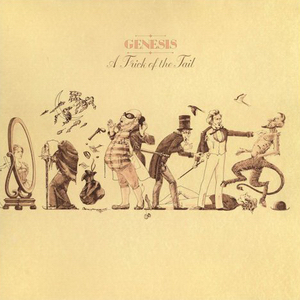
Genesis - A Trick of the Tail

I'm still working my way through some classic prog, this time going with the first Genesis album after Peter Gabriel's departure.  When I reviewed The Lamb Lies Down on Broadway two years ago, I mentioned that I struggled with the Gabriel-era stuff.  I think it's just a tad too weird for me.  I was kind of hoping that this one would be a little easier to get into, and to some extant, it was.

Right off, Phil Collins is definitely a more accessible singer.  While Gabriel was good for the outlandish stuff, this definitely has a closer-to-earth vibe in the lyrics and presentation.  Of course, the rest of the band hasn't changed much, as they pile on the layers for mood and effect, but we do get the first few inklings of a more streamlined sound, with "Squonk" and the title track feature a more poppy vibe.

While I do think I enjoyed this more than Lamb, there's still some quirky stuff in here.  Lots of dreamy vibes, occasionally broken up by a more aggressive section in the middle of the song.  I think a lot of it has to do with a greater emphasis on Banks' keyboards this time around.  I think the songs I liked best were "Entangled," with its interesting build up towards the end, and "Los Endos" being a nice mix of themes and ideas from the album.  Definitely still proggy, and proof the band had a future post-Gabriel.  I could see this one growing on me, maybe.

Freedom Call - Stairway to Fairyland

After listening to some classic rock and some classic prog, I was ready for some classic power metal, and decided to give this German band's debut album a listen.  I had a good idea of what to expect, and certainly got it: tons of uplifting choruses and melodic leads, with a flair for the fantastic.

While the band does develop their own style eventually, this early effort shows more of their influences, with large helpings of Gamma Ray and Trans-Siberian Orchestra, of all things.  The result is a kind of back-and-forth between full-on high speed tracks and more dramatic songs with symphonic flourishes.  They also do the sudden a cappella style on a later chorus that DragonForce would later incorporate into their style.  Stand outs for me were the opener "Over the Rainbow," and "Tears Falling, as well as the more dramatic closing tracks of "Holy Knight" and "Another Day."  

Like TSO, there's also a story being told, working as the concept that holds the album together.  A people of a fallen empire wander the lands, plagued by their sins and regrets, when they meet a group of guardians who tell them of a promised land maintained by a child-like holy one who was born under a holy star.  This chance at hope inspires this forsaken people to go on a quest to find the titular stairway and relief from their suffering.  It's no great tale, but is a decent enough framework for the songs, much like Gamma Ray's Land of the Free or Metallium's State of Triumph.

I don't know if I'd say that Freedom Call's debut is great album, but there is certainly solid stuff on here, and they do break it up with slower, more dramatic songs in-between all the double-kicking power metal.  It's certainly ambitious for a debut, and to their credit, they mostly pull it off.


As always, I hope everyone is staying warm and safe.  I plan on finishing this year strong, with a few more articles on the way.  I intend to get at least one more "Last Played," featuring Majestica and Iron Savior, and maybe a few more New Video based ones.   We'll see what I eventually get around to.  Until then, rock on! \m/

Wednesday, April 15, 2020

Anniversary Series - 1980!

You'd think with everything shutting down that I'd have more time for this blog, but as it seems, my time and interests have taken me away from here lately.  Of course, I'll still be posting content here when I feel like I've got something together, but things may slow down here for a while.

Meanwhile, it is the middle of April, so it's time to put together another anniversary article, this time for the classic year of 1980.  This really was a big year for rock and metal, with some massive albums that started in January and didn't stop until December!  Let's get into it!

We kick the year off with prog rock bands shifting into more mainstream styles.  Rush released Permanent Waves, the first of their sound-streamlining that would define their sound for the upcoming decade.  The song "Spirit of Radio" was their first major radio hit, and be a staple of many live shows to come.  Fellow proggers Genesis was already mid-shift into pop, as 1980 saw them release Duke, with songs "Turn It On Again" and "Misunderstanding."  Yes even teamed up with new wave stars The Buggles ("Video Killed The Radio Star") to give us Drama, a very underrated album that's only recently been given it's proper due.

This year would also be a boon for heavy metal fans, as several bands released several strong records, many of which were debuts: Scorpions released Animal Magnetism featuring "The Zoo"; Judas Priest had British Steel, galvanizing their sound with tracks like "Living After Midnight" and "Breaking the Law"; Iron Maiden had their raw and noodly self-titled debut; Black Sabbath reformed with Ronnie James Dio on the mic, giving us the titanic Heaven and Hell; Motorhead released Ace of Spades, featuring a title track full of gambling high-energy and drive; Diamond Head debuted with Lightning to the Nations, featuring the iconic "Am I Evil?" which would be famously covered by Metallica; Saxon cranked out both Wheels of Steel and Strong Arm of the Law; and Ozzy Osbourne would pull himself together for his own debut, Blizzard of Ozz, with iconic tracks like "Crazy Train," "I Don't Know," and "Mr. Crowley" proving Ozzy wasn't going away anytime soon.


One that stands out to me, though, is Def Leppard's debut On Through the Night.  It straddles the classic metal sound with the more pop-radio-friendly sound they would be known for, with some really catchy and well-written songs!  I remember giving this one a shot on a lark and was blown away with how much I liked all the songs!  It's like this band was made for the arenas!

Speaking of which, arena rock would also have a good year in 1980.  Journey's Departure provided "Any Way You Want It," Loverboy's debut exploded with "The Kid Is Hot Tonite" and "Turn Me Loose," Queen shook things up with The Game through the funky "Another One Bites the Dust," and the retro "Crazy Little Thing Called Love."

As the year goes on, we get the massive Back in Black by AC/DC, proving that even the death of the legendary Bon Scott couldn't stop this band (though Brian Johnson is no slouch in the vocals!).  I don't even need to tell you how many big tracks came from this album, as half of them are still played on classic rock radio stations around the world!

Towards the end of the year, we got Zenyatta Mondatta from The Police, with the massive hits "Don't Stand So Close To Me" and "De Do Do Do, De Da Da Da."  The Alan Parsons Project released Turn of a Friendly Card, best known for "Games People Play" and "Time."  And Queen would return to their classic blend of hard rock and pomp by providing the soundtrack to Flash Gordon, the main theme of which remains one of their most iconic compositions, and given who I'm talking about, that's saying something!

I hope you're enjoying these little trips down memory lane, even if I don't have any of these memories myself, technically.  Still, 1980 was a very strong year, and I left a lot of good albums out of the article!  As always, there's a playlist below with even more, and I've missed any, let me know!  Until then, rock on! \m/


Saturday, November 24, 2018

Last Played - November 2018

So I want to start a series of columns that are something like a list of what I've been listening to without really digging into the nitty-gritty.  Think of them as mini-reviews for albums as I'm listening to them.  There is still so much that I haven't listened to, so expect a weird mix of old and new stuff.  For now, here's what I've been listening to recently.

Roine Stolt - The Flower King

As a big Yes fan, I've always been curious about Roine Stolt ever since Jon Anderson did that collaboration with him (the enigmatic Invention of Knowledge).  Having heard that the Flower Kings were a kind of modern Yes, I figured I'd start with the album that started it all, Roine Stolt's The Flower King.

While it was an interesting listen, prog rock usually requires a few passes really get a feel for it.  However, I can tell Stolt wanted something that was more uplifting, in contrast to all the dour rock music being made at the time (the mid 90s), and it really shows throughout the album.  I liked it, but think I need more time with this one to really decide.

Metallica - ...And Justice For All

While I didn't get my hands on that luxurious remaster, I did give some of it a listen, only to not really notice any difference.  That being said, it get me in the mood to listen to it again, so I did.

In retrospect, it's a bit of a strange album.  Metallica had never done, nor has done since, something that was so complex and focused.  While not quite a concept album, ...And Justice For All really digs into social issues backed by layered riffs and rhythms.  It was a band on a mission to make a statement with their music, both sonically and lyrically.  This album had really grown on me over the years.

Gamma Ray - Sigh No More

Gamma Ray is a band I need to listen to more, as they are one of the pioneers of the power metal sound.  I decided to relisten to their sophomore effort here a few weeks ago, and it's not bad.  Kai Hansen is still rocking his Helloween chops, but the band hasn't quite solidified into something of their own.  Still, it's fun to hear a young Ralf Scheepers before he would gain his iconic Primal Fear voice later on.

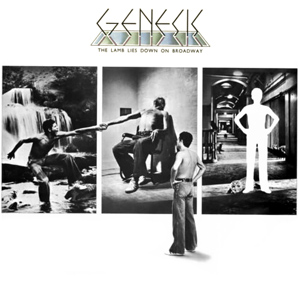
Genesis - The Lamb Lies Down on Broadway

I've been trying to learn more about classic progressive rock, and it's been interesting to hear the albums that helped make the genre what it is.  To be honest, I don't know how much I really get into classic prog Genesis.  With The Lamb Lies Down on Broadway, I have listened to every Peter Gabriel Genesis album, and while some of it was interesting, I don't know if it's really clicked with me.  As I mentioned earlier, sometimes prog takes a few listens to really wrap your head around it, but this one may take more than others.

The Lamb Lies Down on Broadway is a concept album about a Puerto-Rican man living in New York who ends up going on a bizarre psychedelic odyssey full of strange imagery and symbols.  It's not so much a narrative as it is a through-line for Gabriel's theatrical song writing as it shifts from mood to mood.  Certainly an odd and unsettling collection of music, and one that I might not get back to very soon.

Stratovarius - Intermission

More classic power metal!  This one is mostly a compilation of b-sides and covers that Stratovarius released to tide fans over during a long recording hiatus before they released Elements Part 1.  While it's very much classic in sound, and there are a few gems, it's also not their best material.  Mostly for completionists who want everything they've recorded.


Well, that's it for now.  I definitely want this to be a regular feature, so keep an eye out for future articles like this.  I'll probably have another one before November ends.