Showing posts with label Dio. Show all posts

Friday, August 15, 2025

Top 5 of 1990!!

I admit I'm kind of in catch-up mode, at this point, as I do want to make sure these Top 5 articles stay within their intended year, so I admit I didn't listen to everything I could have for 1990.  And I'm afraid this may be the case for the next few, but we'll have to see.  In any case, 1990 is a curious year, as it was one where rock and metal were in transition, like I mentioned in my Anniversary Article.  A few honorable mentions include that Blue Tears album I just reviewed, and Megadeth's Rust in Peace.  However, with my tastes, there really aren't many surprises here.  Here's my Top 5 of 1990!


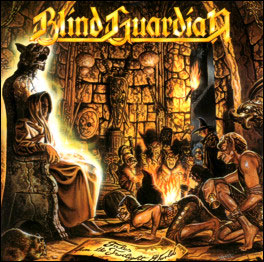
5. Blind Guardian - Tales from the Twilight World

While their first two albums are some curious speed metal, this album is the one where they start to forge their iconic power metal sound.  Great tracks like "Welcome to Dying" and "The Last Candle" help this album be a landmark in the genre's history before it would explode later in the decade.


4. Gamma Ray - Heading For Tomorrow

Upon relistening to this one, I'm discovering that I'm fond of it more than I expected.  While this may have been Kai Hansen's first album away from Helloween, his iconic riffing and song-writing is all over it, and with Ralf Scheepers on board, it makes for a delightful collection of melodic metal.


3. Dio - Lock Up the Wolves

Looking back at my recent review, you'd think I was relatively unimpressed with it, but upon considering it for this list, I can't deny Dio's consistency.  It may not have any major hits, but I'll take a solid album of B's over one with a few A's and too many D's.  


2. AC/DC - The Razors Edge

The comeback album for these Australian titans of hard rock.  It's not flashy, or particularly fresh, but the production finally captures them at their best, playing iconic, anthemic, fist-pumping tracks.  It's not perfect, but the highlights, like the unforgettable "Thunderstruck," help raise this album to #2.


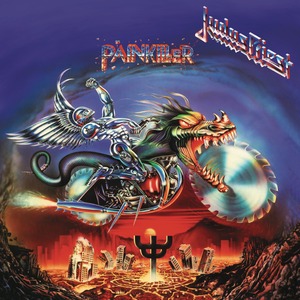
1. Judas Priest - Painkiller

However, the #1 album was not hard to pick.  It's Judas Priest doing what they do best: rocking faces off and rolling over listeners with powerful, catchy, excellently-played heavy metal.  After a few lackluster releases in the late 80s, the band came back roaring with their new drummer Scott Travis!  While this era wouldn't last very long, it definitely made an impression to anyone that listened to it, ensuring that classic metal can be as timeless as anything else.

Friday, August 8, 2025

Retro Reviews - August 2025!

I admit the schedule I had planned for this year has been falling apart as this summer has been rough for me.  For now, I'm mainly going to get these articles out just when they're done.  At the moment, I'm focusing on 1990 for a Top 5 article, and as a consequence, listened to some stuff that I hadn't heard before now.  Featuring both hard rock and heavy metal, this trio of albums turned out to be pretty decent!

Dio - Lock Up the Wolves

While Dream Evil was by no means a bad album, it wasn't a successful as earlier efforts.  This led to quite the shake up in the lineup.  First, Dio brought in Rowan Robertson on guitars, and the two worked together on the new songs.  Jimmy Bain and Vinny Appice would contribute to the writing, but they left before the band got into the studio, replaced with Teddy Cook and Simon Wright, respectively.  Keyboardist Jens Johansson also joined, coming over from Malmsteen's band.  With all these new pieces, Dio crafts his new set of tales, this time with much more atmosphere.

Things start off well with "Wild One," an uptempo speedster (for Dio, anyway), but then the album settles into a slower pace, even doomy at times, as if Dio wanted to reach back to his proggier 70s Rainbow days.  "Between Two Hearts" in particular focuses on a rather sad love story, and the title track, at a stomping eight minutes, provides a lot of mood, much like Dio's work in Sabbath.  There's also a stronger bluesy element, especially on "Evil on Queen Street," with its menacing 6/8 riff.  The album picks up again with "Walk on Water," then settles into cruise control for the rest.  While these slower songs aren't necessarily bad, their long runtimes make a long album feel longer.

I will say that Robertson has some great solos, though, and the rest of the band does well, with Dio still charismatically wailing away as always.  As an album, I'm not sure if I'd say it's an improvement so much as Dio and company flexing some different muscles to provide another slab of epic metal, one that's easy to leave on in the background and headbang away.  While this lineup would not stick around after the tour, their album represents one last hurrah for the 80s style metal that Dio helped define.

AC/DC - The Razors Edge

After truckin' on through the 80s with some mediocre albums, the band carried on, building on the strength of their live touring.  With new drummer Chris Slade, the Young brothers took control of the songwriting.  This time, they've injected a bit more energy, making for quite the capstone for their growing comeback.

"Thunderstruck" starts the album and has been one of their best songs for a good long time.  From the start with the rapid-fire riff, all the way through to its anthemic end, it's peak AC/DC, without a doubt.  The energy sticks around for "Fire Your Guns," "Rock Your Heart Out," and "Are You Ready."  Meanwhile, "Moneytalks" has a catchy, lilting melody and the title track has some very peculiar riffing and chord progressions that got my attention.  The album loses some of its drive by the middle, content to cruise to the end, but none of it is a dealbreaker, largely because of the great production, courtesy of Bruce Fairbairn.  After all the muddy stuff of their last few albums, this clearly is an improvement, making the songs feel big, no matter how simple they are.

Of course, much of what I've said really are nitpicks.  AC/DC remain largely consistent as ever, and my thoughts on any of their albums seem to reflect the band's energy and drive on each one.  With The Razors Edge, the band is more alive, and while it might be a tad too long, there are some good headbangers and solid energy through its runtime.  It's certainly hard to beat this band when they're on top of their game!

Blue Tears - Blue Tears

While Dio was forging ahead and AC/DC was making their comeback, other bands were just getting started, only to be dropped on their heads due to shifting tides and bad timing.  Blue Tears is one such band.  Despite kicking around through most of the 80s, they didn't get picked up by a label until the end of the decade, with this debut album coming out in 1990, just as glam metal was starting to wear out its welcome.  It's a bit of a shame, as this is some pretty solid stuff.

By this point, most glam metal was getting some very shiny production, and this album is no different.  The guitars are crunchy, and the gated reverb makes that snare drum hit like thunder, and most importantly, the vocal harmonies are tight and lush.  Their inclusion of some synths in the back give the band an AOR vibe, not unlike Night Ranger.  Of course, ballads were big winners by this point, and they provide more than a few, though they're not bad.  "Blue Tears" does get a bit cheesy, but otherwise hits all the right marks.  As for the rockers, the album starts with their iconic track "Rockin' with the Radio," and their other single "Innocent Kiss" has a bit of a cinematic tone.  Other standouts include "Crush," with its massive riff, and the energetic closer "Thunder in the Night."

Naturally, comparisons to other glam metal bands like Europe, Poison, and Def Leppard come to mind, but honestly, this album is about as good as any of theirs.  It's not perfect, as a song or two do drag the album down, but otherwise, I found this to be pretty enjoyable.  Unfortunately, when the band started recording their second album, their label dropped them in the wake of the grunge and alternative rock explosion.  Years later, the band would release those tracks (and many others) in some compilations, and later a reunion album (sorta), and I may have to check them out at some point.  Despite some good, catchy tracks, Blue Tears just ended up getting lost in the cracks.

Monday, June 30, 2025

Top 5 of 1985!!

Well, this took a lot longer than it should have!  Turns out that there's a lot of rock and metal for this year, most of which was decent, but not amazing, so it took quite a few listens to figure out where to rank things.  While I do have an obvious winner (or two; I'll explain), the rest of the list was not easy, but eventually I decided I couldn't listen to everything and had to cut things off and choose.  I'm not as confident in this list as I am about the previous ones, but I have to move on.  So, for now anyway, here is my Top 5 for this quirky year.


5. Dio - Sacred Heart

It was tough to decide fifth place, as I was considering everything from Ratt and Accept, to Rush, but Dio's grandiosity won out.  It's not as strong as his first two solo efforts, as the band was starting to fall apart at this time, but you wouldn't really know it from the music.  Perhaps cheesy at times, but still a good amount of fun.


4. Asia - Astra

Once again, it's a drop off compared to this band's first two, as the inclusion of Mandy Mayer of Krokus pushed the band in more of an AOR style, but I think they make it work.  It's not as rich or proggy as the earlier albums, but there's enough of the classic Asia sound for me to put it up here.


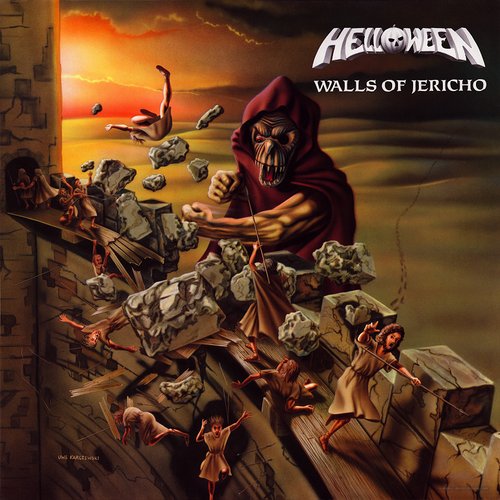
3. Helloween - Walls of Jericho

As far as I'm concerned, European power metal started here.  Yes, it's a very rough album, mainly in classic speed metal territory, but careful listening shows the first steps of epicness, between the neo-classical riffing and Kai Hansen's wailing vocals.  While the band would definitely do better from here, picking up Michael Kiske, but I still find plenty of this iconic band's charm on their debut.


2. Dire Straits - Brothers in Arms

If there was an album that really defined 1985, it's this one.  Pushing their roots rock sound toward more commerciality, only to land on MTV's most sarcastic hit with "Money for Nothing," the band was thrown to the forefront of music listeners around the world.  Fortunately, the rest of the album is solid as well, with the somber title track, the easy-going "So Far Away," and my favorite from the album, the nostalgic "Walk of Life."  While the band had succeeded before, this album made them superstars.


1. The Alan Parsons Project - Vulture Culture/Stereotomy

Okay, so maybe I'm cheating here, putting two albums at number 1, but when they're both by one of my favorite bands, I was left with a hard choice?  Do let them take up two slots on a top 5?  Do I drop one in favor of the other?  Or maybe I just insist that it's my list and so I can make my own rules!  Seriously, though, this is some solid songwriting from a talented core of people.  The first carries on the formula of the previous two albums while the second sees them experimenting again a little.  While I do think Vulture Culture is the better of the two, Stereotomy is no slouch and has plenty of catchy melodic rock to enjoy.  Again, nostalgia plays a major role in putting these two albums at number 1, as I grew up on this band, but I can't think of any other album that can overtake either of these two for 1985!

Thursday, October 10, 2024

Anniversary Series - 2009!!

I know I'm not posting these Anniversary Articles very consistently this year, but there were some pretty interesting albums I wanted to go over with this one, so it took some time to pull these together.  As always, there's more in the playlist below, so check that out, but for now, reviews!

Heaven and Hell - The Devil You Know

I feel like the story behind this album is better known than the album itself.  The Dio-era lineup of Black Sabbath came back together in the mid-2000s for a compilation record that included three new songs (which are decent).  After touring together afterwards, they decided to release a new album of songs under the name Heaven & Hell, after the first Dio-led album.  I had heard it was to avoid complications with Sharon Osbourne, but other sources make it seem like Iommi's decision to avoid brand confusion.  In any case, this is, essentially, the fourth Dio Sabbath album, and it's darker and doomier than the other three.

Once again, there's significant a boost in production, making the songs feel thicker than their last album.  The song-writing is also a bit more adventurous, as the band focuses more on a classic sense of darkness from the early Ozzy years (perhaps feeling more relevant with the reunions of the classic lineup before all this).  They're definitely trying some things, but sometimes, it feels like the songs are slow for their own sake or seem to be not as well organized.  Of course, the lineup's performance remains as consistent as before, though Dio does sound a little weaker (understandable, given the circumstances) but he still sings his heart ou,t and Iommi's riffs are as crunchy and heavy as ever.  It's the band you know, but with more experience and heft.

It's a solid album, but not all of the songs work for me.  "Bible Black" is certainly a highlight, making me think of the classic Dio era, and both "Follow the Tears" and "Breaking Into Heaven" are great slabs of doom.  But then you have songs like "Fear," where the chorus is just weird, "Double the Pain," which doesn't quite come together, or "Rock and Roll Angel" which just drags along.  I don't think it's as good as their classic 80s albums, but it serves as a fine conclusion to this part of Sabbath's legacy.

Astra - The Weirding

Well, after enjoying Birth's debut album so much that it ended up in my Top 5 for that year, I figured it would be worth my time to dig into what some of these guys were doing before and listen to Astra's debut for this article.  Going with a very retro sound that it nearly hurts, they blend elements of psychedelic and progressive rock in ways that feel appropriate and adventurous without feeling derivative.

If I could describe their sound, I'd say they're close to the mellow side of King Crimson and Caravan, but with the occasional Black Sabbath riff thrown in, and more layers of keyboards.  The performances are solid, as they focus more on exploratory melodies than technical musicianship, but there is so much reverb on everything, I wondered if I wasn't listening to some third-generation re-recording of a radio broadcast.  However, the band is much more interested in creating a lot of atmosphere than focusing on any sense of orchestral arrangement like most other prog bands, so the reverb doesn't really ruin the experience, featuring plenty of nice melodies all over the album.  The wall of Mellotrons might be a bit much at times, but those who like that classic sound will find plenty to love here.  As a whole, it feels like it was made in mind for those looking for an album to just vibe with while doing something (or nothing) else.

The other issue is that the album is very long, nearly 80 minutes, with a lot of repetitive sections.  If this kind of mood-driven space rock is not your thing, your time is better spent elsewhere.  However, I was able to groove with the songs pretty well, sinking into their sound by the end.  I ended up liking the title track with its space jams, "Ouroboros," which made me think of Tales of Topographic Oceans at times, and the closer "Beyond to Slight the Maze" which felt more Pink Floyd.  While I wish the reverb wasn't quite so strong so that I could better hear the performances, I found this album to be a pretty satisfying experience.  

Herman Frank - Loyal to None

Despite being a mainstay in German metal since the 80s, Herman Frank's first solo album didn't come out until 2009.  I came across him a few years ago, being blown away by his fourth album, but feeling that his fifth (and latest) was a little lackluster.  Now this article gives me the chance to go back and see how things started for his solo efforts.  Unsurprisingly, it's another chunk of traditional metal, but not without issues.

The first major difference is Jioti Parcharidis on vocals, who I assume Herman Frank brought over from Victory.  He has a rougher voice than Rick Altzi (who takes over after this album), but he's still a good choice for this style of metal.  However, the production is a problem.  I'm not quite sure what's wrong, but Jioti feels buried at times, and the guitars don't feel as punchy as they should, sometimes sounding thin or muddy.  The song lyrics are a bit strange as well.  A few songs are about epic battles while others are fun-times 80s rockin'.  "Hero" feels like some kind of political statement for which I don't have the context, and "Father Buries Son" is weirdly upbeat for its somber topic.  While the music is pretty consistent, the lyrics don't quite match the songs the way you'd think.

Otherwise, it's Herman doing what he does best: providing plenty of chunky riffs and tight solos, with the rhythm section giving him a solid platform to work from.  The album starts well enough with "Moon II" and "7 Stars" being good energetic heavy/power metal songs, and "Down to the Valley" has a bit of an Iron Maiden feel.  However, the production and the weird lyrics bring this down for me.  Despite the experience on board for the songs, this album feels rough and under-cooked, but if you don't mind that, there's plenty of 80s-style metal to enjoy.


Well, I suppose that will do for 2009.  As always, let me know what you think in the comments.  In the meantime, I should get to work on the next one if I want time to cover all that I want to!  Until then, rock on!  \m/

Saturday, April 22, 2023

Anniversary Series - 1983!

After doing that massive collection of reviews for albums from 1983, I'm more than prepared for this Anniversary Article.  As I mentioned in that other article, 1983 was a pretty exciting year for rock and metal, and going over this year, it's hard to decide to what to keep and what to leave out!  Let's get into it.

Right off, we have some pretty massive releases from some great melodic rock bands.  Journey push their Frontiers with massive hits like "Separate Ways (Worlds Apart)" and "Faithfully."  Styx released Kilroy Was Here with the ever-catchy "Mr. Roboto" and the great ballad "Don't Let It End."  Blues-rock masters ZZ Top put out Eliminator, featuring a lot of classic rock staples like "Give Me All Your Lovin'," "Got Me Under Pressure," "Sharped Dressed Man," and of course, "TV Dinners."  (Well, okay, that last one is just a personal favorite.)

Heavy metal was just starting to break into the mainstream, starting with Def Leppard's Pyromania, with tracks like "Photograph" and "Rock of Ages" getting tons of airplay on MTV.  We also saw Mötley Crüe Shout at the Devil while displaying "Looks that Kill," but it would Quiet Riot's Metal Health that would be the first metal album to reach #1 on the Billboard 200, soaring with their cover of Slade's "Cum On Feel the Noize," beating out Michael Jackson's Thriller.

Great metal albums would continue to come out as the year went on.  Iron Maiden followed up their titanic Number of the Beast with Piece of Mind and "The Trooper."  Dio would start his own band with Holy Diver and sing about being a "Rainbow in the Dark."  Anvil and Manowar would carry on the US side of traditional metal with Forged in Fire and Into Glory Ride, respectively.  However, Metallica would provide the shot in the arm for the underground scene with their debut Kill'em All, and kickstarting thrash metal the world over.

Progressive bands would find themselves in a strange position.  Many of the old guard were suddenly finding pop success.  Genesis's self-titled album provided "That's All" and "Mama" as big radio hits, prog supergroup Asia would struggle with Alpha, despite being a very solid album, and Yes would reform around new guitarist Trevor Rabin for the massive hit "Owner of a Lonely Heart" on 90125.  However, with the review I gave last month, newcomers like Marillion and IQ were putting a new spin on what prog could sound like.

Getting to the end of the year, we have some more excellent metal to round us out.  Night Ranger's debut album Midnight Madness was big, with "(You Can Still) Rock in America," "When You Close Your Eyes," and the massive power balled "Sister Christian."  Ozzy regrouped after the disastrous death of Randy Rhoads by finding Jake E. Lee and releasing Bark at the Moon, and Accept would find international success with Balls to the Wall.  

Whew!  That was quite a lot, and there's plenty more in the playlist below, so be sure to check out what's down there.  I know that every year generally has some solid stuff, but 1983 was clearly a great year for rock and metal.  If there was anything I missed, let me know in the comments.  

Sunday, May 15, 2022

Anniversary Series - 1987!

Moving right along with these Anniversary articles it's time for 1987!  To be honest, this year is pretty dominated by glam metal, but that's not a bad thing, as it hadn't quite worn out its welcome yet.  Sure, there were rumblings in the underground, with more extreme metal and college rock getting momentum, but those are outside the scope of this blog.  For now, let's focus on the melodic rock and metal of the year!

Like I said, it was a big year for glam metal.  Whitesnake released their massive self-titled album, featuring a re-recording of "Here I Go Again" and the big ballad "Is This Love?"  Mötley Crüe took things to the "Wild Side" with Girls, Girls, Girls, Great White put out Once Bitten, with the big hit "Rock Me," Dokken came Back for the Attack, and Guns 'n' Roses had their historic debut album.  Would classic rock be the same without "Welcome to the Jungle" and "Sweet Child o' Mine"?

However, in my opinion, the biggest album in the pop metal world is Def Leppard's Hysteria.  After having such a rough hiatus, with their drummer losing an arm, they came back with a titanic record that featured seven hit singles, and even some of the deeper tracks like "Run Riot" and "Excitable" are solid.  The story goes that the album wasn't as big at first, but when "Pour Some Sugar On Me" hit the radio waves, it became one of the best selling albums of the decade, and when I listen to it, I can't deny that it deserves it.  Just massive stadium-ready hooks from front-to-back.

Of course, the decade wasn't all metal.  Rock still had a presence here and there.  The Alan Parsons Project would release their last album, Gaudi, early in this year.  One would expect a concept album about a Spanish architect, but it's a solid release.  Other former prog rockers would put out some decent melodic rock as well.  Rush had the synth-heavy Hold Your Fire, Yes tried for, but largely failed to get big success with Big Generator, and Pink Floyd had their peculiar comeback with A Momentary Lapse of Reason, which as become one of my favorites of theirs in recent years.  Marillion also had a decent year with Clutching at Straws, a concept album about a man who missed out on success and brags about it while drinking in a bar.

Speaking of progressive music, Savatage would finally ditch any attempt at MTV success and rediscover themselves with Hall of the Mountain King, which saw them teaming up with Paul O'Neill and starting their shift into the symphonic, concept-driven metal that would take them to Trans-Siberian Orchestra in the 90s.  Other notable metal release include Manowar's Fighting the World, Dio's Dream Evil, doom metal legends Candlemass's Nightfall, and Running Wild finally finding success with the piratey Under Jolly Roger. 

Finally, I want to bring up Helloween's massive Keeper of the Seven Keys Part I.  While the band had released an album before this one, I feel like Keeper is when they finally found their sound, and as a consequence, established the sound of power metal for many bands to follow.  Between the upbeat "I'm Alive" and the epic "Halloween," it was really the first time melodic leads and aggressive riffing really came together, establishing the genre that wouldn't quite take off until a decade later.

That wraps up this year, clearly one for throwing up fists for some great rock and metal.  As always, my playlist is below with even more great tracks, and if you think I've missed something, let me know in the comments.  I hope you're enjoying these articles as much as I enjoy making them!  Until then, rock on! \m/

Saturday, April 23, 2022

Last Played - April 2022!

I'm finally getting around to listening to some new stuff!  Well, new to me anyway.  Lots of catching up on classic bands this time, but there's a lot of good stuff to go over.  Here's what I've been listening to lately!!

Anvil - Metal On Metal

Last year, I decided to check out Anvil's debut album, only to find it pretty underwhelming and immature.  There were a few decent parts, but otherwise, I was not impressed.  So I was glad to hear how much of an improvement their next album was, as they push further into heavy metal territory.

Right off the bat, with the opening title track, you can tell they've picked up a lot of heft.  While they did have a bit of the NWOBHM rockin' before, on this album there's much stronger Judas Priest and Accept vibes.  The riffs are chunkier, and the leads are quite noodly, as they find little gaps to fill in here and there.  "Mothra" and "Scenary" continue the heavy metal assault, with Lips sounding a lot like Rob Halford.  "March of the Crabs" stands out as well, as it's a noodly instrumental reminiscent of early Iron Maiden, and there are some more Maiden-y riffs on "Tease Me, Please Me."  Things even get a bit thrashy on the tracks "Jackhammer" and "666."  Everyone just sounds like they really stepped up their game for this album.

Unfortunately, the sleazy lyrics make return on a handful of songs.  However, they aren't quite as amateur as they were on the last album, as they wouldn't be out of place on some glam metal albums that would dominate the decade, so maybe they were ahead of their time.  Still, this album is a major improvement after Hard 'n' Heavy, with the metal riffing and bigger attitude across the board.

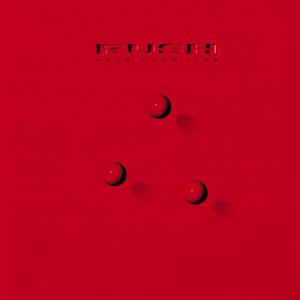
Rush - Hold Your Fire

As I said in my review of Power Windows over two years ago, Rush is a band that I think I like, but I haven't really spent a lot of time with them, especially their later material.  Picking this up where I left off, Hold Your Fire shows Rush at their most 80s, for better and worse.

This is definitely an album that dates itself.  The production definitely sounds like 1987 (making me think of Yes's Big Generator from the same year, actually).  However, once you get past this, the music remains some pretty solid, synth-heavy melodic rock.  Geddy Lee gets a lot of layers of lushness out of his keyboards, givng the songs an expansive feel to match their big ideas.  He doesn't overuse any particular sound, often shifting from big symphonic synth pads to small, noddly little pieces.

Of course, we also get Lee's melodic basslines, Lifeson's unique (if jangly) guitar work, and Peart's iconic drum fills.  I don't know if any of the tracks really stand out, as they are all generally pretty solid, though I do feel like the band has definitely taken a deeper step into AOR territory.  However, the occasional proggy bit and Peart's lyrics really help to elevate this album from getting too fluffy and shallow.

I like this album more than Power Windows, as this one feels more optimistic and uplifting, over all.  Once again, I think this album could grow on me if I listened to it more.  It really is impressive how these guys seem to sound so iconic even deep within the 80s rock scene.  While it certainly is a product of its time, Rush remain consistent as ever.

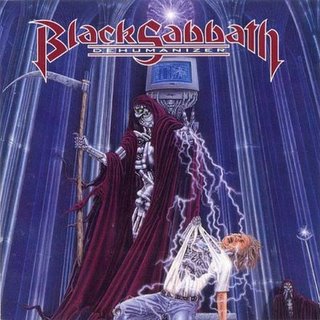
Black Sabbath - Dehumanizer

So after doing Heaven and Hell and The Mob Rules, I wasn't sure if I wanted to do the rest of the 80s for Sabbath.  I had heard that it gets pretty messy and mediocre.  So I thought I'd just jump right ahead to 1992 and the return of the Dio lineup.  While it was a short-lived reunion, the result is some pretty decent heavy metal.

It's interesting comparing this one to the two previous ones, as I feel like the decade difference in time has allowed for some subtle changes.  Not only is the production even shinier, I could start to hear the influences of the last decade seeping in a little as well.  Of course, Dio brings his stamp onto things, with songs sounding like much of the output from his solo career, especially "TV Crims" and "Master of Insanity."  But when they do the darker songs like "Computer God, "After All (The Dead)," and "Buried Alive," it sounds like one of those slower thrash metal songs, like the opening of "South of Heaven" by Slayer.  However, there are a few poppy songs as well, with "Sins of the Father" and "I" making me think of Ozzy's solo stuff, of all things.

Despite all these interesting influences, I can't shake the feeling that it's a bit of a safe album.  While it's certainly not bad, as I did quite like "After All (The Dead), "TV Crimes", and "I," I don't know if it really has any surprises, or any thing that the other two Dio Sabbath albums didn't do better.  It's a solid album, as everyone performs well and Iommi does some decent solos, though, Certainly a big comeback for the band and their fans, but I do wonder if it was a little too focused on trying to recapture some old magic.

Hammer King - Kingdom of the Hammer King

After enjoying their self-titled album last year, I thought I would dig into their back catalog and check out Hammer King's debut album.  While I expected more of their heavy/power metal sound, this album definitely shows a band that hasn't quite matured, but still establishes a decent foundation for them to build on.

The main thing that stands out is just how generic it all is.  This is about as meat-and-potatoes as a heavy/power metal album can be!  The lyrics in particular are quite short and simple, leaning heavily into their inspirations of Manowar and HammerFall.  However, they end up turning the simplicity into a strength, helping the songs feel more catchy and fun to sing along with.  The songwriting is also pretty straight-forward and formulaic, but there is something to be said for focusing on execution, resulting plenty of mid-tempo chugging, and some very nice melodic solos.

However, it really is the same tone and vibe all the way through.  While "Blood Angels" does get a little darker and heavier, this is some pretty cookie-cutter heavy/power metal.  There isn't much to criticize, though, as it's all done pretty well.  I particularly enjoyed the call-and-response elements on "Aderlass," "We Are the Hammer" kicks it up a notch, and "Figure in the Black" is a curious ode to James Bond, of all things.  While it's not as good as their self-titled album, I can see this album as a good starting point for what they will become.

Tuesday, November 9, 2021

Last Played - November 2021!

After doing some current releases, I decided I wanted to kick back and check out some older albums.  This one is all 80s, starting with some new-wave-y prog rock and following it up with a pair of epic metal releases.  Here's what I've been checking out lately!

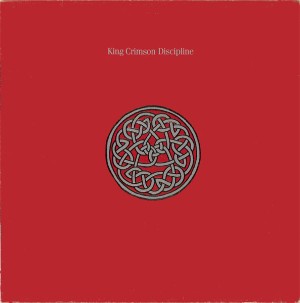
King Crimson - Discipline

After 7 years of silence, Robert Fripp starting rebuilding his music career.  At first, he worked within the growing new wave space of the early 80s, then grabbed drummer Bill Bruford again for a new project that was going to be called Discipline.  They brought in Tony Levin for bass and Andrew Belew of the Talking Heads to sing, write lyrics, and play guitar along with Fripp.  The result is an interesting fusion of ideas, bringing over the 70s organized chaos the band was known for and meshing it with the more streamlined, new wave sound, making for quite a significant shift for the band.

I have to admit, this is still a pretty challenging listen, though.  I did like the complex melodies of tracks like "Frame By Frame" and "Discipline."  The way the guitars play off of each other is very fascinating.  Fripp in particular really pushes his math rock muscles with some complicated fretwork, and Belew backs him up, either providing more rhythm, or getting some wild animal noises from his guitar.  "Sheltering Sky" has a solid atmosphere, letting the solos just drift over it.  However, there are times with the band gets back to the 70s jam-heavy style, particularly on "Indiscipline" and "Elephant Talk", ensuring that this is still Fripp and company.  "Matte Kusadai" tries to be this proggy ballad, but doesn't really go anywhere, and the use of a frantic recording from Belew on "Thela Hun Ginjeet" makes the song hard to appreciate.  Levin does give the piece a decent funky groove, though.

This album is definitely much more accessible than most anything they have done before.  While there are plenty of proggy noodles and curious time signature shenanigans here and there, this album has a much stronger focus on organized song-writing and more repetitive and trancy segments.  Between the math rock and ambient side, we get an album that shows that prog rock is not a dinosaur, but has potential to move forward in its own way.  That being said, it's still a bit of a struggle for me to really appreciate overall, but I can't learn if I don't try.

Cirith Ungol - King of the Dead

After doing this band's first album earlier this year, I thought I'd check out their critically acclaimed second album to see if they had improved.  Right off, this one is much more consistent in quality and style, really settling into a unique metal sound.  I know other folks have often called this album a staple of early power or doom metal, but honestly, I hear a lot of 70s influences.  I know I mentioned early Rush in regards to the last album, and that tone is still there, but this one has some added power like classic Judas Priest, such as Sad Wings of Destiny or Sin After Sin.  However, it does benefit from a heftier 80s production, letting these songs sound pretty big and crunchy.

Tim Baker continues his iconic, gritty wailing, giving the songs a lot of melodrama.  He has a pretty epic scream towards the end of "King of the Dead" that stood out to me.  "Finger of Scorn" had an interesting doomy vibe, with the acoustic sections, big riffs, and a punchy chorus.  "Cirith Ungol" also brings the doom, with a long outro.  I also liked "Master of the Pit," as it had a proggier vibe, starting and ending with long, noodly guitar solos.  In fact, there's a lot of great solo work on this album, overall.  The Bach cover is interesting, as they're using some kind of pedal to make their guitars sound a bit like an organ.

I don't know if I was completely enthralled by what I hear.  The album has a bit of a lackluster start, and takes a while to really get going.  Once it does, though, it settles into a nice, mid-tempo groove with a lot of atmosphere and great guitar work. This is definitely an improvement over their first, and certainly has some interesting, epic moments.

Dio - Dream Evil

I'm surprised I haven't talked more about Dio's solo career, but it's another one I've been slowly working my way through.  At this point, listening to any of Dio's stuff feels like it's more about the mystique  of the man than the music itself, though he's certainly been responsible for many great songs.  Dream Evil feels like a general continuation of what he had built with the previous three albums, with maybe an extra layer of polish.

At this point, the group brought in Craig Goldy on guitars and Claude Schnell on keyboards.  While I don't know if I feel like the guitars are doing anything other than just being very 80s, the keyboards definitely feel stronger on this album, providing a lot of ambience and atmosphere that I don't exactly recall on the other albums.  While synths aren't anything new for Dio, their prevalence on this album does kick it up a notch in the epicness department.  Another thing I noticed this time was how each song's chorus is just basically repeating the title a lot.  Again, not a new thing for Dio ("Rainbow in the Dark" comes to mind), but the fact that it happened on every track made me wonder if things weren't getting a little too formulaic. If there is a shift from previous albums, I think there's a greater emphasis on anthemic tones, designed for stadiums.  I can easily see folks clapping and singing along to these quite easily.

That's not to say this is bad album, by any means.  This is definitely stronger overall than their last one, Sacred Heart.  "Dream Evil" is a very solid rocker, and "All the Fools Sailed Away" feels like a "Children of the Sea 2.0" and mostly works.  I particularly liked the proggy shift about halfway through, topped with some nice solos.  The rest are a bit of a mixed bag, but are mostly decent rock and metal numbers to support Dio's trademark vocals.  


I admit things have gotten a little slow around here, lately.  There are still a handful of 2021 releases I want to try and get to before the end of the year, and I've got one more anniversary article coming up that I need to decide what I'm doing with, so I'll probably have at least two more articles this month, but I'm thinking about focusing less on the videos and more on the reviews.  While I do enjoy writing all these different articles, I certainly don't want them to become more work than they're worth.  Hopefully, I can find a good balance going forward.  Until then, rock on!  \m/

Saturday, July 20, 2019

Last Played - July 2019!

Rock and roll never sleeps, but I've been feeling more exhausted than ever lately (maybe it's the heat).  Because of that, I've decided to dig deep into the history of rock to try and relax and cool off.  Let's see what I've been listening to this month!

Pink Floyd - Obscured by Clouds

When I’m feeling exhausted, Pink Floyd can be the best band to listen to in the world.  Their mix of blues, ambiance, and rock just seems to provide a lot of relief from the weariness of the day.  While some albums are better about it than others, I decided to listen to the often overlooked Obscured by Clouds, and it was the right album to listen to that day.


Being a hodgepodge of songs made for a movie soundtrack, it doesn’t have the thematic vibe of their better known albums, but it shows how, even when they’re just throwing stuff together, they still know how to set an iconic tone.  Set between the bluesy Meddle and the dramatic Dark Side of the Moon, there are some very nice pieces on here that wouldn’t be out of place on either, honestly.  


Of course, there are some stand out tracks.  “The Gold It’s In The…” is very different, almost coming across as a CCR or Guess Who style blues rocker (and not a bad one, in my opinion).  And there’s “What’s … Uh The Deal?”, a great acoustic ballad later made famous by its inclusion on David Gilmour’s later solo tours.  In fact, Gilmour has a lot of good (if short) solos on this album.  However, it’s the instrumental sections that really stood out to me this time around, notably the opening title track and “Mudmen.”


To be sure, this isn’t Pink Floyd at their best, but to dismiss this album as mere filler would be a mistake, in my opinion.  If you’re in the mood to just throw on a solid, ambient rock album and not worry about following a thread from track to track, Obscured by Clouds fills that need quite well.

Rainbow - Down to Earth

I’m pretty familiar with Rainbow’s classic three albums with Ronnie James Dio, but I hadn’t really bothered with their later stuff, that is until I decided to tune in to Dee Snider’s House of Hair show.  After he played a few tracks from this album, I decided I should give it a shot.  Right off, it’s definitely a change of pace from Dio’s sword-and-sorcery and mysticism.  Gone are the long, proggy epics, and instead we get a handful radio-friendly rockers with a much more straight-forward approach.  

That doesn’t necessarily mean it’s bad, but it does make comparisons to the earlier stuff somewhat useless.  Comparing it to the likes of Styx’s Grand Illusion or Kansas’s Point of Know Return would probably serve it better.  However, even in the company of those albums, a lot of this stuff sounds very bog-standard late-70s arena rock. The production also seems a bit muddy, like they were trying for a “wall of sound” effect, but the results sound like everything is just smushed together. 

Still, there are some songs worth listening to.  Blackmore brings his bouncy riffs and solid solos, while new singer Graham Bonnet has his moments.  Singles “All Night Long” and “Since You Been Gone” do have their charm, and “Eyes of the World” still has shades of the Dio-era bigness.  Songs like “Makin’ Love” and “Love’s No Friend” have more of an old-school Deep Purple vibe, which let Blackmore’s bluesy-ness really hang out.  “Lost in Hollywood” makes for a pretty solid closer, as well.

So, overall, not a bad album.  Perhaps not the chart-breaking success they were going for with the transition from 70s metal to 80s AOR, but a decent attempt at the sound while still retaining a few of the elements that has made Blackmore one of the most celebrated guitarists in the world.

Black Sabbath - Heaven and Hell

Speaking of Dio, can you believe that I hadn’t listened to his iconic first Black Sabbath album until this month?  While I was somewhat familiar with Sabbath’s Ozzy period, as well as early Rainbow and Dio’s later solo career, I had overlooked this nexus of two great names for far too long, so I decided to fix that, and throw it on. 

Up front, this definitely has Dio’s stamp all over it.  The epic melodic lines, the mythological references, the soaring vocals over crunchy powerful riffs; it really does feel like a prototype of Dio’s Holy Diver, and it sounds amazing.  Dio may have been many things, but he certainly knew how to pen a rock song and give it life like few others can.

That’s not to say he overwhelms the album.  Tony Iommi is definitely here, bringing his solid, thick chords and riffs.  In fact, compared to the likes of Technical Ecstasy and Never Say Die, both of which sounded pretty thin, the production on Heaven and Hell is very full and powerful, so I can see how many would see this as a major step up for the band.

I do think the first side (with “Neon Knights,” “Children of the Sea,” and the title track) is definitely stronger than the second, though “Die Young” has a lot of dynamic range.  It also seems to have a bit of a glossy sound, not unlike Judas Priest’s British Steel, as Sabbath rides the NWOBHM wave of tighter, faster, slicker metal.  Overall, very solid, and I feel bad for having missed it this whole time.

AC/DC - Dirty Deeds Done Dirt Cheap

Wrapping this up with another classic, it’s hard to go wrong with AC/DC.  While some of their albums might have more going for them than others, every single one is a testament to a band that just wanted to play fun, stripped-down rock and roll!

Just to be clear, I’m listening to the international version, so this one has “Love at First Feel” and “Rocker” instead of "R.I.P. (Rock in Peace)" and “Jailbreak,” as well as the shorter variations of the songs it shares with the Australian version.

Not that it matters all that much, really.  Like I mentioned earlier, you know what to expect with an AC/DC album, and this one certainly delivers.  While the title track may be one of the best known songs in their catalog (and for good reason!), there are other solid songs like "Rocker" and “Problem Child” to fill things out, and "Ride On" provides a unique change of pace, being a slow-burning blues rocker.  Of course, you also get a few songs on the raunchier side, with the aforementioned “Love at First Feel” and the notorious “Big Balls,” but they’re performed with such tongue-in-cheek, it’s hard to really take them seriously.  

In the end, it's probably pointless to review an AC/DC album.  Their sound is so familiar and recognizable, you probably already know how you feel about them, and any given album won't change that for you.  For me, they're albums that let me kick back and not think for a while, and sometimes, in this heat, it's all I want.


The more I listen to rock music, the more staggering it becomes how much of it is out there, and how much of it I want to listen to.  Still, the journey certainly is a blast, whether I'm checking out the new stuff or digging up classics.

I'm planning on doing one more article before this month ends, so keep an eye out for that.  Until then, rock on!  \m/