Showing posts with label Marillion. Show all posts

Friday, May 16, 2025

Retro Reviews - 1985 Edition!

Well, I have to admit I'm having a pretty slow month.  Hayfever hit pretty hard, and I'm realizing that I have a lot of gaps in my 1985 list, so I'm going to have plenty of retro review articles for this year as I figure out my Top 5 (which might be delayed as a consequence).  I decided to start things off by getting into the neo-prog scene, so here are three reviews of albums that have some interesting takes on what 80s prog rock was doing.

Pendragon - The Jewel

I admit I gave this a shot purely on the notion check out a new band from the neo-prog era.  I saw their name on a list, saw that their debut was in 1985, and gave it a listen to see if it had a chance at being in my Top 5 article.  While they toured with Marillion quite a bit at this time, they definitely sound more like Asia or Drama-era Yes, with some 80s Rush-style AOR here and there.

The album starts with "Higher Circles," which honestly feels like a single, with it's typical structure and bouncy rhythms.  It's not bad, but certainly not indicative of the rest of the album with it's more complex prog rock ideas.  The next track in particular, "The Pleasure of Hope," is just under four minutes long but has some curious energy shifts.  "Leviathan" is where I think the band finally stretches out and finds their strengths, and "Circus" really lets the synths build quite well.  While he would only be on this album, keyboardist Rick Carter gives the band a good, atmospheric wall of sound, and trades solos quite well with Nick Barrett (the guitarist and singer).  Speaking of which, I think Nick sounds a lot like Greg Lake, his unique English accent piercing through the songs.  The album closes with its longest song "The Black Knight," at nearly ten minutes long.  Here, the band leans into more somber, Pink Floyd style, and shows a lot of their unique dynamics and thoughtful melodies.

Going in rather blind, I was pleasantly surprised by what I heard.  While they were (unsurprisingly) very 80s, they don't feel stuck in one style or another, and blend their influences and ideas together well.  "Leviathan" and "Circus" were the two that stood out the most for me, largely because of Peter Gee's melodic bass work making me think of Chris Squire (which is always a good thing in my book).  I'll need to listen to this a few more times to decide how I really feel about it to rank it, but upon first impressions, I found plenty to like!

Marillion - Misplaced Childhood

While their first two albums were interesting works, if a bit messy at times, the band found their stride with this one, not only maturing as song-writers, stretching their ideas into concept albums and tracks that segue into long flowing pieces across the album.  It also ends up being their breakout success, largely through "Kayleigh" becoming a hit single.

Inspired by Fish's life (and an acid trip), the album focuses on lost love and lost innocence, but also in finding it again and being revitalized.  The band carries these ideas well, keeping to their blend of influences, though I do think their Pink Floyd side was much stronger this time around.  While the big hit "Kayleigh" is a standout, the whole album is actually quite good, without really having any low points (and Fish seems to be less whiney this time around).  The short tracks almost serve like intermissions or segues, and each side feels like a long, winding prog epic, with interesting twists and turns, again much like Pink Floyd.

It really feels that everyone in the band is more in sync with each other now, as the rhythms and melodies flow well between high and low dynamics, though for much of the album, the tone stays pretty somber.  It's not until the end that the mood improves and Fish gets rather optimistic about things.  I don't know if it's better than Clutching at Straws (I should relisten to that again), but Misplaced Childhood is a definite improvement for the band.

IQ - The Wake

To round out this article of 80s neo-prog, I decided to listen to IQ's second album.  I checked out their debut album last year and found it interesting, if a bit messy.  However, even in just a year, the band starts to settle into their unique brand of dramatic melancholy.

Once again, the production is a bit dated.  They're trying to get this wall-of-sound style to work, and it mostly does, but it sometimes gets muddy, and vocalist Peter Nicholls often gets buried in all the synths, but I was able to get used to it eventually.  This album gets more atmospheric than the debut, which becomes a staple of the band's sound (at least, from what I've listened to).  Things start pretty spacey with "Outer Limits," as it has a long intro and some interesting rhythmic changes.  I liked "The Magic Roundabout" with it's Yes-like blend of jazz and classical (though I do wonder if that wasn't intentional, considering the title), and "Widow's Peak" goes through some interesting dynamics as well.  The shorter songs were more poppy, but I liked the energy on "The Thousand Days."  While it makes for some decent variety, the tracks all blend well with the style they're building for themselves.

Overall, this is definitely an improvement over Tales from the Lush Attic, mainly because this album feels more whole and consistent.  There are some neat little melodies, and Martin Orford gets plenty of work layering all those synths and organs.  While I can imagine this getting lost in the cracks while Marillion found success, but it very much marks when this band started to codify their iconic sound.

Wednesday, May 15, 2024

Retro Reviews - May 2024!

This may be a bit different, doing a bunch of albums after the Anniversary article, but there were a handful on my 1984 list that I wanted to get to for various reasons.  While I didn't exactly love two of these albums, they certainly reflect the variety of rock sounds available at the time.  Here's what I've been listening to lately!

David Gilmour - About Face

After enjoying Gilmour's first solo album for being pretty chill, I expected more of the same with his second.  Wrapping up the tense Final Cut sessions, he wanted to pull together a bunch of talent for his next effort, eventually tapping into the talents of Pete Townsend of the Who and Jon Lord of Deep Purple.  The result, however, is something very 80s, like somewhere between Bryan Adams and Dire Straits.

To be clear, this is still Gilmour, with his guitar licks and vocal harmonies, but the songwriting goes for more of an 80s movie soundtrack vibe, mixing in walls of synths and some funk sections here and there.  It definitely feels like David wanted to branch out and explore some other ideas instead of the moody epic art rock he had been doing.  While the results are certainly varied, they're definitely not boring, as the songs shift around in tone.  From the hard rockin' of "All Lovers are Deranged" to the cinematic flair of songs like "Until We Sleep," and "You Know I'm Right."  Meanwhile, "Blue Light" gets very funky, "Cruise" throws in some reggae at the end, and "Murder" brings back the Pink Floyd vibes, starting as a folky acoustic ballad only to build into something like the angry side of "Comfortably Numb."  Unfortunately, "Let's Get Metaphysical" features no Olivia Newton John, but is another cinematic piece as Gilmour plays a slow, melodic solo over a piano and some strings.

In short, it's a weird album with some interesting stuff.  Perhaps this effort in more diverse music helped expand Gilmour's songwriting, as I can certainly hear how this evolves into the sound we got on A Momentary Lapse of Reason.  I may have to listen to it a few more times to really decide how I feel about it, but it certainly has plenty worth listening to.

Helstar - Burning Star

Despite being a classic US power metal band, I haven't really listened to them before now.  However, I've always been curious and have heard plenty of good things, so I figured I should check out their debut.  Unfortunately, it's some of the most average metal I've heard.

To be clear, they don't really make any mistakes.  The production is clear enough, but just kinda flat.  The songs aren't awful, but seem to lack the energy of other metal releases at the time.  The performances are fairly tight, and there's some good guitar noodling, but nothing really sticks with me once the songs are done.  Even vocalist James Rivera sounds pretty good, though he does tend to wail too much.

In the end, it ends up feeling like just another 80s metal album.  While I do think "Run with the Pack" did have some interesting ideas, especially the uptempo section at the end, not much else sticks out to me here.  I did notice that the lineup changes quite a bit after this, so maybe it took a bit before the band found their sound.  I'll try to get to their other albums at some point, but I think I won't be coming back to this one anytime soon.

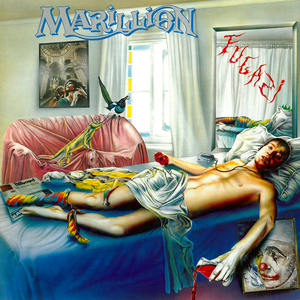
Marillion - Fugazi

These guys continue to be a fascinating band with their second album, despite what are some mixed feelings.  After picking up a new drummer, they carried one with Fish's iconic lyrics and their unique blend of sounds, as they still lean into Genesis and Pink Floyd territory here and there.  It's just so unfortunate that the album can't seem to balance the lyrics with the music very well.

Maybe it was just the mood I was in when I listened to it, but I'm really struggling with Fish's lyrics here.  Many of the songs seem to be about relationships (both with friends and lovers) and how they go sour.  While there's some interesting wordplay here and there, I couldn't shake the feeling that all the flowery words and purple prose were just to cover up the fact that he was whining.  It may be a mistake to conflate the voice of the lyrics with the creator, but it did make me wonder what Fish was going through at this time to compel him to write all these things.

Which is such a shame because the rest of the band is doing pretty well.  They sound tight and energized, with Trewavas and newcomer Mosely holding down the rhythm well, while guitarist Rothery and keyboardist Kelly provide great riffs, licks, and solos.  The production is clearer and the songs flow so much better than their first album.  I really do want to like this album as it's much stronger musically than their debut, and maybe it will grow on me with time, but the lyrics make me think of the kind of people who cannot acknowledge that the problem is with them and just want to complain how everyone else is inconveniencing them like it's a grand tragedy.  Fish certainly has a flair for the dramatic, but here, it just comes across as alienating.

Saturday, April 22, 2023

Anniversary Series - 1983!

After doing that massive collection of reviews for albums from 1983, I'm more than prepared for this Anniversary Article.  As I mentioned in that other article, 1983 was a pretty exciting year for rock and metal, and going over this year, it's hard to decide to what to keep and what to leave out!  Let's get into it.

Right off, we have some pretty massive releases from some great melodic rock bands.  Journey push their Frontiers with massive hits like "Separate Ways (Worlds Apart)" and "Faithfully."  Styx released Kilroy Was Here with the ever-catchy "Mr. Roboto" and the great ballad "Don't Let It End."  Blues-rock masters ZZ Top put out Eliminator, featuring a lot of classic rock staples like "Give Me All Your Lovin'," "Got Me Under Pressure," "Sharped Dressed Man," and of course, "TV Dinners."  (Well, okay, that last one is just a personal favorite.)

Heavy metal was just starting to break into the mainstream, starting with Def Leppard's Pyromania, with tracks like "Photograph" and "Rock of Ages" getting tons of airplay on MTV.  We also saw Mötley Crüe Shout at the Devil while displaying "Looks that Kill," but it would Quiet Riot's Metal Health that would be the first metal album to reach #1 on the Billboard 200, soaring with their cover of Slade's "Cum On Feel the Noize," beating out Michael Jackson's Thriller.

Great metal albums would continue to come out as the year went on.  Iron Maiden followed up their titanic Number of the Beast with Piece of Mind and "The Trooper."  Dio would start his own band with Holy Diver and sing about being a "Rainbow in the Dark."  Anvil and Manowar would carry on the US side of traditional metal with Forged in Fire and Into Glory Ride, respectively.  However, Metallica would provide the shot in the arm for the underground scene with their debut Kill'em All, and kickstarting thrash metal the world over.

Progressive bands would find themselves in a strange position.  Many of the old guard were suddenly finding pop success.  Genesis's self-titled album provided "That's All" and "Mama" as big radio hits, prog supergroup Asia would struggle with Alpha, despite being a very solid album, and Yes would reform around new guitarist Trevor Rabin for the massive hit "Owner of a Lonely Heart" on 90125.  However, with the review I gave last month, newcomers like Marillion and IQ were putting a new spin on what prog could sound like.

Getting to the end of the year, we have some more excellent metal to round us out.  Night Ranger's debut album Midnight Madness was big, with "(You Can Still) Rock in America," "When You Close Your Eyes," and the massive power balled "Sister Christian."  Ozzy regrouped after the disastrous death of Randy Rhoads by finding Jake E. Lee and releasing Bark at the Moon, and Accept would find international success with Balls to the Wall.  

Whew!  That was quite a lot, and there's plenty more in the playlist below, so be sure to check out what's down there.  I know that every year generally has some solid stuff, but 1983 was clearly a great year for rock and metal.  If there was anything I missed, let me know in the comments.  

Thursday, March 23, 2023

Last Played - March 2023 Part Two!

While I'm working on my various Anniversary Articles, I do try to listen to something I haven't before from each of the years, as I do have a lot of gaps to fill.  However, for 1983, I discovered there were quite a handful of albums I was interested in, for various different reasons, and decided to group them all together into one Last Played article!  Let's get started!

Black Sabbath - Born Again

I know it's probably a mistake to listen to Sabbath's non-Dio 80s stuff, as I've heard it's quite the mixed bag, but I can't deny that I'm curious.  So, despite it's reputation, I'm going to carry on my way through the Black Sabbath discography, and decide for myself if it's any good, starting with this one.  While bringing in Ian Gillian of Deep Purple is novel, the resulting album is rather kind of bland.

Of course, following the excellent Dio albums was always going to be a tough gig, especially with such a massive lineup change.  Gillian does a good job, singing in his own style, and it's not like the band is a mess, but I think they settled on keeping things pretty basic, with many of the songs repeating a lot of metal clichés.  They're not bad songs, but it's hard not to feel like this kind of stuff has been done better elsewhere.

"Disturbing the Priest" is probably the closest the band gets to a Sabbath-y sound, and the title track ends with a decent jam, like an 80s version of "Planet Caravan."  However, the other tracks often feel weak or uninspired.  "Zero the Hero" tries to be this Dio-inspired epic, but it's repetitive riff just goes for too long, and Gillian is no Dio.  For what it's worth, I do think there's a bit of promise in here, and if this lineup had carried on for another album, they could have put something great together (though it would have been quite different), but it was not to be.  In the end, it ends up being a pretty insubstantial one-off that's remembered for being a curious part of Sabbath's history, and not much more.

Ozzy Osbourne - Bark at the Moon

While Black Sabbath were stumbling around, their former singer was also struggling.  With the sudden death of Randy Rhoads, the lineup experienced a significant change-up, eventually settling on Jake E. Lee for their lead guitarist.  Filling the rest with industry veterans like Tommy Aldridge and Don Airey, Ozzy was able to bounce back without too much trouble.  Once again, my familiarity with Ozzy is mostly through classic rock stations, where one hears the regular handful of hit singles.  As such, I don't know the albums too well.  While I have listened to his first two solo efforts, and they're generally pretty good, this one really makes an impact as Ozzy drifts further into pop metal territory.

There's been some controversy over the years regarding who wrote these songs, but what can't be denied is how much Lee dominates this album, as his guitarwork finds the right balance between shred and melody.  Between his slick riffing and iconic solos, he's as much the star as Ozzy himself.  Don Airey's keyboards are also prominent, giving the album a distinct glam metal feel, which was building up at the time.  As a result, all the songs are pretty catchy, with plenty of melodic hooks.  Even the sappy ballad "So Tired" isn't too bad, as it has these lush orchestrations that make me think of Electric Light Orchestra, of all things.

The title track stands out the most, and for good reason.  The catchy riff, the noodly solos, and the horror lyrics that fit right in with Ozzy's reputation at the time; it's easy to hear why it's been on classic rock radio for so long.  "Rock 'N' Roll Rebel" and "Slow Down" are a solid pair of pop metal rockers, and "Waiting for Darkness" is a solid moody anthem with some dramatic synths and strings.  While I know the first two albums are well-regarded in their own right, I think this album is just a little stronger across the board.

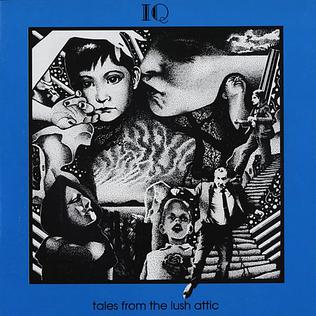
IQ - Tales from the Lush Attic

Of course, metal wasn't the only thing blowing up in 1983.  While the scene was significantly smaller, there were handful of UK bands who sought to do their own take on classic 70s prog rock, and so neo-prog is born.  I have heard some of IQ's later work before this, but since I had the opportunity, I thought I'd give their debut album a spin.

Right off, the Gabriel-era Genesis influence is apparent, helped partially by the orchestral synths and vocalist Peter Nicholls sounding not a little like Gabriel himself.  However, I also felt there were a lot of elements from Yes's Drama album, and a few bits of early 80s Rush.  While I don't know if they've completely carved out their own identity yet, they certainly aren't without ambitions, starting with the 20-minute epic "The Last Human Gateway," which is actually quite good.  The band takes you on a journey through all their modes, from moody ambience to upbeat rocking sections, and everything in between, without ever being too chaotic or hard to follow.  The rest of the album isn't too bad, either, with "Through the Corridors" being a spritely and energetic romp, despite its short length.  They do a good job of giving their ideas enough space to be understood while drifting between them, though "The Enemy Snacks" does get a little messy.  Of course, the band isn't so lost in their pretentions to not do a few silly things, such as "My Baby Treats Me Right 'Cos I'm A Hard-Lovin' Man All Night Long" being a few minutes of classical piano with no lyrics.  

If there is a big problem, it's the production.  While it's not bad, it can be hard to separate the instruments as they often get washed together into this 80s wall of sound.  Even Nicholls vocals get a little lost from time to time, making them hard to make out.  I just kinda wish I could hear everything going on a little better.  I admit I'm not the biggest Gabriel-era Genesis fan, but I do think IQ does pretty well to set up a foundation for them to build upon in subsequent albums.

Marillion - Script for a Jester's Tear

While the neo-prog scene did feature a handful of bands, Marillion was definitely the one to rise to the top of the crop.  Built around guitarist Steve Rothery and initially powered by the lyrics of the vocalist simply named Fish, the band has carved their own destiny, largely starting with this debut album.  While I have listened to Clutching at Straws before, mostly because I came across "Incommunicado" and really liked it, I don't have much experience with this band yet.

Once again, the Genesis vibes are strong, but I also hear elements of Pink Floyd and, of all things, The Alan Parsons Project.  I think it's a combination of the 80s synths and production, along with guitar solos that focus more on melodic phrasing than shred-based pyrotechnics that makes me think of Parsons.  However, the lyrics and tone are quite a bit darker, often focusing on themes of alienation, tragedy, loneliness, and drug addiction.  And yet, the band creates a rather theatrical wall of sound, giving these songs a kind of epicness I wasn't expecting.  While there are no extended tracks, most of them tend to be seven or eight minutes long, allowing enough space for their ideas to develop.  The result is a set of songs that are easy to sink into, letting their atmosphere and melodies just surround you with a kind of 80s proggy melancholy all their own.

The only real knock I have on the album is that some of songs' structures feel a little loose and don't quite hold together, often having rather sudden transitions.  The album opens with the title track, and it kinda stumbles about, despite some interesting ideas.  However, the album improves from there, as "He Knows You Know" and "The Web" both have great moody atmosphere and melodic grooves.  "Chelsea Monday" is a curious, melancholy ballad, while "Forgotten Sons" is an interesting closer, being much more aggressive and stark, showing the range the band has.  Comparing it to IQ's debut, they've definitely gone for more of an accessible melodic rock sound, but they do it with a lot of confidence, which allows them to get away with it.

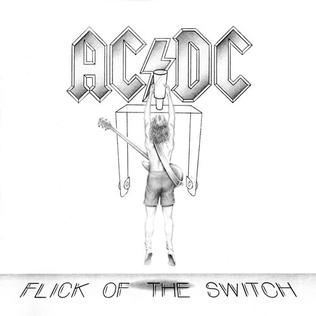
AC/DC - Flick of the Switch

Now that I've covered most of this band's 70s albums, it's time to jump ahead to the 80s ones that I haven't listened to yet.  While Back in Black and For Those About To Rock were full of anthemic stadium classics, the band sought to strip things down to the basics, deciding to leave behind Mutt Lange in favor of producing this one on their own.  Focusing on a rawer approach with more of a live feel, the band settle into a slower groove, resulting in an album that has less energy and intensity.

I admit I do miss Lange's iconic, clear production, as this album is a little muddier, and Brian Johnson's vocals get a little buried from time to time.  While the band has had plenty of mid-tempo rockers before, this album does feel a little sluggish, and sometimes the chorus for a number of tracks is just repeating the song's title a few times, which feels uninspired.  I know the band was struggling a little at this time, and I can't help but wonder if burnout wasn't a factor as well.

Of course, it's not like the band has changed from their blues-rock roots.  Any differences would only be found by nitpickers and diehards.  Much of the same solid riffing, energetic solos, suggestive innuendos, and strutting swagger is still here.  Songs like the title track and "Landslide" stand out from the pack, with "Landslide" having plenty of power.  It just has to come after a pair of well-made and successful albums, making this one feel a bit weaker in comparison.

Accept - Balls to the Wall

Let's wrap up this massive article with a metal classic as I carry on my journey through Accept's discography.  As it turns out, this is the one that has Herman Frank before he would move on to other projects, eventually coming back for the reunion in 2010.  Naturally, this is another slab of traditional metal, full of chunky, mid-tempo riffing, but I don't know if it's quite as good as Restless and Wild.  

It's not like there's anything immediately wrong with it, though.  Starting off with the title track, the album sets the stage for another set of anthemic rockers, with the lyrics definitely leaning into providing empowerment for the marginalized.  Udo continues to croon his way over the album, and Hoffmann and Frank do great work with their riffs and solos.  There's also a bit of a nudge toward more of the pop metal sound, but that might just be a consequence of the production, and it really doesn't bring the album down.

However, there's still something that feels a little less engaging with this one.  Maybe as I listen to these albums more, I can better parse how I feel about them.  For what it's worth, I enjoyed the title track, of course, but "Losing More Than You've Ever Had" is a solid rocker, with some interesting gang vocals on the chorus and a bridge that maybe goes on a little too long, and "Losers and Winners" has a strong Judas Priest vibe that I liked.  Unfortunately, the rest just feels like more of the same; not bad, but also not really keeping my attention as well as it could.


Well, that was quite a bit of content!  I generally try not to write long articles like this, but I figured it would better to group these all together.  I'll probably try to focus more on newer releases, as I know there are a handful I need to catch up on already.  Also, I've got some surprises for April, so keep an eye out for those.  Until then, rock on! \m/

Saturday, August 22, 2020

Last Played - August 2020!

Hey, it's one of these again.  It's been longer than I was anticipating, to be honest.  I thought I would be able to really dig into some new albums over the summer, but it hasn't really happened.  However, I've finally turned on enough stuff to put together another one of these articles, and this time, it's all progressive rock!  Here's what I've been checking out lately.

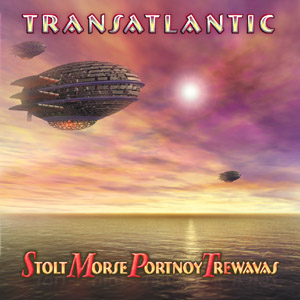
Transatlantic - SMPT:e

So members of Spock's Beard, The Flower Kings, Dream Theater, and Marillion got together at the turn of the millennium and made the proggiest of prog rock albums.  It's an interesting assortment, but one that certainly has plenty of potential.  20 years later, I'm giving it a spin.

The first thing I noticed was just how much jazz-fusion it had.  The band is much more interested in jazzy grooves and jams more than anything else.  The album opens with a 31 minute epic called "All of the Above" that exemplifies this, going through some interesting moodshifts and throwing in a few nods to other prog greats of the past.  However, it does go on for a bit too long, especially at the end.  The shorter songs show different sides of the band, with "We All Need Some Light" being a anthemic and uplifting acoustic ballad while "Mystery Train" is a very quirky and weird piece.  As for the other original epic, "My New World" draws more from Sgt. Peppers-era Beatles before eventually falling back into a jazz fusion groove.  The album ends with a cover of Procol Harum's "In Held 'Twas In I" (often regarded as the first prog rock epic), and it's a curious arrangement.  They sing the spoken part of "Held", and skip "Twas" entirely, instead adding in more jamming and even a free jazz section.  Needless to say, it's a bit all over the place.

Overall, it's some pretty decent stuff, but it does lack a little in energy, mostly content to sit back and soak in it's jazz/rock tone that rolls back and forth, but never really rocks.  Fans of Stolt and Morse will find plenty of familiar sounds, and the production is very clear, but it really doesn't do anything that I would call great.

Pattern-Seeking Animals - Pattern-Seeking Animals

Finally, I decided to give this a listen through, after liking pieces of it last year.  It's kind of an interesting follow up from that Transatlantic album, given that PSA is made up of different Spock's Beard members, current and former.  The tone of the album is also pretty similar: proggy, but rather laid back, content to just kinda wallow around its moody atmosphere.

The album starts off with the solid "No Burden Left to Carry," with some nice mood shifts, some solid guitar work.  The follow up of "The Same Mistakes Again," is a nice, softer piece.  However, the album just kinda meanders around those same moods.  It doesn't even try to spice things up with jazz-fusion, going for a more straight-forward, somewhat plodding songwriting.  A little quirky, sometimes light, sometimes dark, but never straying too far from their soft, prog rock style.  Despite not really knowing these artists' heritage, I'm sure fans of Spock's Beard will find plenty to like.

So in the end, it's album that's nice while it's on, and is clearly well-played, but none of it really sticks with me, unfortunately.  It rocks a little here, does a soft-jam there, has plenty of layers of keyboards and synths, but like Transatlantic's debut, never really seems to push it to that next level at any time.

Rick Wakeman & The English Rock Ensemble - The Red Planet

Now this is prog rock!

Okay, I admit that I'm not being fair, here.  I'm a diehard Yes fan, so I've been anticipating Wakeman's new solo album for a while now.  He's gone full-on Six Wives mode here, with a band backing him up, and tons of layers and ideas all blending together.

The song titles are thematically appropriate, all based on various landmarks of Mars.  Otherwise, each song is a little prog epic that stands on its own, featuring a variety of moods and tempos.  Songs like "Pavonis Mons" and "Ascraeus Mons" are upbeat and driving, while "Tharsis Tholus" and "South Pole" offer more mellow sounds, with the former going for a dark, jazz-fusion vibe, and the latter being more chill and well-paced, with some soft piano in the middle section.  Then there are songs like "Arsia Mons" and "The North Plain" that shift around quite a bit, with "The North Plain" drifting from thick rock organs to ambient soundscapes.  It also features a great guitar solo from Dave Colquhoun at the end.

Overall, compared to the other two in this article, this just has more energy.  A lot of that simply might have to do with Wakeman's electric synth runs, his fingers not having aged a day since the 70s.  The band almost makes Mars itself seem varied and magical in comparison to the rust-colored and largely empty planet that it is.  Solid work from top to bottom, this album is proof that Wakeman is still the wizard at the keys and as imaginative as ever.


Well, I'm still plugging away around here.  Getting out more articles than I would have thought.  I'm not sure what the rest of the year will be like, but I'll continue doing what I can.  I should probably get into more current year releases.  I'm running out of time to include them in a best-of article!!

Until then, rock on! \m/
Friday, May 15, 2020

Anniversary Series - 1985!

I hope everyone is staying safe.  I know I haven't been as productive as I could be here, but I'm committed to at least get these anniversary articles out.  Going back over 1985 seems to be an odd year, as there doesn't seem to be as much in the way of major releases like my previous articles.  Still, any year is a good year for rock music to come out, and this one isn't any different.

The year starts off with John Fogerty, of Creedence Clearwater Revival fame, getting a big solo hit with "Centerfield."  Dire Straits would find their own massive success with Brothers in Arms, featuring "Walk of Life," the satirical "Money for Nothing," and the epic title track.  Starship would continue it's complicated history with "We Built This City," and Heart would make their big comeback this year with "These Dreams."

As for metal, the genre was slowly expanding, with the subgenres of thrash, death, speed, power, and even doom finding their footing.  Those waving the banner for traditional metal found plenty to enjoy with Accept's Metal Heart, and Dio's Sacred Heart.  Power metal quietly kicked off this year with Helloween's Walls of Jericho, establishing the sound that would inspire epic music for decades to come.

Glam was certainly not sitting back, though as one of the biggest albums would be Theatre of Pain by Mötley Crüe, featuring a cover of "Smokin' in the Boys Room" and "Home Sweet Home," the power ballad that would pave the way for many more to follow the rest of the decade.  Other highlights include Ratt's Invasion of Your Privacy, Dokken's Under Lock and Key featuring "Unchain the Night" and "The Hunter," and Twisted Sister's Come Out and Play, best known these days for a team up with Alice Cooper for "Be Chrool to Your Scuel," the video for which ended up being banned from MTV.

Prog rock would definitely take a backseat at this time as most bands were content with a streamlined sound.  Marillion would end up being big this year as their album Misplaced Childhood would provide the hit "Kayleigh."  Rush continued their synth-heavy sound with Power Windows, Supertramp would recruit David Gilmour for Brother Where You Bound, and Asia would replace Steve Howe for Mandy Meyer for the more stadium-rock savvy Astra.  The Alan Parsons Project, after attaining radio success for for the past five years, would pick up some of their older progressive styles with Stereotomy at the end of the year.  

Hopefully, that covers the year pretty well.  Check out my playlist below, and speak up if you think I've missed something.  Until then, rock on! \m/