Showing posts with label IQ. Show all posts

Saturday, July 12, 2025

New Releases - July 2025!

Once again, time and the summer heat have nearly gotten the best of me, but I've been able to squeeze in time for some modern releases!  I've got a bit of everything this time, as I'm trying to catch up with what's come out this year (I'm so far behind!).  In any case, here's what I've been jamming out to lately!

Robin McAuley - Soulbound

This guy certainly has something going with Frontiers Records, this being his third album in five years.  (And that doesn't include all the other projects he's doing, like Black Swan!)  I enjoyed the first one a lot, but was underwhelmed with the second album, and this new one seems to fall in between.

The album starts off pretty rough, as the first few tracks feel oddly stiff.  There's some interesting riffs, but nothing feels particularly alive.  Then, in the middle, there's suddenly a shift and they pick up some Whitesnake-style energy with "Crazy," "Let It Go," and "Wonder of the World."  At that point, it's like the album loosens up, and they start having fun.  The rest of the tracks are some decent AOR, but not as strong as those songs in the middle.  "Wonder of the World" is easily the highlight of the album.  Still, it was an interesting journey, and maybe this album will grow on me with more listens, but overall, it's a bit off-kilter.  It's always hard to know how these label-driven projects can turn out after a couple of albums, but at least Robin has a place to really let his voice soar, as it's aging pretty dang well.

Brainstorm - Plague of Rats

After enjoying their last album so much that it squeezed into my Top 5 for that year, I figured I should keep my eye on them for what they do next after the solid Wall of Skulls.  While they do have a new bassist for this one, it's pretty much business as usual as they pound out another enjoyable slab of heavy/power metal.

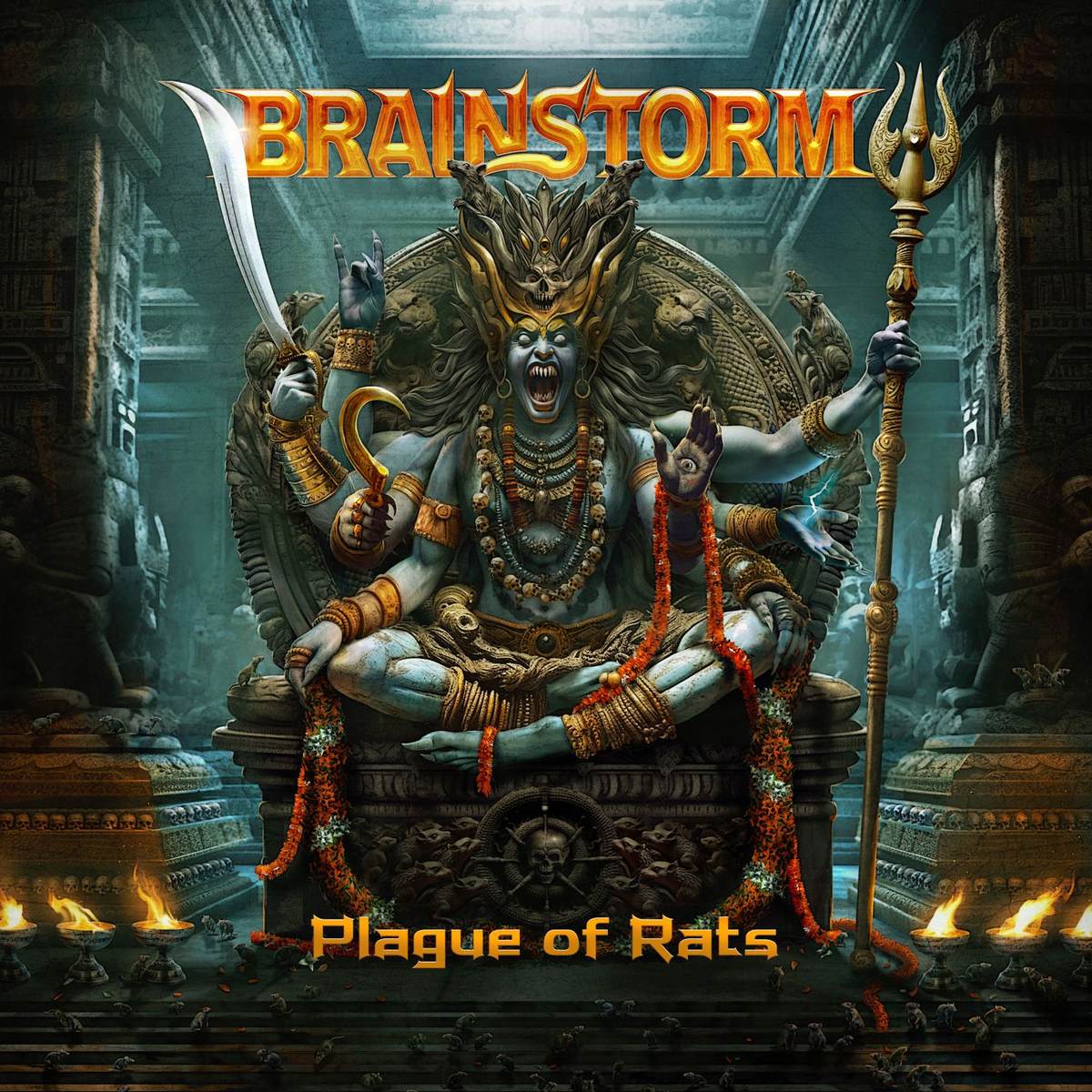
Based on the album cover, one would expect songs based on the Hindu religion and its lore, and there are a few songs that do that, but this is not a concept album.  As things go on, the songs shift to other themes, like darkness, redemption, and memories.  Still, the handful of songs that do have that Indian theme are interesting, featuring some folky instruments and melodies.  Otherwise, the band sticks to what they do best, which is crunchy riffs from Milan Loncaric and Torsten Ihlenfeld, pounding rhythms from Dieter Bernert, and the gritty, soaring vocals of Andy B. Franck.  

Overall, it's another pretty solid album, though I do think the standout tracks are the faster ones, like "Beyond Enemy Lines," "False Memories," and "Masquerade Conspiracy."  The Indian themes provide a bit of an interesting twist, but it feels underused, as the band gets back to business as usual as the album progresses.  I don't know if this is quite as good as Wall of Skulls, but the consistent quality of Plague of Rats might help it squeeze into my Top 5 once again.  We'll see when I get to that at the end of the year.

IQ - Dominion

After enjoying a handful of their albums, I figured I should check out their latest in melancholic prog.  With the same lineup they've had for the past 14 years, IQ have provided another introspective suite of synth-heavy rock with tons of spacey ambience.

Things start off big with a 22-minute epic titled "The Unknown Door."  It starts off rather somber, with some symphonic elements that add a cinematic tone to things.  However, once the song reaches Part 2, the band really gets going with some interesting transitions between the somber and upbeat sections.  After that, the rest of the album generally maintains the synth-driven sound.  "One of Us" is really the only track without any dynamics, probably because it's so short (relatively speaking).  It's a nice piece of folky introspection before the rest of the album carries the listener on a journey.  While I don't think this is a concept album, the lyrics generally focus on abstract concepts, like dreams, fate, ambition, companionship, choices, and consequences.  I admit the lyrics were a little harder to follow on this one, but they never felt out of place with the music, which the band plays with confidence.

This one is going to take a few listens before I can decide how I really feel about it.  There isn't as much rock as I've heard on previous albums, focusing instead on a lot of synthy atmosphere, and such albums need time to really soak into them.  While I like most of what I heard, with "Far From Here" being the standout, I did wonder if the synths dominated the mix a little too much, giving the songs a bit of a post-rock vibe.  Still, it's definitely more IQ, and their iconic introspective sound continues to drift between low and high energy with ease, perhaps with a softer touch this time around.

Friday, May 16, 2025

Retro Reviews - 1985 Edition!

Well, I have to admit I'm having a pretty slow month.  Hayfever hit pretty hard, and I'm realizing that I have a lot of gaps in my 1985 list, so I'm going to have plenty of retro review articles for this year as I figure out my Top 5 (which might be delayed as a consequence).  I decided to start things off by getting into the neo-prog scene, so here are three reviews of albums that have some interesting takes on what 80s prog rock was doing.

Pendragon - The Jewel

I admit I gave this a shot purely on the notion check out a new band from the neo-prog era.  I saw their name on a list, saw that their debut was in 1985, and gave it a listen to see if it had a chance at being in my Top 5 article.  While they toured with Marillion quite a bit at this time, they definitely sound more like Asia or Drama-era Yes, with some 80s Rush-style AOR here and there.

The album starts with "Higher Circles," which honestly feels like a single, with it's typical structure and bouncy rhythms.  It's not bad, but certainly not indicative of the rest of the album with it's more complex prog rock ideas.  The next track in particular, "The Pleasure of Hope," is just under four minutes long but has some curious energy shifts.  "Leviathan" is where I think the band finally stretches out and finds their strengths, and "Circus" really lets the synths build quite well.  While he would only be on this album, keyboardist Rick Carter gives the band a good, atmospheric wall of sound, and trades solos quite well with Nick Barrett (the guitarist and singer).  Speaking of which, I think Nick sounds a lot like Greg Lake, his unique English accent piercing through the songs.  The album closes with its longest song "The Black Knight," at nearly ten minutes long.  Here, the band leans into more somber, Pink Floyd style, and shows a lot of their unique dynamics and thoughtful melodies.

Going in rather blind, I was pleasantly surprised by what I heard.  While they were (unsurprisingly) very 80s, they don't feel stuck in one style or another, and blend their influences and ideas together well.  "Leviathan" and "Circus" were the two that stood out the most for me, largely because of Peter Gee's melodic bass work making me think of Chris Squire (which is always a good thing in my book).  I'll need to listen to this a few more times to decide how I really feel about it to rank it, but upon first impressions, I found plenty to like!

Marillion - Misplaced Childhood

While their first two albums were interesting works, if a bit messy at times, the band found their stride with this one, not only maturing as song-writers, stretching their ideas into concept albums and tracks that segue into long flowing pieces across the album.  It also ends up being their breakout success, largely through "Kayleigh" becoming a hit single.

Inspired by Fish's life (and an acid trip), the album focuses on lost love and lost innocence, but also in finding it again and being revitalized.  The band carries these ideas well, keeping to their blend of influences, though I do think their Pink Floyd side was much stronger this time around.  While the big hit "Kayleigh" is a standout, the whole album is actually quite good, without really having any low points (and Fish seems to be less whiney this time around).  The short tracks almost serve like intermissions or segues, and each side feels like a long, winding prog epic, with interesting twists and turns, again much like Pink Floyd.

It really feels that everyone in the band is more in sync with each other now, as the rhythms and melodies flow well between high and low dynamics, though for much of the album, the tone stays pretty somber.  It's not until the end that the mood improves and Fish gets rather optimistic about things.  I don't know if it's better than Clutching at Straws (I should relisten to that again), but Misplaced Childhood is a definite improvement for the band.

IQ - The Wake

To round out this article of 80s neo-prog, I decided to listen to IQ's second album.  I checked out their debut album last year and found it interesting, if a bit messy.  However, even in just a year, the band starts to settle into their unique brand of dramatic melancholy.

Once again, the production is a bit dated.  They're trying to get this wall-of-sound style to work, and it mostly does, but it sometimes gets muddy, and vocalist Peter Nicholls often gets buried in all the synths, but I was able to get used to it eventually.  This album gets more atmospheric than the debut, which becomes a staple of the band's sound (at least, from what I've listened to).  Things start pretty spacey with "Outer Limits," as it has a long intro and some interesting rhythmic changes.  I liked "The Magic Roundabout" with it's Yes-like blend of jazz and classical (though I do wonder if that wasn't intentional, considering the title), and "Widow's Peak" goes through some interesting dynamics as well.  The shorter songs were more poppy, but I liked the energy on "The Thousand Days."  While it makes for some decent variety, the tracks all blend well with the style they're building for themselves.

Overall, this is definitely an improvement over Tales from the Lush Attic, mainly because this album feels more whole and consistent.  There are some neat little melodies, and Martin Orford gets plenty of work layering all those synths and organs.  While I can imagine this getting lost in the cracks while Marillion found success, but it very much marks when this band started to codify their iconic sound.

Wednesday, October 30, 2024

Anniversary Series - 2014!

Alright, I think I'm starting to catch up.  When I get to these later years, it's hard to really say anything conclusive, as rock and metal have long since come their own way by this point.  So once again, I'll be reviewing some albums from this year to fill out the article, but be sure to check out the playlist below for some more solid tracks.  

IQ - The Road of Bones

Funny story: I've actually heard this album before.  I remember some prog rock sites highly praising this one, so I gave it a listen, and at the time, most of it just kinda went in one ear and out the other.  Except for "Until the End."  For some reason, that song stuck with me, and I've since listened to it several times.  With this anniversary article, I figured I should give the whole album another shot and really see how I feel, now that I have a better idea of the band's sound.  I've listened to a few of their albums before, including their debut, but I think this one stands out for its rich production and moody atmosphere.

Not to say that IQ was particularly peppy before, but this album really leans into a particular sense of darkness, letting it linger so that it can explored.  Much of the lyrics focusing on wrestling with some abstract concepts, though some of the songs shift into a more hopeful tone, often with the theme of reconciliation.  The band is quite tight, with no performance standing out so much as these songs show just how in sync they are with each other, and the album flows quite well as a consequence.  If there are any problems, it's the songs are so similar to each other that they do kind of blend together.  Sure, they have the dynamics of prog rock within the songs, going from soft to loud and somber to uplifting, but when it's that kind of thing song after song, and the vocal cadences don't vary too much, the album may be a struggle for those wanting more variety in the tones and ideas.  However, those who don't mind letting the music soak around them won't have a problem.

What the band really excels in, though, is interesting transitions, solid atmosphere, and many catchy melodic hooks.  If the album weren't quite so long, I'd say it would be a great starting point for someone getting into the genre.  The songs are all pretty good, even from the curious start with the samples from the classic 30s Dracula, through the epic "Without Walls," the fascinating combo of "Knucklehead" and "1312 Overture," to the fade out ending of "Hardcore."  However, I think the big stand outs are "Until the End", which I mentioned before, "Constellations," which is a good throwback to 80s prog, and "Ten Million Demons," with a pulsing synth bass reminding me of Pink Floyd's "One of The Days."  As usual with prog rock, I'll have to listen to it a few more times to really decide how I feel about it, but overall, this is a good (if long) album of moody prog rock songs that flow, drop, and build-up well, arranged into a satisfying journey.

Sabaton - Heroes

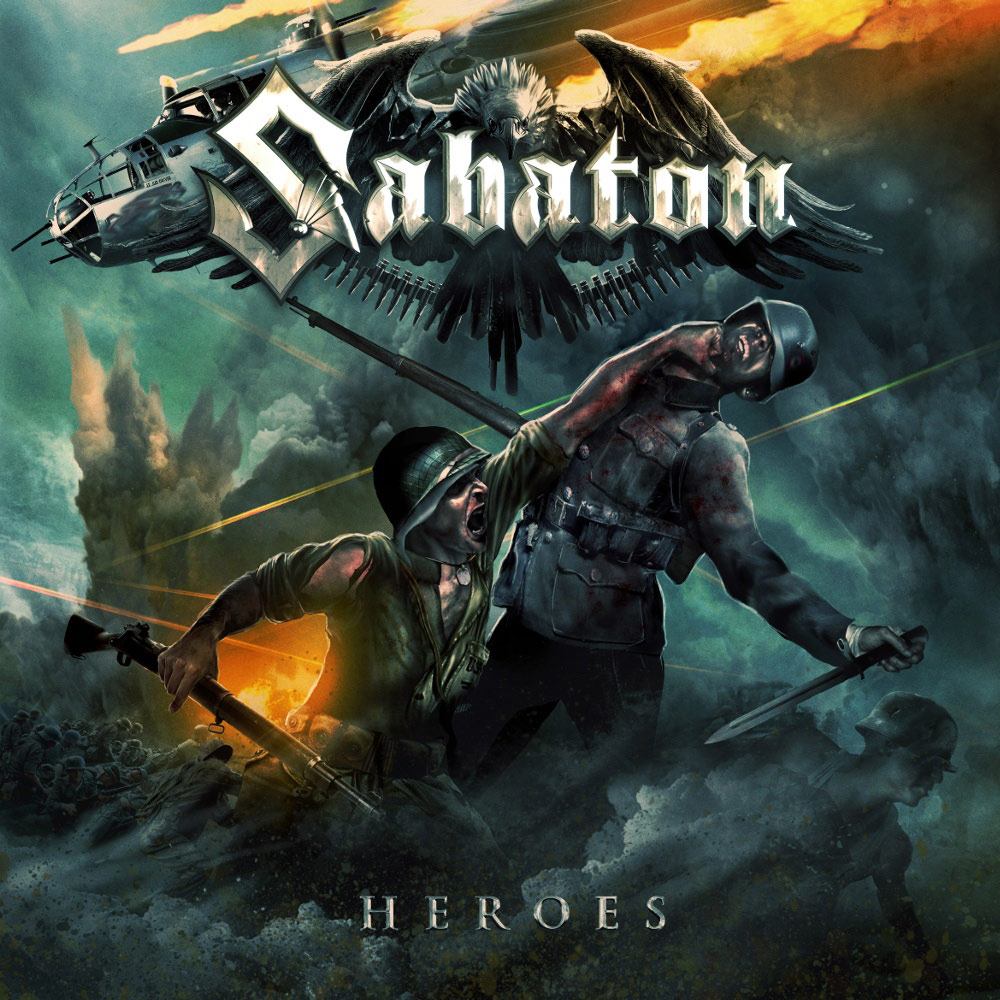
Wow, has it really been more than two years since I last talked about Sabaton?  To be fair, their last album was kinda lackluster, being just another chunk of songs about World War I with some novel elements.  However, they've been pretty busy with their concert film and will likely be working on a new album soon (if they aren't already).  In any case, this article gives me the opportunity to fill in another gap in their discography that I haven't listened to.  The novelty with this one is an emphasis on individuals rather than the great battles of World War 2.

It's business as usual for the band, as Joakim Brodén belts out the stories with his usual charisma.  Naturally the band backs him up with the usual amount of melodrama and bombast, with choirs kicking in from time to time for the big moments.  The songwriting doesn't deviate much from their typical heavy/power metal flair, though "The Ballad of Bull" falls a little flat as it's more of a piano-driven ballad.  This is the first album with newcomers Thobbe Englund and Chris Rörland on guitars and Hannes Van Dahl on drums who all perform admirably.

Honestly, even with the lineup changes, Sabaton is pretty consistent in their style and quality.  As usual, I found a few songs that stand out from the pack, particularly the first two songs "Night Witches" and "No Bullets Fly" which set the tone for the album pretty well, and "Resist and Bite," which is full of the heroic vigor this band does so well.  While some may scoff at their discography being the same thing over and over, those of us who don't mind a bit a cheese with our epicness know that this band delivers where it counts, and that's more than enough.

Accept - Blind Rage

Accept is another band I've been slowly working through.  This one is their third with Mark Torillo, and the last one to have Herman Frank on guitars who would go back to his solo work and other projects.  Unsurprisingly, it's another slab of old-school, traditional metal with solid modern production.

The album chugs along pretty nicely, shaking things up just enough with the tempos.  Things start off energetic with "Stampede," and are carried on with "200 Years" and the closer "Final Journey."  Meanwhile, they get slow and groove-driven with songs like "Dark Side of My Heart," "Fall of the Empire," and "Bloodbath Mastermind."  They even touch on power metal territory with "Trails of Tears."  However, I think the song that stands out the most is "Dying Breed," featuring slick 6/8 riffs and referencing a bunch of their influences.  It's a pretty consistent album from beginning to end.

However, Blind Rage isn't as strong as Blood of the Nations or Stalingrad.  I'm not really quite sure why I feel that way; maybe it's just that I'm getting used to their modern sound and so this album isn't doing anything that the other two already did.  Still, I'm sure to come back to this one (and the others) when I'm in the mood for some classic metal crunchiness.

Thursday, March 23, 2023

Last Played - March 2023 Part Two!

While I'm working on my various Anniversary Articles, I do try to listen to something I haven't before from each of the years, as I do have a lot of gaps to fill.  However, for 1983, I discovered there were quite a handful of albums I was interested in, for various different reasons, and decided to group them all together into one Last Played article!  Let's get started!

Black Sabbath - Born Again

I know it's probably a mistake to listen to Sabbath's non-Dio 80s stuff, as I've heard it's quite the mixed bag, but I can't deny that I'm curious.  So, despite it's reputation, I'm going to carry on my way through the Black Sabbath discography, and decide for myself if it's any good, starting with this one.  While bringing in Ian Gillian of Deep Purple is novel, the resulting album is rather kind of bland.

Of course, following the excellent Dio albums was always going to be a tough gig, especially with such a massive lineup change.  Gillian does a good job, singing in his own style, and it's not like the band is a mess, but I think they settled on keeping things pretty basic, with many of the songs repeating a lot of metal clichés.  They're not bad songs, but it's hard not to feel like this kind of stuff has been done better elsewhere.

"Disturbing the Priest" is probably the closest the band gets to a Sabbath-y sound, and the title track ends with a decent jam, like an 80s version of "Planet Caravan."  However, the other tracks often feel weak or uninspired.  "Zero the Hero" tries to be this Dio-inspired epic, but it's repetitive riff just goes for too long, and Gillian is no Dio.  For what it's worth, I do think there's a bit of promise in here, and if this lineup had carried on for another album, they could have put something great together (though it would have been quite different), but it was not to be.  In the end, it ends up being a pretty insubstantial one-off that's remembered for being a curious part of Sabbath's history, and not much more.

Ozzy Osbourne - Bark at the Moon

While Black Sabbath were stumbling around, their former singer was also struggling.  With the sudden death of Randy Rhoads, the lineup experienced a significant change-up, eventually settling on Jake E. Lee for their lead guitarist.  Filling the rest with industry veterans like Tommy Aldridge and Don Airey, Ozzy was able to bounce back without too much trouble.  Once again, my familiarity with Ozzy is mostly through classic rock stations, where one hears the regular handful of hit singles.  As such, I don't know the albums too well.  While I have listened to his first two solo efforts, and they're generally pretty good, this one really makes an impact as Ozzy drifts further into pop metal territory.

There's been some controversy over the years regarding who wrote these songs, but what can't be denied is how much Lee dominates this album, as his guitarwork finds the right balance between shred and melody.  Between his slick riffing and iconic solos, he's as much the star as Ozzy himself.  Don Airey's keyboards are also prominent, giving the album a distinct glam metal feel, which was building up at the time.  As a result, all the songs are pretty catchy, with plenty of melodic hooks.  Even the sappy ballad "So Tired" isn't too bad, as it has these lush orchestrations that make me think of Electric Light Orchestra, of all things.

The title track stands out the most, and for good reason.  The catchy riff, the noodly solos, and the horror lyrics that fit right in with Ozzy's reputation at the time; it's easy to hear why it's been on classic rock radio for so long.  "Rock 'N' Roll Rebel" and "Slow Down" are a solid pair of pop metal rockers, and "Waiting for Darkness" is a solid moody anthem with some dramatic synths and strings.  While I know the first two albums are well-regarded in their own right, I think this album is just a little stronger across the board.

IQ - Tales from the Lush Attic

Of course, metal wasn't the only thing blowing up in 1983.  While the scene was significantly smaller, there were handful of UK bands who sought to do their own take on classic 70s prog rock, and so neo-prog is born.  I have heard some of IQ's later work before this, but since I had the opportunity, I thought I'd give their debut album a spin.

Right off, the Gabriel-era Genesis influence is apparent, helped partially by the orchestral synths and vocalist Peter Nicholls sounding not a little like Gabriel himself.  However, I also felt there were a lot of elements from Yes's Drama album, and a few bits of early 80s Rush.  While I don't know if they've completely carved out their own identity yet, they certainly aren't without ambitions, starting with the 20-minute epic "The Last Human Gateway," which is actually quite good.  The band takes you on a journey through all their modes, from moody ambience to upbeat rocking sections, and everything in between, without ever being too chaotic or hard to follow.  The rest of the album isn't too bad, either, with "Through the Corridors" being a spritely and energetic romp, despite its short length.  They do a good job of giving their ideas enough space to be understood while drifting between them, though "The Enemy Snacks" does get a little messy.  Of course, the band isn't so lost in their pretentions to not do a few silly things, such as "My Baby Treats Me Right 'Cos I'm A Hard-Lovin' Man All Night Long" being a few minutes of classical piano with no lyrics.  

If there is a big problem, it's the production.  While it's not bad, it can be hard to separate the instruments as they often get washed together into this 80s wall of sound.  Even Nicholls vocals get a little lost from time to time, making them hard to make out.  I just kinda wish I could hear everything going on a little better.  I admit I'm not the biggest Gabriel-era Genesis fan, but I do think IQ does pretty well to set up a foundation for them to build upon in subsequent albums.

Marillion - Script for a Jester's Tear

While the neo-prog scene did feature a handful of bands, Marillion was definitely the one to rise to the top of the crop.  Built around guitarist Steve Rothery and initially powered by the lyrics of the vocalist simply named Fish, the band has carved their own destiny, largely starting with this debut album.  While I have listened to Clutching at Straws before, mostly because I came across "Incommunicado" and really liked it, I don't have much experience with this band yet.

Once again, the Genesis vibes are strong, but I also hear elements of Pink Floyd and, of all things, The Alan Parsons Project.  I think it's a combination of the 80s synths and production, along with guitar solos that focus more on melodic phrasing than shred-based pyrotechnics that makes me think of Parsons.  However, the lyrics and tone are quite a bit darker, often focusing on themes of alienation, tragedy, loneliness, and drug addiction.  And yet, the band creates a rather theatrical wall of sound, giving these songs a kind of epicness I wasn't expecting.  While there are no extended tracks, most of them tend to be seven or eight minutes long, allowing enough space for their ideas to develop.  The result is a set of songs that are easy to sink into, letting their atmosphere and melodies just surround you with a kind of 80s proggy melancholy all their own.

The only real knock I have on the album is that some of songs' structures feel a little loose and don't quite hold together, often having rather sudden transitions.  The album opens with the title track, and it kinda stumbles about, despite some interesting ideas.  However, the album improves from there, as "He Knows You Know" and "The Web" both have great moody atmosphere and melodic grooves.  "Chelsea Monday" is a curious, melancholy ballad, while "Forgotten Sons" is an interesting closer, being much more aggressive and stark, showing the range the band has.  Comparing it to IQ's debut, they've definitely gone for more of an accessible melodic rock sound, but they do it with a lot of confidence, which allows them to get away with it.

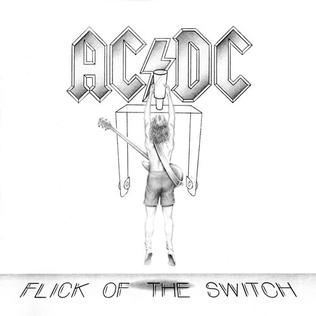
AC/DC - Flick of the Switch

Now that I've covered most of this band's 70s albums, it's time to jump ahead to the 80s ones that I haven't listened to yet.  While Back in Black and For Those About To Rock were full of anthemic stadium classics, the band sought to strip things down to the basics, deciding to leave behind Mutt Lange in favor of producing this one on their own.  Focusing on a rawer approach with more of a live feel, the band settle into a slower groove, resulting in an album that has less energy and intensity.

I admit I do miss Lange's iconic, clear production, as this album is a little muddier, and Brian Johnson's vocals get a little buried from time to time.  While the band has had plenty of mid-tempo rockers before, this album does feel a little sluggish, and sometimes the chorus for a number of tracks is just repeating the song's title a few times, which feels uninspired.  I know the band was struggling a little at this time, and I can't help but wonder if burnout wasn't a factor as well.

Of course, it's not like the band has changed from their blues-rock roots.  Any differences would only be found by nitpickers and diehards.  Much of the same solid riffing, energetic solos, suggestive innuendos, and strutting swagger is still here.  Songs like the title track and "Landslide" stand out from the pack, with "Landslide" having plenty of power.  It just has to come after a pair of well-made and successful albums, making this one feel a bit weaker in comparison.

Accept - Balls to the Wall

Let's wrap up this massive article with a metal classic as I carry on my journey through Accept's discography.  As it turns out, this is the one that has Herman Frank before he would move on to other projects, eventually coming back for the reunion in 2010.  Naturally, this is another slab of traditional metal, full of chunky, mid-tempo riffing, but I don't know if it's quite as good as Restless and Wild.  

It's not like there's anything immediately wrong with it, though.  Starting off with the title track, the album sets the stage for another set of anthemic rockers, with the lyrics definitely leaning into providing empowerment for the marginalized.  Udo continues to croon his way over the album, and Hoffmann and Frank do great work with their riffs and solos.  There's also a bit of a nudge toward more of the pop metal sound, but that might just be a consequence of the production, and it really doesn't bring the album down.

However, there's still something that feels a little less engaging with this one.  Maybe as I listen to these albums more, I can better parse how I feel about them.  For what it's worth, I enjoyed the title track, of course, but "Losing More Than You've Ever Had" is a solid rocker, with some interesting gang vocals on the chorus and a bridge that maybe goes on a little too long, and "Losers and Winners" has a strong Judas Priest vibe that I liked.  Unfortunately, the rest just feels like more of the same; not bad, but also not really keeping my attention as well as it could.


Well, that was quite a bit of content!  I generally try not to write long articles like this, but I figured it would better to group these all together.  I'll probably try to focus more on newer releases, as I know there are a handful I need to catch up on already.  Also, I've got some surprises for April, so keep an eye out for those.  Until then, rock on! \m/