
Showing posts with label Neo-Prog. Show all posts

Saturday, July 12, 2025

New Releases - July 2025!

Once again, time and the summer heat have nearly gotten the best of me, but I've been able to squeeze in time for some modern releases!  I've got a bit of everything this time, as I'm trying to catch up with what's come out this year (I'm so far behind!).  In any case, here's what I've been jamming out to lately!

Robin McAuley - Soulbound

This guy certainly has something going with Frontiers Records, this being his third album in five years.  (And that doesn't include all the other projects he's doing, like Black Swan!)  I enjoyed the first one a lot, but was underwhelmed with the second album, and this new one seems to fall in between.

The album starts off pretty rough, as the first few tracks feel oddly stiff.  There's some interesting riffs, but nothing feels particularly alive.  Then, in the middle, there's suddenly a shift and they pick up some Whitesnake-style energy with "Crazy," "Let It Go," and "Wonder of the World."  At that point, it's like the album loosens up, and they start having fun.  The rest of the tracks are some decent AOR, but not as strong as those songs in the middle.  "Wonder of the World" is easily the highlight of the album.  Still, it was an interesting journey, and maybe this album will grow on me with more listens, but overall, it's a bit off-kilter.  It's always hard to know how these label-driven projects can turn out after a couple of albums, but at least Robin has a place to really let his voice soar, as it's aging pretty dang well.
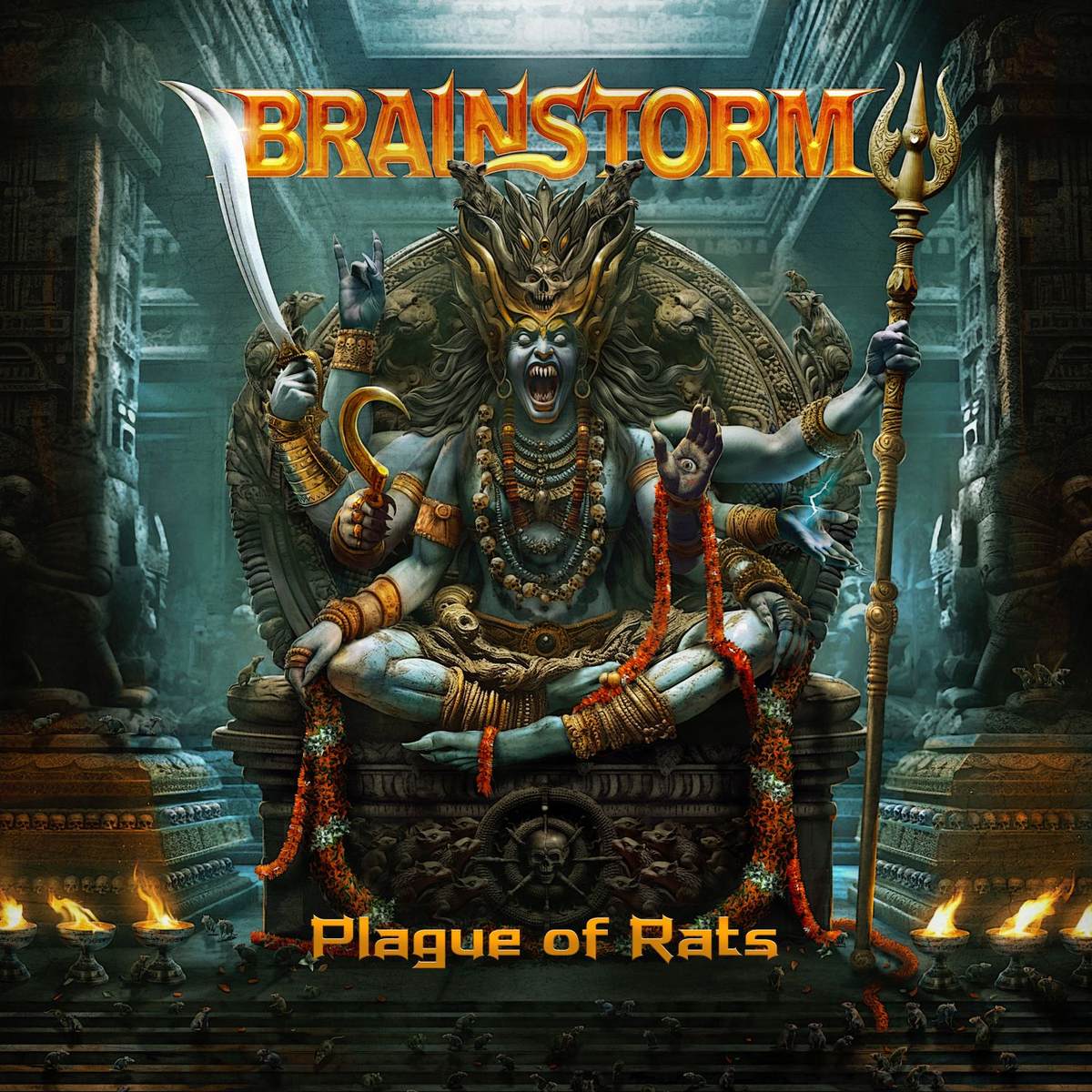
Brainstorm - Plague of Rats

After enjoying their last album so much that it squeezed into my Top 5 for that year, I figured I should keep my eye on them for what they do next after the solid Wall of Skulls.  While they do have a new bassist for this one, it's pretty much business as usual as they pound out another enjoyable slab of heavy/power metal.

Based on the album cover, one would expect songs based on the Hindu religion and its lore, and there are a few songs that do that, but this is not a concept album.  As things go on, the songs shift to other themes, like darkness, redemption, and memories.  Still, the handful of songs that do have that Indian theme are interesting, featuring some folky instruments and melodies.  Otherwise, the band sticks to what they do best, which is crunchy riffs from Milan Loncaric and Torsten Ihlenfeld, pounding rhythms from Dieter Bernert, and the gritty, soaring vocals of Andy B. Franck.  

Overall, it's another pretty solid album, though I do think the standout tracks are the faster ones, like "Beyond Enemy Lines," "False Memories," and "Masquerade Conspiracy."  The Indian themes provide a bit of an interesting twist, but it feels underused, as the band gets back to business as usual as the album progresses.  I don't know if this is quite as good as Wall of Skulls, but the consistent quality of Plague of Rats might help it squeeze into my Top 5 once again.  We'll see when I get to that at the end of the year.

IQ - Dominion

After enjoying a handful of their albums, I figured I should check out their latest in melancholic prog.  With the same lineup they've had for the past 14 years, IQ have provided another introspective suite of synth-heavy rock with tons of spacey ambience.

Things start off big with a 22-minute epic titled "The Unknown Door."  It starts off rather somber, with some symphonic elements that add a cinematic tone to things.  However, once the song reaches Part 2, the band really gets going with some interesting transitions between the somber and upbeat sections.  After that, the rest of the album generally maintains the synth-driven sound.  "One of Us" is really the only track without any dynamics, probably because it's so short (relatively speaking).  It's a nice piece of folky introspection before the rest of the album carries the listener on a journey.  While I don't think this is a concept album, the lyrics generally focus on abstract concepts, like dreams, fate, ambition, companionship, choices, and consequences.  I admit the lyrics were a little harder to follow on this one, but they never felt out of place with the music, which the band plays with confidence.

This one is going to take a few listens before I can decide how I really feel about it.  There isn't as much rock as I've heard on previous albums, focusing instead on a lot of synthy atmosphere, and such albums need time to really soak into them.  While I like most of what I heard, with "Far From Here" being the standout, I did wonder if the synths dominated the mix a little too much, giving the songs a bit of a post-rock vibe.  Still, it's definitely more IQ, and their iconic introspective sound continues to drift between low and high energy with ease, perhaps with a softer touch this time around.

Friday, May 16, 2025

Retro Reviews - 1985 Edition!

Well, I have to admit I'm having a pretty slow month.  Hayfever hit pretty hard, and I'm realizing that I have a lot of gaps in my 1985 list, so I'm going to have plenty of retro review articles for this year as I figure out my Top 5 (which might be delayed as a consequence).  I decided to start things off by getting into the neo-prog scene, so here are three reviews of albums that have some interesting takes on what 80s prog rock was doing.

Pendragon - The Jewel

I admit I gave this a shot purely on the notion check out a new band from the neo-prog era.  I saw their name on a list, saw that their debut was in 1985, and gave it a listen to see if it had a chance at being in my Top 5 article.  While they toured with Marillion quite a bit at this time, they definitely sound more like Asia or Drama-era Yes, with some 80s Rush-style AOR here and there.

The album starts with "Higher Circles," which honestly feels like a single, with it's typical structure and bouncy rhythms.  It's not bad, but certainly not indicative of the rest of the album with it's more complex prog rock ideas.  The next track in particular, "The Pleasure of Hope," is just under four minutes long but has some curious energy shifts.  "Leviathan" is where I think the band finally stretches out and finds their strengths, and "Circus" really lets the synths build quite well.  While he would only be on this album, keyboardist Rick Carter gives the band a good, atmospheric wall of sound, and trades solos quite well with Nick Barrett (the guitarist and singer).  Speaking of which, I think Nick sounds a lot like Greg Lake, his unique English accent piercing through the songs.  The album closes with its longest song "The Black Knight," at nearly ten minutes long.  Here, the band leans into more somber, Pink Floyd style, and shows a lot of their unique dynamics and thoughtful melodies.

Going in rather blind, I was pleasantly surprised by what I heard.  While they were (unsurprisingly) very 80s, they don't feel stuck in one style or another, and blend their influences and ideas together well.  "Leviathan" and "Circus" were the two that stood out the most for me, largely because of Peter Gee's melodic bass work making me think of Chris Squire (which is always a good thing in my book).  I'll need to listen to this a few more times to decide how I really feel about it to rank it, but upon first impressions, I found plenty to like!

Marillion - Misplaced Childhood

While their first two albums were interesting works, if a bit messy at times, the band found their stride with this one, not only maturing as song-writers, stretching their ideas into concept albums and tracks that segue into long flowing pieces across the album.  It also ends up being their breakout success, largely through "Kayleigh" becoming a hit single.

Inspired by Fish's life (and an acid trip), the album focuses on lost love and lost innocence, but also in finding it again and being revitalized.  The band carries these ideas well, keeping to their blend of influences, though I do think their Pink Floyd side was much stronger this time around.  While the big hit "Kayleigh" is a standout, the whole album is actually quite good, without really having any low points (and Fish seems to be less whiney this time around).  The short tracks almost serve like intermissions or segues, and each side feels like a long, winding prog epic, with interesting twists and turns, again much like Pink Floyd.

It really feels that everyone in the band is more in sync with each other now, as the rhythms and melodies flow well between high and low dynamics, though for much of the album, the tone stays pretty somber.  It's not until the end that the mood improves and Fish gets rather optimistic about things.  I don't know if it's better than Clutching at Straws (I should relisten to that again), but Misplaced Childhood is a definite improvement for the band.

IQ - The Wake

To round out this article of 80s neo-prog, I decided to listen to IQ's second album.  I checked out their debut album last year and found it interesting, if a bit messy.  However, even in just a year, the band starts to settle into their unique brand of dramatic melancholy.

Once again, the production is a bit dated.  They're trying to get this wall-of-sound style to work, and it mostly does, but it sometimes gets muddy, and vocalist Peter Nicholls often gets buried in all the synths, but I was able to get used to it eventually.  This album gets more atmospheric than the debut, which becomes a staple of the band's sound (at least, from what I've listened to).  Things start pretty spacey with "Outer Limits," as it has a long intro and some interesting rhythmic changes.  I liked "The Magic Roundabout" with it's Yes-like blend of jazz and classical (though I do wonder if that wasn't intentional, considering the title), and "Widow's Peak" goes through some interesting dynamics as well.  The shorter songs were more poppy, but I liked the energy on "The Thousand Days."  While it makes for some decent variety, the tracks all blend well with the style they're building for themselves.

Overall, this is definitely an improvement over Tales from the Lush Attic, mainly because this album feels more whole and consistent.  There are some neat little melodies, and Martin Orford gets plenty of work layering all those synths and organs.  While I can imagine this getting lost in the cracks while Marillion found success, but it very much marks when this band started to codify their iconic sound.