Showing posts with label Deep Purple. Show all posts

Friday, February 13, 2026

Retro Reviews - February 2026 Part One!

Now that 2025 is finally out of the way, I can focus on a new set of Top 5 lists for this year.  However, in order to check out some stuff for my 1971 list, I figured I should squeeze in a handful of debut albums in advance.  The first three bands all have albums in 1971, but I'll get to those next time.  Here's what I've been checking out for the start of the new year!

Caravan - Caravan

Formed by remaining members of The Wilde Flowers, and borrowing equipment from their country mates Soft Machine, Caravan had their humble start with this debut album in 1969.  While I definitely enjoyed their follow up from 1970, going back to this one shows them still forming their sound and clearly hoping for some pop success.

The songs are much more conventional here, with many of them featuring standard verse and chorus structures.  While they aren't bad songs, they do just kinda carry on in a bit of a lazy, laid back.  The opener "Place of My Own," "Love Song with Flute," and the nine-minute closer "Where But For Caravan Would I" all sound the most like their jazz fusion-y second album, so they stand out the most to me, but there were a few other good moments.  "Ride" gets some decent, meditative sections and "Magic Man" is a good little ballad.  However, other tracks like get a little too weird.  "Policeman" feels like their attempt at a quirky Beetles-like song, and "Cecil Rons" has some jarring repetitive chords and aggressive growling vocals, of all things!

So over all, it's a decent set of songs with more than a few clunky moments, though this is expected of a band who is on the cusp of something greater.  Sometimes it just takes some experience before a band really coalesces into themselves.  I don't know what I was expecting necessarily when I started listening to this, but it served as a decent foundation for them to build on for future releases.

Wishbone Ash - Wishbone Ash

This is a band I've heard about, but had never really gotten around to until now.  They are best known for having two guitarists, a style that would be very influential on later metal bands like Judas Priest and Iron Maiden.  Opening for Deep Purple helped them get attention from MCA Records, and by the end of 1970, they released this debut album.  Clearly built on the British blues rock scene, this some decent rock with a very jam-friendly vibe.

While bands like Cream, The Yardbirds, and perhaps even Black Sabbath's first album come to mind, but the double-guitar work really sets them apart from those bands.  Another stand-out element is the very clean production, allowing you to hear those crisp guitar harmonies that really are the highlight of the album.  Even bassist Martin Turner joins Andy Powell and Ted Turner on some of the melodies, creating a powerful sense of unity.  Meanwhile Steve Upton gets plenty of work out of his drums, find all kinds of gaps to get in a fill.  Overall, there's a solid, upbeat vibe to their songs, at least for the first half, with "Blind Eye" and "Lady Whiskey" bringing a lot of boogie.

The second half has the band really pushing into psychedelic rock, featuring only two tracks that are both over ten minutes long.  "Handy" starts with an extended bass solo before settling into a blues rock groove that felt like a genuine ancestor to Seven Planets before reaching a rather jazzy ending.  "Phoenix" was much the same, starting with some laid back jamming before turning up the energy with a swing step.  I definitely like the second half more, as I think it had more identity and featured the players at their best as they jammed away.  Overall, it was a pretty fun album, banging my head through it all.  For a debut album, there's quite a bit going on, and I look forward to where the band goes from here.
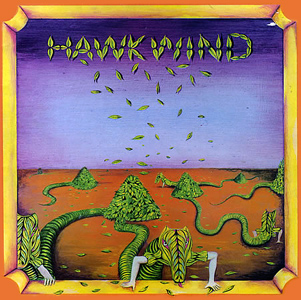
Hawkwind - Hawkwind

Another debut album!  Hawkwind is another band I had heard about, but never listened to until now.  I mostly knew them as a band that leaned in "space rock" long after the 60s (and had Lemmy on bass for a bit before they kicked him out, which caused him to start Motorhead).  But I'm getting ahead of myself here.  Their first album is considered an early space rock landmark, but honestly, I don't think it's aged that well.

I get that the point of psychedelic rock is the vibes and atmosphere instead of having thought-out orchestrations, but there are times where this album seems to revel in musical noise that occasionally has some rock jams in between.  A great example is "Seeing It as You Really Are," where there are so many sound effects and strange noises going on that it overwhelms what might have been a decent track.  Another example is "The Reason Is," which turns out to be just a few minutes of jarring ambiance.  Fortunately, there are a few songs to enjoy here.  The opener "Hurry on Sundown" has a folky twang coming from a 12-string guitar, making for a very acoustic-heavy rock jam.  "Be Yourself" has some rather King Crimson rhythms at the start before settling into a decent groove.  The closer "Mirror of Illusion" is probably the best track, as Dave Brock's voice really carries the song through a pretty solid jam, featuring plenty of solos.  I guess this song is what I was expecting the whole album to be like.

After listening to the whole thing, I get the feeling that the band were more interested in freaking out the listener than focusing on the music.  The descending warp in "Paranoia Part 1" in particular seems designed to make the listener to panic, thinking there is something wrong with their player.  Perhaps innovative and bizarre for its time, but listening to this retroactively on a computer, it feels just tacky.  Even though there are a few decent sections, this feels like one of those "you had to be there" kind of albums.
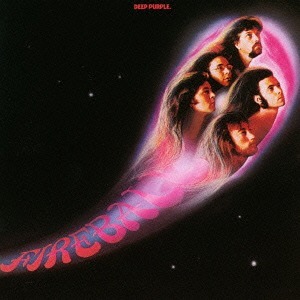
Deep Purple - Fireball

Finally, something that isn't a debut album!  I've been slowly working my way through Deep Purple's catalog, and I can see why Mark II is so important to the band's history, as I'm finding quite a bit to like.  This one has another decent bunch of songs, but listening to this retroactively, it's hard not to feel like this is just preparation for something greater.

I think a good way to describe this album is to say that the band is coming to terms with their new sound.  While In Rock was a massive burst of power, here they are grappling and controlling that power into something more organized.  They also wander into elements of space rock here and there, exploring the dynamics of their sound.  "No No No" and "Fools" have some stark transitions between hard riffs and mellower sections, but none of it feels jarring as they make these switches with a confident ease.  "The Mule" also has this droning quality that pushes the listener into a very strange space (though I do think the version on Made In Japan is better, naturally).  Still, there's plenty of rockin', with the opening title track not wasting anyone's time with its double-kicking bass drum energy, and "No One Came" has this pulsing drive from Roger Glover that keeps things moving.  "Anyone's Daughter" is a curious attempt at a joke song, but it's hard to know how much of the band was into the idea.

This is an improvement over In Rock, as the band is a little more confident in what they're doing, not really having to prove themselves as much.  However, like I said, with Machine Head coming after this one, it's hard not to feel like this one falls short of that excellent album.  Perhaps it's unfair to do that.  In any case, they are really becoming a strong unit with some solid (if quickly written) songs, proving that the switch to Mark II was worth it for both the band and the listener.

Thursday, March 20, 2025

Retro Reviews - March 2025!

While working on my Top 5 articles, I ended up listening to a lot of new stuff.  However, I figured I couldn't do a review for all of them, but here's a handful that I thought were worth talking about, partially because they let me carry on reviewing these bands' discographies.  

Deep Purple - Deep Purple in Rock

While I've reviewed a handful of this band's albums, I'm certainly doing them out of order.  In preparation for this one, I did listen to their first three albums, and they're just okay.  Obviously, Jon Lord's neo-classical elements were neat, but it was clear that they weren't really doing anything too special quite yet.  With a lineup change, things are certainly different, as the band really digs in hard on a louder, more intense sound.

Right away, new vocalist Ian Gillian makes an impact.  Rod Evans wasn't a bad singer, but he wouldn't have been a good match for this shift into hard rock.  Gillian takes command of the songs and gives them a ton of attitude.  The rest of the band really turns it up as well, making some very loud and forceful tunes.  Jon Lord and Ritchie Blackmore go back and forth with their solos, while Ian Paice rocks out with new bassist Roger Glover.  I can definitely see why the band felt this was a restart for them, calling this iteration Mark II.

However, it's still rough in spots.  Lord leans a little too hard on some atonal chords for his organ in spots, and the second half of the album isn't as strong, which is why it didn't make my Top 5 for the year.  Still, it's all pretty solid, heavy-hitting blues rock.  Songs like "Speed King" and "Child in Time" have cemented themselves in rock history, and the album sets the foundation for them to turn into one of the major hard rock bands of the era.

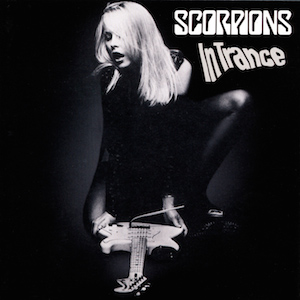
Scorpions - In Trance

Yup, it's time to pick up where I left off with this band.  While the first two album had them still messing around with progressive rock ideas, here we have the band fully streamlined into a 70s hard rock sound.  While I don't think they have their iconic sound quite yet, I can't deny this one had some very fun songs, and I'm kinda surprised it wasn't a bigger deal back then (on an international level, anyway).

Once again, Klaus Meine shows why he's one of the best of the business, his vocals majestically soaring over the songs, and the harmonies are very spot on as well.  However, I do wonder if guitarist Uli Jon Roth doesn't take a bit too much of the spotlight.  Some of the songs later on the album just feel like pieces for him to solo over, and not much else (including the instrumental track that closes the album).  Still, what's here rocks pretty well, finding a spot between Black Sabbath, Deep Purple, and Uriah Heep (especially with those organs they use in the background sometimes).

As for standouts, the title track is the biggest, feeling like a mini-epic with how it builds, "Robot Man" is definitely on the quirky side, but it also has some good energy, and many of the tracks show Roth's range of guitar playing ability, with him playing both melodic and noodly parts quite well.  Which is why it's strange that it feels like this album wasn't a bigger deal when it came out.  I get that getting a record outside of Germany in the 70s may not have been easy, but I could see fans of Queen and Rainbow really digging this, between the theatrical tones and dynamic guitar work.

Uriah Heep - Return to Fantasy

Speaking of which, I'm still working my way through this band's discography!  John Wetton of King Crimson (and would later start Asia) joins them on bass for this album.  However, the band stays pretty consistent with what they've been doing recently, though with a few twists here and there.

For an album title that claims to return to the fantastical, the lyrics seem to focus on typical romantic stuff.  I admit I would have liked them to bring back some of the ideas from Demons and Wizards.  Nevertheless, what makes Uriah Heep is still around: the tight vocal harmonies, the prominent organ, now joined by more synths, and some solid rocking grooves.  Wetton seems to bring a little funk with him, as well.  The title track and "Showdown" show the band still has their chops, both in performing and song-writing.  "Beautiful Dream" gets a bit weird, but in a good way, as the song builds well.  And the closer "A Year and a Day" has some good dynamics and transitions, getting a bit anthemic.

However, some songs end up being just filler.  "Your Turn to Remember" is a pretty generic blues rocker, "Why Did You Go" has this somber vibe that I think they've done better elsewhere, and "Prima Donna" has this horns section and bombastic energy that it didn't even feel like Uriah Heep!  I'm not sure why they went with that for a single.  Overall, it's decent stuff, about as good as previous albums, if perhaps a little less inspired, as it seems like they're hitting the same notes as before.

Queen - A Night at the Opera

Well here's a bit of a throwback.  Much earlier in my blog, I started reviewing Queen's discography, hoping to get a little deeper into their catalog.  After doing the first three albums, I guess I dropped the ball.  Fortunately, these Top 5 articles I'm doing have inspired me to pick this band up again.  With all the 70s rock I'm listening to, it's hard to imagine the decade without Queen, after all.

Of course, this album is probably their best known, featuring some of their biggest hits, like "You're My Best Friend" and the immortal "Bohemian Rhapsody."  Getting into the deeper songs, we see more of their humorous and whimsical side, with "Lazing on a Sunday Afternoon," "Seaside Rendezvous," and "Good Company."  These sound like some of the Beatles' later experiments with a bouncier sound, but Queen gives them just enough pomp to make them their own.  As for more of their rock side, while "Sweet Lady" does feel like filler, "Death on Two Legs" has to be one of their most aggressive songs, and "The Prophet's Song," while maybe a little too long with the neat a capella section, is them at their most epic and theatrical.  Those looking for hard rock with plenty of flair would find little competition in the 70s.  

Reviewing this album maybe a little redundant, as it is so well loved, but like I said, I wanted to go beyond the handful of tracks that I hear on classic rock radio all the time.  While previous albums have decent, I can definitely say this one is nearly the complete package, a joy to listen to all the way through, and one of the best albums of 1975.  This Top 5 article I'm working on is gonna be hard to decide!

Tuesday, February 15, 2022

Anniversary Series - 1972!

A new year means a new batch of Anniversary articles!  Starting with 1972, we've got some pretty big albums reaching 50.  Rock was definitely expanding at this time, with progressive rock really starting to peak.  However, we also see some early evolutions of metal and hard rock as well.  Let's get into it.

Starting the year is actually a handful debut albums.  Blue Oyster Cult, Scorpions, and Styx would start their storied careers in the first quarter of 1972, with very little fanfare.  Scorpions and BOC were deep in the psychedelic rock style, and Styx was also very proggy, much like an American ELP, even featuring their own version of "Fanfare of the Common Man," which was used as part of a longer track.  However, all three had some of the hard rock crunch these bands would be known for later on.

That being said, the big album for the early part of the year was Deep Purple's Machine Head, which I reviewed nearly three years ago (where does the time go?).  Featuring their future hit "Smoke on the Water," the jam friendly "Space Truckin'," and proto-metal stomper "Highway Star," this album would celebrated years later as very influential for rockers around the world.

As the year goes on, we see many of the major prog rock releases.  Jethro Tull decided to pull a bit of a prank with their satirical concept album Thick as a Brick, which ended up becoming a celebrated masterpiece, despite (or, perhaps because of) the joke.  Pink Floyd would release Obscured by Clouds, a selection of songs the composed for a film that has pretty much since been forgotten if not for the Floyd connection.  I think it's a bit of an overlooked gem, with some neat little songs and spacy hammond organs.

However, the big prog releases came later, with ELP giving us Trilogy, Genesis dancing a Foxtrot, and Yes's titanic Close to the Edge.  Here, we see bands really pushing their song-writing limits, often writing epics that go over the 18 minute range.  I'm sure prog heads have their favorites, but for me, it's all about Close to the Edge and its masterful melodies and arrangements.  An incredible album from start to finish.

From here, the year gives us a few more highlights.  Eagles would also debut this year with their self-titled album providing several big hits with "Take It Easy," "Witchy Woman," and "Peaceful Easy Feeling."  In harder rock, Alice Cooper would let us know that "School's Out," and Black Sabbath would carry on with drug-addled Vol. 4.  Uriah Heep would release two albums this year, with Demons & Wizards and The Magician's Birthday, streamlining their own sound into a hard rocking outfit (and those Roger Dean covers are nice, too!).

Finally, the year would end with Deep Purple coming back with Made In Japan, a live album that wasn't even supposed to be released outside of it's titular country, but found itself in record players all over the world, with the band's improvisations extending their classic songs far beyond their original track lengths.  I enjoyed this one quite a bit myself when I reviewed it two years ago.

As you can see, this was quite the year for longer rock songs.  Fortunately, they're worth their runtime.  As always, I've got a playlist that has even more, and if you think I've missed something, let me know!  Until then, rock on! \m/

Monday, February 15, 2021

Anniversary Series - 1971!

Yup, we're back with these again!  I just want to say up front that 1971 is an incredible year for rock music.  Lots of great stuff came out this year, and now we get to celebrate the 50th anniversary of these iconic and excellent albums!

The year starts off with a lot of solid progressive rock.  Yes brings in Steve Howe for The Yes Album, writing the first of many epics in the form of tracks like "Yours Is No Disgrace" and "Starship Trooper," while "Your Move" (the first half of "I've Seen All Good People") found success on the radio.  Jethro Tull would follow up with Aqualung, the title track of which having one of the best opening riffs in all of classic rock.  Emerson Lake and Palmer released Tarkus, and the middle of the year would see albums from Caravan, The Strawbs (then featuring future Yes member Rick Wakeman), and Gentle Giant.

Of course, bands from the 60s were still rocking into the new decade.  The Doors released LA Woman, with big hits like the title track and the epic "Riders on the Storm."  The Rolling Stones were right there with them with Sticky Fingers and "Brown Sugar."  Then The Who released Who's Next, with the massive tracks "Baba O'Riley" and "Wont' Get Fooled Again."  

Hard rock and metal would be busy this year as well.  Alice Cooper released "I'm Eighteen," T. Rex would encourage us to "Get It On," Deep Purple sent out their Fireball, Uriah Heep produced two albums in Salisbury and Look at Yourself, and Black Sabbath would get even heavier with their third album Master of Reality, featuring great riffs with "Children of the Grave" and "Into the Void," and setting the template for many metal bands to follow in the future.

At the end of the year, prog would take over again, as Pink Floyd finally put their melancholy stamp on the genre with Meddle, Genesis told us us a Nursery Cryme, King Crimson had Islands, Emerson Lake and Palmer finally got to release their live interpretation of Pictures at an Exhibition, and Yes would also release a second this year, this one being the renowned Fragile, not only featuring their big hit "Roundabout," but also my favorite Yes track "Heart of the Sunrise."  I absolutely love how it shifts from chaos to peaceful moments, along with Chris Squire's iconic bass solo.  A masterpiece from the band that has been a staple of their live shows for many years to come.

Of course, any discussion of this year wouldn't be complete without Led Zeppelin's epic and mysteriously title fourth album.  Massive tracks like "Black Dog," "Rock & Roll," and "Stairway to Heaven" would become staples of classic rock stations to this very day, and the bane of guitar stores across the country.  Often considered of the one greatest rock albums every recorded, and it's hard to argue against it.

I think that wraps up 1971 pretty well, and I've put them all (along with a few extras) in the playlist below.  If I've missed any, be sure to let me know.  Certainly a great year, and full of albums that I go back to regularly.  Until then, rock on! \m/


Wednesday, July 8, 2020

New Videos - July 2020!

Well, July is just as hot as June, and I'm not just talking about the temperature!  I've found another great handful of videos full of epic melodies and catchy choruses.  Hopefully, these will help you deal with the summer heat, or at the very least, give you reason for why you're sweating so much!  Headbanging is hard work, you know!


Why do I always keep forgetting about Lovebites?  This is another high-speed monster from the Japanese power metal outfit I discovered at the end of 2018.  The vocals are sung in English, so they take some getting used to, but the shredding and the powerful rhythms are huge, reminiscent of DragonForce or some of Sonata Arctica's faster songs.


One Desire does it again!  Their style of poppy 80s rock is just massive, full of catch melodies and the epic vocals from André Linman soaring over everything.  This album needs to get to the top of my priority list yesterday!


This is different!  Deep Purple, best known for hard rock classics in the early 70s, has a new album coming out, and this shows a spacier side to them.  Granted, maybe it's because Don Airey pulled out some hammonds for this one, but it really does feel like a song from another time.


Falconer is a name I've seen around, but never really listened to.  Fortunately, they have a new album, but unfortunately, the band is now breaking up after this release.  Still, this promises the same epic folk/power metal fusion the band has been known for all these years.


So John Payne was the singer for Asia after Wetton left but before the band reunited in 2006 with the original lineup.  Since then, Payne has been kicking around, and his latest group is the Dukes of the Orient, which has a very strong British 80s AOR vibe, like Asia and The Alan Parsons Project.  This one is a neat little song for their second album, as they carry on their sound.


Apparently, Moonlight Haze has already released a second album!  Their take on symphonic metal is very poppy and fun, with just a dash of mystery, and this song is full of the same energy.  I'm seriously having a hard time keeping up with all of these releases!


Saturday, May 30, 2020

Last Played - May 2020!

As the month comes to a close, I'm surprised at how quickly time is passing.  So much rock, so little time in which to listen to it!!  Still, I listened to a few albums in the passing days, and now you get to read what I thought of them!  Let's get started!

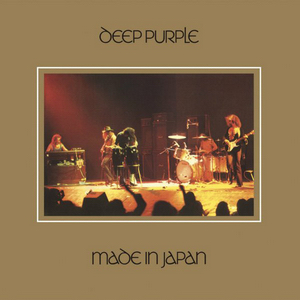
Deep Purple - Made in Japan

Can you believe that I hadn't heard this until this month?  A classic live rock album from a band known for their vibrant and powerful performances, and I finally get around to it in 2020.  Originally planned to only be released in the titular country, it would go to be one of their most popular and influential releases, and it's easy to see why.

Honestly, I don't have much to say other than this is really good stuff.  The band is tight, jamming all over their classic songs.  Ian Gillian has plenty of his iconic screams, Blackmore and Lord play great solos, Ian Paice and Roger Glover hold down the rhythm, and they all sound great together.  

Some of the highlights are Paice's great drum solo on "The Mule," the quirky duet between Gillian and Blackmore on "Strange Kind of Woman," and of course the in-between line of "Can I have everything louder than everything else?"  (That's rock and roll in a nutshell, isn't it?)  Overall, you get a collection of recordings of a band having an absolute blast playing live together, and that joy carries over to the music.  Classic for a thousand reasons.

Yes - From A Page

So after some serious delays due to the lockdown, my copy of the From a Page boxset finally arrived.  As this contains some new Yes music, I'm going to be taking it pretty seriously.

Taking material from around 2009-2010, the lineup is Benoit David on vocals, Steve Howe on guitar, Oliver Wakeman on keys, Alan White on drums, and Chris Squire on Bass, which right before the album Fly From Here.  This collection consists of the In the Present - Live from Lyon live album and a third disc of studio tracks they had started on, before they moved on to Fly From Here, but were never finished or released.  When Chris Squire passed away, Oliver Wakeman took it upon himself to get those studio tracks finished up for release, which results in material from a very unique time in Yes's history.

The live album is decent enough.  Benoit David is a solid singer, and the material is classic stuff, though getting live Drama tracks is admittedly neat.  However, the band is slightly sluggish here, which is a problem their live albums have had for the past 10 years, really.  Not a deal breaker, but it doesn't really incentivize me to listen back through it again.

As for the studio material, there's less than 30 minutes of it, so there isn't much to go over, but it still ends up being a bit of a mixed bag.  "To the Moment" starts things off with a nice piece, full of lush layers and Yes-isms.  Nothing amazing, but a decent song.  "Words on a Page" is more of a ballad and doesn't really do much for me.  However, it builds nicely, adding in layers as the song goes on.  "From the Turn of a Card" is a piano/vocal duet that didn't get fully realized, and I wish it had, as it's a pretty upbeat number.  David sings in a lower register, which gives it a different tone.  (Apparently, David's vocals were taken from another recording of the song on an album Oliver Wakeman did with Gordon Giltrap.)  "The Gift of Love" feels like it would have been at home on Fly From Here, which makes sense as it's the only song that credits the entire band as its writers.  It still has a laid back feel, like a very modern version of "To Be Over."

I don't know if From A Page collection will be anything more than a footnote in Yes's history, as it won't make new fans out of anyone and will likely be just another box set in a Yes fan's collection, but it does capture a moment that we might not have heard otherwise, which I think makes the effort worthwhile.  I'll probably need to spin it several times before I really can decide how I feel about it, but I'm certainly glad to have it.

Gamma Ray - Land of the Free

After listening to their last album, I got the impression that Gamma Ray was settling into their power metal sound, and this one confirms it.  It's also the first where Kai Hansen takes over on vocals, and it's clear that he's improved quite a bit since The Walls of Jericho.  It's not an amazing voice, but it's sufficient for what they're going for here.

Which happens to be something of a concept album, actually, telling the story about the oppression of Dreamland and the quest to free it by a hero seeking to go beyond the wall and find the truth that will save them all.  That being said, the lyrics mostly keep things in the abstract, so there doesn't seem to be much of a plot to follow, other than challenges faced, then overcome.

As for the music, it's power metal for sure, but still kind of early and rough around the edges, and Kai Hansen still has some Helloween-isms in his playing (not that there's anything wrong with that).  The opening track "Rebellion in Dreamland" is built like an Iron Maiden epic, and there are symphonic flourishes in multiple songs that made me think of Avantasia, especially in "Abyss of the Void."  However, the stand out track for me is "Salvation's Coming," with some very powerful riffs and a ton of energy!

The album isn't completely solid, with some quirks.  "Farewell" is pretty flat as a ballad, "All of the Damned" has an extended reference to the solo from "Hotel California" of all things, and the short tracks seem to have little purpose.  Otherwise, it's fairly standard stuff: crunchy, melodic, well-paced, and probably the strongest overall album I've heard from them so far.


Those were some lengthy reviews!  I hope you don't mind my long-winded remarks!  That being said, I do enjoy listening to rock and metal from all decades, as there is just so much diversity!  As for me, I'll keep "Space Truckin'" along and posting articles when I can.  Until then, rock on! \m/

Saturday, February 15, 2020

Anniversary Series - 1970!

I've been talking about doing more kinds of articles this year, and this is the beginning of one idea I've been tinkering with for a while: anniversary articles!

Okay, so maybe it's not the most original idea, and I admit that I'll be talking about music that came out before I was born for some of these, but it's still something different, right?  At least it breaks up all the video articles I keep doing, right?  Anyways, let's get started with 1970 and celebrate it's 50th anniversary!

While the year started with big songs from Chicago and The Guess Who, namely "25 or 6 to 4" and "American Woman" respectively, but the one that stands out the most (at least retrospectively) is Black Sabbath's debut album, kicking off the beginning of heavy metal.  While critics didn't care for what they doing, often calling them Cream knock-offs, the band gained an immediate fanbase, and it's easy to see why.  With it's big riffs and horror-like sound, they made a distinct impact to the music of the time, and set the stage for so many other bands to follow.

1970 was also a time of endings, as it provided the last Beatles album to be released from the band just after their official break-up.  Famous for a rooftop concert that provided takes for the album, it features the iconic ballad as the title track, "Let It Be," and the back-to-roots rock song "Get Back," showing their departure from the more complex arrangements from their Sgt. Pepper's days.  Overall, it marked the end of a saga that had changed rock and roll forever.

As the year moves on, we see a number of bands really standing out, with Deep Purple coming into their own with In Rock, and bands like Creedence Clearwater Revival and Santana only getting bigger, with songs like "Lookin' Out My Back Door," "Who'll Stop the Rain," and "Black Magic Woman," "Oye Como Va," respectively.

Progressive Rock would make some significant steps during this year as well.  Pink Floyd's Atom Heart Mother shows the band getting closer to their iconic sound, Hawkwind makes their debut as does Emerson Lake & Palmer with their ballad "Lucky Man," Genesis gives us "The Knife," and Yes start including a symphonic orchestra to their efforts with Time and a Word.

As the year winds down, we get more hard rock and heavy metal.  Led Zeppelin's III, with massive tracks like "The Immigrant Song," "Celebration Day," and "Gallows Pole" becoming arena rock standouts (even if that last one is acoustic, it's still an epic song!).  This is followed up by Black Sabbath's second record, featuring massive hits like "Paranoid," "Iron Man," and "War Pigs."

At the end of the end of the year, Creedence Clearwater Revival also gives us a second record in Pendulum, notable for the hit "Have You Ever Seen the Rain," while Eric Clapton forms Derek and the Dominos to give us "Layla."

Anyways, I hope you enjoyed that retrospective of 1970, clearly a big year for rock and metal music.  I've thrown together a Spotify playlist for the year that includes all these songs and many others.  If you feel I've missed something, let me know!  Until then, rock on! \m/


Thursday, May 30, 2019

Last Played - May 2019!

Good heavens!  It's been a while since I've done one of these!  Hopefully this will break up all the video articles I've been doing lately, though.  Let's see what I've been spinning lately!


Pearl Jam - Ten

Here we are, with Pearl Jam’s first album.  Here, we have them playing more straight-forward grunge, but even as I listened to this album, I could feel some of the hypnotic, almost psychedelic groove to it.  Vitalogy was really just them exploring a sound they already had to some degree.

I also began to see how these songs would probably sound really great live, and has got me thinking that I should try to find a live show of them from the early to mid 90s.  Their music has this jamming quality to it, stuff that could go off for a while, then come back like nothing happened.  I guess it’s just them living up to their namesake!

In any case, all three albums contain very solid rock music, and while the depressing lyrics and topics might not be everyone’s thing, they certainly good at setting their own compelling atmosphere, even during a time when grunge started to sell out hard.

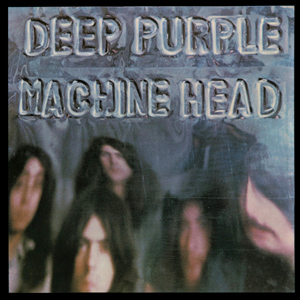
Deep Purple - Machine Head

A classic that really needs no introduction.  Here we have Deep Purple at their peak, providing some of their most iconic songs.  While the story behind the album is almost as fascinating, the music has really helped this album become one of the most celebrated in all of rock ‘n’ roll.

And it’s easy to see why.  Between the lightning quick leads of Blackmore and the aggressive organ of Lord, we have a fun, rockin’ album that knows when to ease off into a bluesy bit and when to turn up the heat.  It really is an amazing recording by a band very much in tune with each other.

Of course, some songs stand out more than others.  The power of "Highway Star" is outright undeniable, with Lord’s and Blackmore’s classically inspired solos.  "Smoke on the Water," for all it’s simplicity, remains very compelling, not only with the story, but with the licks and rhythms.  Then you have "Space Truckin’" and "Lazy," which are just incredible, jam-heavy pieces that roll right along.

In all honesty, thousands of words have already been written that explain how great and influential this album is, often cited as a major inspiration for heavy metal.  While I can hear the sparks of metal here and there (mostly in "Highway Star"), what I think matters is how well the songs themselves have aged as just plain great rock music.  

Herman Frank - Fight the Fear

After getting hyped up about this album back at the end of last year, I finally took the time to sit down and listen to the whole album.  Not surprisingly, it really is just wall-to-wall traditional metal, and I mean that in a good way!

Of course, when dealing with a sound this consistent, it can be hard to identify the stand out tracks.  While I did re-enjoy “Sinners” and “Hail & Row,” the only other songs that stood out to me was the power-metal-esque “Wings of Destiny” and the anthemic closer “Lost In Heaven.”  Everything else just kinda crunched along.

The lyrics are a bit of a mixed bag, with many of them having something of an apocalyptic but adrenaline-driven tone.  While they provide many great sing-along choruses, some of the grammar is clunky, with some of the lines breaking me out of the experience.  However, they’re all confidently sung by Rick Altzi, bring the right kind of old-school machismo that this kind of music needs.

Overall, this is a good album; let me make that clear.  Nothing feels particularly weak or excessive (thought the album might be a bit on the long side).  Full of crunchy, satisfying riffs and electric solos, it’s straight-ahead metal for those who wish the 80s never ended.  Fans of Judas Priest, early Ozzy, and Accept (naturally) will find a lot to like with this one.  

Kamelot - Ghost Opera

After covering a few of Kamelot's early albums in previous articles, I'm jumping ahead to their 2007 effort, mostly because I've listened to the four in-between so many times, I can't even count.  As far as I'm concerned, The Fourth Legacy, Karma, Epica, and The Black Halo are Kamelot's classic period, and represent the best they've made with Roy Khan.

So, Ghost Opera.  I remember listening to this when it came out and being pretty disappointed.  Of course, coming after the excellence that was The Black Halo, it would have been difficult to make an album of equal measure, but I still felt like something was missing from this one.

Upon relistening, I noticed a serious lack of Thomas Youngblood's iconic guitar riffs.  While the album is decently crunchy, the lightning-fast melodies seem to be missing this time, focusing on a more symphonic approach, helping to set a rather grim tone.  While this isn't a concept album, themes of death, futility, and abandonment pervade most of the songs.

That's not to say the album is bad.  The orchestrations are dynamic and effective, and Roy Khan remains a wonderfully dramatic singer.  While this may not be his best work, he does show a considerable amount of range in his performance, almost like an actor.  And the album has their iconic Kamelot sound, so it's by no means a betrayal of expectations.

However, the songs don't seem as inspired as on their classic albums, coming across as maybe a little too dour.  Perhaps it's just a consequence of nostalgia, as I discovered the band in college and binged on them hard.  Still, even upon relistening it, I feel this a weaker effort compared to previous heights.


So things have taken a bit of a video-y turn lately around here.  I do hope I can balance things out in the future.  I'm mostly happy that I'm able to keep posting things on such a regular (if inconsistent) basis.  For now, this seems to be working, so I'm sticking with it, but I know I want to do more.  Hopefully, I can find time for other things as I go on.

Until then, rock on!  \m/